Encinitas Resident Ordered to Remove Fence Sign Under Local Code Enforcement Rules
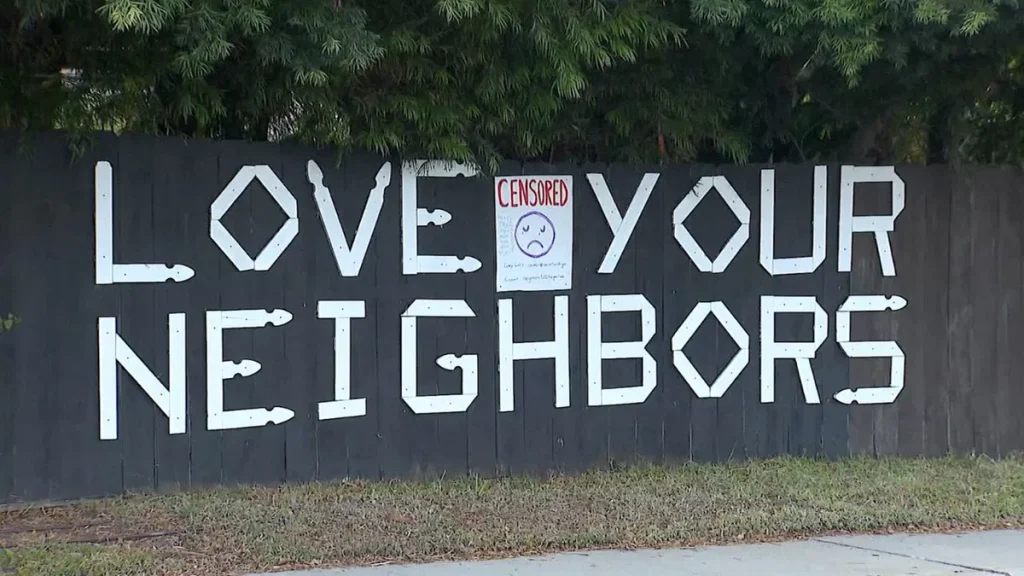
City of Encinitas Code Enforcement officials directed a homeowner to remove a “Love your neighbors” sign, citing a violation of the municipal sign ordinance.
The case raises questions about how local regulations interact with protected non-commercial expression on private property.
Why an Encinitas Homeowner Was Told to Remove His “Love Your Neighbors” Sign
City of Encinitas Code Enforcement officials informed a homeowner last week that a “Love your neighbors” sign attached to his backyard fence must be removed for violating the city’s sign ordinance.
The sign, constructed in September from leftover wooden fencing, was cited following an inspection reportedly prompted by a neighbour complaint.
A written notice sent later in the week instructed the homeowner to remove the sign by Tuesday or face administrative fines beginning at $100 and increasing to $1,000 if non-compliance continued.
The situation has prompted attention because the sign’s message is non-commercial and displayed on private residential property, bringing forward a legal question about how municipal sign regulations operate alongside First Amendment protections.
Code enforcement actions of this type are administrative rather than criminal, but they can affect residents’ ability to display personal messages.
The case highlights broader public-interest issues concerning transparency in enforcement, clarity of local rules, and how municipalities balance regulatory duties with constitutionally protected expression.
The Legal Questions Raised
The key legal question concerns how municipal sign ordinances apply to non-commercial messages placed on private residential property.
Under U.S. law, local governments may regulate aspects such as size, placement, and structural features of signs, provided the rules are content-neutral and applied consistently.
Courts typically examine whether a regulation addresses zoning, safety, or visibility concerns without targeting the message itself.
Another issue relates to the scope of First Amendment protections. Residential signs expressing personal viewpoints generally receive strong constitutional protection.
When enforcement is based on structural or zoning criteria, authorities often assess whether the regulation is narrowly tailored and whether residents received clear notice of compliance requirements.
A further consideration is administrative fairness: cities must apply their ordinances predictably so residents can understand what is permissible.
Human Rights, Safety and Public-Interest Context
International frameworks, including UN guidance on freedom of expression, emphasise that any restriction on non-harmful speech must be lawful, necessary, and proportionate.
These standards focus on ensuring that government actions serve legitimate purposes such as safety or zoning, while avoiding measures that could unduly burden personal expression.
Principles recognised by bodies such as the Organization for Security and Co-operation in Europe (OSCE) similarly highlight the importance of transparent local rules that support community safety and predictable governance.
These frameworks stress that enforcement actions should follow clearly defined criteria to reduce the risk of inconsistent application.
In the broader U.S. public-interest context, municipal sign ordinances are intended to manage structural safety, prevent obstructions, and maintain neighbourhood standards.
Effective administration of these rules supports public confidence and helps reduce disputes between residents while maintaining space for lawful personal expression.
The Role of Enforcement Authorities and the Public Impact
City code enforcement officers typically inspect residential signs, determine whether they meet local ordinance requirements, and issue notices if a violation is found.
Their role is administrative and centred on the sign’s physical characteristics rather than its message. When a citation is disputed, municipalities usually offer review or appeal procedures that consider photographs, measurements, and the ordinance text.
Police involvement is rare unless a separate safety issue arises, and regulators may check that notice, timelines, and potential fines were applied in a viewpoint-neutral manner.
These actions can affect public confidence in local governance. Unclear or inconsistently applied rules may leave residents uncertain about their rights and the predictability of enforcement.
Signage disputes can also influence neighbourhood cohesion, particularly when residents hold differing views about property standards and municipal authority.
Transparent, consistent processes help balance regulatory goals with constitutional protections for non-commercial expression.
Key Questions People Are Asking
What authority do U.S. cities have to regulate residential signs?
Most cities adopt sign ordinances under their zoning and land-use powers. These ordinances typically regulate dimensions, placement, and construction but must remain neutral regarding the message displayed.
How does the First Amendment apply to signs on private property?
Residential signs expressing personal viewpoints receive strong First Amendment protection. Courts usually assess whether any restrictions are reasonable “time, place, and manner” regulations that do not discriminate based on content.
Can a neighbour complaint start an enforcement process?
Yes. Many U.S. code enforcement departments operate on a complaint-driven basis. A complaint can prompt an inspection, but citations depend on whether the sign violates a specific ordinance.
Do residents have review rights after receiving a citation?
Most municipalities provide administrative hearings or appeals where residents can present evidence, request clarification, or challenge how the ordinance was applied.
Does the message on a sign affect enforcement?
Under constitutional principles, enforcement should focus on structural or zoning criteria rather than the viewpoint expressed, except in very narrow categories of unprotected speech.
What Residents Can Expect Next and Why This Case Matters
Procedurally, the homeowner may remove the sign, seek clarification from city staff, or use the administrative review process described in the citation.
These reviews typically examine the wording of the ordinance, the sign’s physical characteristics, and any documentation submitted by either the resident or enforcement officers.
Code enforcement may conduct follow-up checks to determine whether the issue has been resolved, and if the matter proceeds to a hearing, the reviewing authority will assess compliance, timelines, and whether procedures were followed.
Where First Amendment considerations are relevant, municipalities may also review internally whether enforcement actions align with content-neutral regulatory standards.
These steps generally occur through written communication rather than criminal proceedings.
Overall, the case highlights how Encinitas’s sign ordinance applies to a non-commercial message displayed on private property.
It demonstrates the importance of clear, content-neutral regulations that give residents certainty about their obligations while protecting constitutional rights.
Transparent processes and consistent enforcement support public trust in local governance.
The central issue moving forward is how municipalities balance routine regulatory duties with safeguarding lawful personal expression in residential areas.
Frequently Asked Questions About Local Sign Rules
What qualifies as a “sign” under typical U.S. municipal codes?
Definitions vary, but many codes classify any structure or display intended to convey a message and visible from public areas as a sign, with specific rules governing size and placement.
Can administrative fines be issued for non-compliance?
Yes. Municipal codes often authorise escalating fines if a cited violation is not corrected within the required timeframe, following proper notice.
Are non-commercial messages generally protected?
Non-commercial expression on private property receives broad First Amendment protection, subject to reasonable, content-neutral time, place, and manner restrictions.
Can documentation be submitted during a review?
Administrative review bodies typically accept photographs, written statements, and ordinance citations to clarify whether a rule was applied correctly.