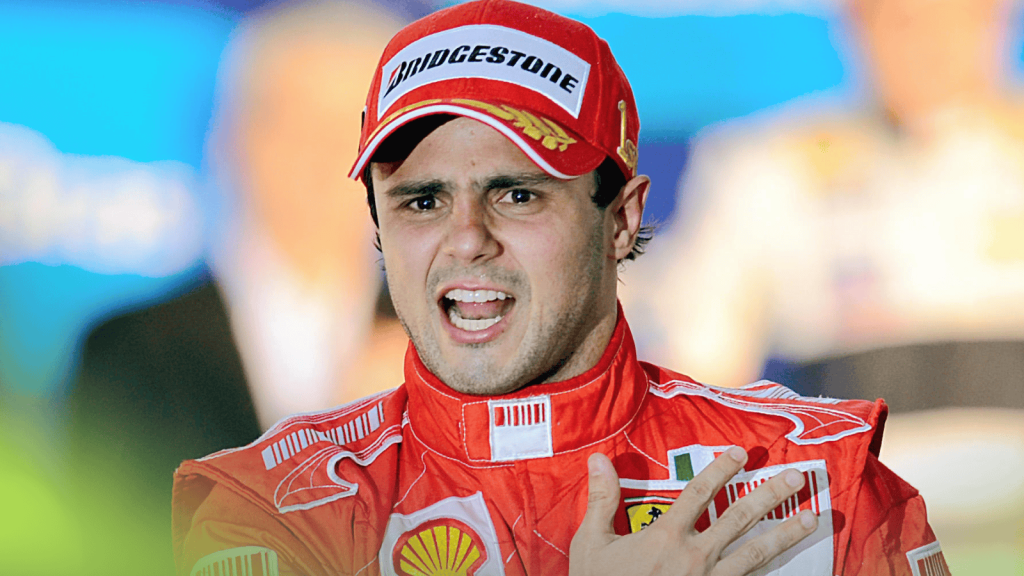
Felipe Massa’s fight over the 2008 Formula One world championship took a dramatic step forward today as a High Court judge in London cleared his £64 million lawsuit to go to trial. The former Ferrari driver is suing Formula One Management, the FIA and ex-F1 supremo Bernie Ecclestone, claiming the way the sport handled the infamous Singapore Grand Prix crash cost him a title he lost by just a single point to Lewis Hamilton. The ruling confirms that Massa can pursue a civil claim based on alleged “unlawful means conspiracy,” putting some of the sport’s most powerful institutions under renewed legal scrutiny.
The judge stopped short of questioning the official championship result and made clear that courts cannot rewrite race standings. But by allowing the core of Massa’s financial claim to proceed, the decision opens the door to a full examination of who knew what, and when, about Nelson Piquet Jr.’s deliberate crash and the fallout that followed.
High Court Ruling: What the Judge Has Allowed Felipe Massa to Do
The defendants had asked the court to throw the case out at an early stage. Their position was that the lawsuit had been brought too late and that Massa’s loss in Singapore came down to race circumstances, not any coordinated wrongdoing.
The judge rejected that attempt to shut the case down, finding that Massa has a real prospect of proving the key elements of an unlawful means conspiracy at trial. That means his central claim is strong enough, in legal terms, to justify a full hearing with evidence and witnesses.
However, the court did strike out part of the claim that asked for declarations effectively saying Massa should have been world champion in 2008. The judge stressed that an English court does not have the power to force the FIA to alter past race results or championship standings, keeping a clear line between sporting governance and legal remedies.
Why the 2008 Singapore Crash Is Still So Explosive
The case turns on one of the most controversial races in modern F1 history. During the 2008 Singapore Grand Prix, Nelson Piquet Jr. crashed his car and triggered a safety car period that completely changed the race. Massa, who had been leading comfortably for Ferrari, was caught out in the chaos of the pit lane and slipped down the order, scoring no points.
The following season, Piquet revealed that the crash had been deliberate and carried out on team orders. That revelation shook the sport and led to sanctions against those involved at Renault.
Massa argues that if the incident had been fully and properly dealt with at the time, the race result could have been treated differently, which might have changed the outcome of the championship. His claim focuses on the financial impact of missing out on the title, not on having the trophy reassigned.
Who Felipe Massa Is Suing – and Why It Matters
Three major pillars of Formula One now sit on the other side of Massa’s claim:
-
Bernie Ecclestone, who ran the commercial side of F1 for decades
-
The FIA, which regulates and governs world motorsport
-
Formula One Management (FOM), which holds the sport’s commercial rights
All three deny the allegations. Their legal teams argued in court that Massa’s lawsuit is based on flawed assumptions, overlooks his own errors during the race and was brought outside the strict legal time limits that normally apply to civil claims.
The trial will not look at every decision made during the 2008 season. Instead, it will focus on whether any coordinated actions or failures to act around the Singapore crash and its handling caused Massa to suffer measurable financial loss.
What “Unlawful Means Conspiracy” Means in Massa’s Case
For many fans, the phrase “unlawful means conspiracy” sounds technical, but it can be broken down into simple steps.
How the Claim Works
Under English civil law, a claim like this generally requires Massa to show that:
-
Two or more parties acted together,
-
used unlawful or improper means, and
-
caused him financial loss as a result.
In this case, the alleged loss relates to the earnings, sponsorship value and commercial opportunities Massa says he missed out on by not being recognised as world champion.
What Courts Can – and Cannot – Do
There are important limits on what the High Court can decide:
-
The court can decide whether any actions or failures by the defendants caused financial harm and, if so, what compensation might be appropriate.
-
The court cannot change the official 2008 drivers’ standings, reallocate points or force the FIA to declare a different world champion.
Today’s ruling does not mean Massa has proved his case. It simply means the judge has decided that the legal test for letting the claim go to trial has been met.
What Happens Next in Felipe Massa’s High Court Case
With the early challenge dismissed, the case now moves into a more detailed phase. The parties will prepare for trial by exchanging documents, requesting disclosure of relevant materials and finalising witness evidence.
A trial date has not yet been set, but when it does reach court the hearing will give a rare public look at how legal responsibility is assessed when major sports controversies end up before a judge. Whatever the final outcome on damages, the judgment will help define the boundary between decisions left to sporting authorities and disputes that can be tested in a courtroom.
FAQs: Felipe Massa’s £64m F1 Lawsuit
Does this ruling change who won the 2008 F1 championship?
No. The judgment does not change the official result. The court has confirmed it cannot alter past race outcomes or championship standings.
Is Lewis Hamilton involved in this legal case?
No. The claim does not accuse Hamilton of any wrongdoing and he is not a defendant in the lawsuit.
Why is Felipe Massa claiming £64 million?
Massa says missing out on the 2008 title cost him financially through lost prize money, sponsorship value and long-term commercial opportunities linked to being world champion.
What is the next key step in the case?
The next major step is the preparation for a full trial, which includes disclosure of documents and witness evidence. The court will then set a date for the hearing, where a judge will decide whether Massa has proved his claim.
👉 In Focus: How Vulnerable Are Britain’s Undersea Cables to Russian Attack? The Real Risk Behind the Yantar Incident 👈