Understand Your Rights. Solve Your Legal Problems


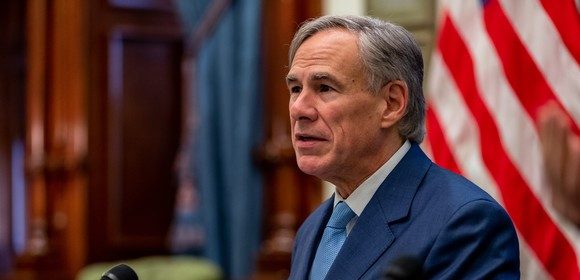
Texas was thrown into turmoil on Thursday after Governor Greg Abbott signed a sweeping proclamation branding the Muslim Brotherhood and the Council on American-Islamic Relations (CAIR) as terrorist and transnational criminal organisations, and moving to block people linked to them from buying land in the state.
The order lands even though neither group appears on any official U.S. federal terrorism list, immediately raising questions about how far a state can go when it comes to national security labels.
Muslim Texans and civil-rights advocates say the move hits at the heart of property rights, religious freedom, and basic equality under the law.
They warn that families, mosques, donors, and community volunteers could now face suspicion simply because of perceived ties to two organisations that Washington has not classified as terrorist entities.
Supporters, meanwhile, frame Abbott’s step as a tough-on-security stance, deepening a political fight that now stretches from neighbourhood planning meetings all the way to potential courtroom battles.
Today, I designated the Muslim Brotherhood and Council on American-Islamic Relations as foreign terrorist and transnational criminal organizations.
This bans them from buying or acquiring land in Texas and authorizes the Attorney General to sue to shut them down. pic.twitter.com/lSYvpkTmh3
— Greg Abbott (@GregAbbott_TX) November 18, 2025
The controversy starts with a simple fact: in the United States, the official terrorism lists used for sanctions, immigration, and criminal penalties are maintained by the federal government, not by individual states.
Agencies such as the State Department and the Treasury Department decide which foreign organisations meet the legal criteria for a terrorist designation.
CAIR, the country’s most prominent Muslim civil-rights group, has never been placed on those lists. The Muslim Brotherhood, while politically divisive in parts of the Middle East, is also not designated as a terrorist organisation by the U.S. government.
Abbott’s proclamation, however, treats both as security threats inside Texas, creating a sharp contrast between federal classifications and state-level rhetoric.
Muslim residents fear that this mismatch may encourage banks, landlords, local officials, and even neighbours to treat them with suspicion, despite there being no federal ruling that the organisations they support or interact with are terrorist entities.
Civil-rights groups argue that it risks turning political messaging into a practical barrier to everyday life.
Tensions did not begin with the proclamation. For months, a proposed Muslim-led residential development outside Dallas—widely referred to as “EPIC City” has been the target of rumours and political attacks.
Critics claimed it would become an isolated religious enclave or “Sharia compound,” a term Muslim leaders say is rooted in conspiracy theory rather than law.
Regulators and federal civil-rights investigators reviewed the project and did not take action against it, closing an inquiry without charges. Despite that, some state lawmakers championed bills aimed at restricting similar developments.
Abbott’s new declaration arrives on the heels of that political fight and, in the eyes of many Muslim Texans, folds long-running fears about religiously driven zoning battles into a broader label of criminality and terrorism.
Community advocates worry that future mosque expansions, housing schemes, or faith-based schools could be viewed as suspect if opponents use the proclamation as a political weapon, even when projects meet all legal and regulatory requirements.
Under U.S. law, the power to formally label a foreign organisation as a Foreign Terrorist Organization lies with the federal government.
The State Department leads that process, relying on intelligence assessments, interagency consultations, and strict statutory criteria.
The result is an official list that triggers specific legal consequences, including immigration bars, financial sanctions, and criminal penalties for material support.
States do not have the authority to add or remove names from that federal terrorism list.
What state governments can do is set their own policies about who can receive state contracts, grants, or certain types of land-related approvals so long as those rules comply with the U.S. Constitution and do not conflict with federal law.
When a state policy appears to diverge from federal standards on sensitive topics like terrorism, legal challenges are common.
Courts tend to look closely at whether the state has unfairly targeted a group, violated equal protection, or infringed on freedoms such as speech, association, and religion.
This is why lawyers and rights groups are closely analysing Abbott’s proclamation and how it might be applied in practice.
Muslim organisations and civil-rights advocates are already signalling that they may respond through legal channels, particularly if the proclamation is used to block land purchases or restrict legitimate community activities.
Any lawsuit would likely focus on constitutional protections, federal supremacy over terrorism designations, and whether the state is effectively penalising people for their religious or political associations.
On the political front, the proclamation is likely to feature in upcoming local and statewide races, with candidates pressed to say whether they support or oppose tying land restrictions to a label the federal government does not recognise.
City and county officials may soon face pressure to clarify how the proclamation will be applied, especially in zoning decisions, housing approvals, and land transactions.
For Muslim Texans, the immediate concern is whether everyday activities - buying property, donating to community organisations, or serving on local boards, will now attract unwanted attention or hesitation from institutions and officials.
The larger legal issue remains unresolved: how far a state can go in treating groups not designated by the federal government as terrorist threats. That question is expected to shape the next phase of this fight, in Texas and potentially in any other state considering similar moves.