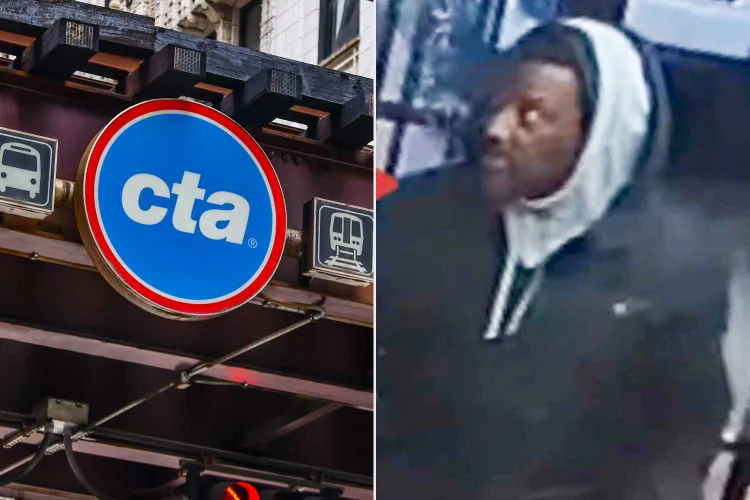
A Violent Transit Attack That Shook Chicago’s Loop
Chicago’s evening commute turned into a scene of terror on Monday when a 26-year-old woman was set on fire aboard a CTA Blue Line train near the busy Clark and Lake station. Federal prosecutors say 50-year-old Lawrence Reed poured a flammable liquid over the passenger before igniting it, leaving her hospitalized in critical condition and prompting an immediate federal terrorism charge tied to Chicago’s transit system.
The attack happened just before 9:30 p.m., sending panicked riders rushing toward the exits as flames spread through the train car. The U.S. Attorney’s Office confirmed Reed was arrested shortly afterward and charged with committing a terrorist attack against a mass transportation system, a federal offense that carries a potential life sentence. Investigators say the victim managed to escape the burning train but suffered severe injuries.
How the Attack Unfolded, According to Investigators
Federal officials say the victim was seated when Reed approached from behind and emptied a flammable liquid onto her head and clothing. As she tried to run, he allegedly ignited the substance, setting her on fire inside the moving train. Riders scrambled to get away as the woman ran toward the door engulfed in flames.
Emergency responders met the train at the next station, where the victim was rushed to a trauma center. Police say there is no indication an argument occurred beforehand, and investigators have not identified a motive as reported in the criminal complaint and statement.
What Authorities Are Revealing About the Suspect
Reed, a Chicago resident, was taken into custody shortly after the attack. He appeared Wednesday before a federal magistrate judge for his initial hearing. Because the incident occurred on public transit infrastructure, the investigation falls under federal jurisdiction rather than state court.
The case is being handled jointly by federal prosecutors, ATF investigators, and the Chicago Police Department. Officials say additional evidence, including surveillance video from multiple train cars and station platforms, is now being reviewed.
Why This Charge Qualifies as Terrorism Under Federal Law
Federal law treats certain violent acts on buses, subways, and trains as terrorism when they endanger passengers or threaten critical infrastructure. Setting a person on fire inside a crowded, enclosed transit space meets the threshold for an attack designed to cause serious harm.
This type of federal charge is uncommon but recognized in cases involving fire, explosives, or dangerous substances on public transit. The classification allows investigators wider access to federal resources, evidence processing, and surveillance review.
Legal Breakdown: How a Transit Terrorism Case Moves Forward
Under federal statutes, prosecutors must prove two elements in a transit-based terrorism case:
1. The act targeted a mass transportation system.
The CTA Blue Line qualifies as part of Chicago’s essential public infrastructure.
2. The act was intended to cause death, serious injury, or major danger.
Using a flammable substance in an enclosed public space can meet this requirement when supported by evidence of deliberate action.
How Investigators Build These Cases
These cases often rely on surveillance footage, chemical analysis of accelerants, witness accounts, and fire-pattern reconstruction. This helps prosecutors establish intent, danger, and the sequence of events.
This explanation is informational only.
What Happens Next in the Case
The victim remains in critical condition. Prosecutors will continue gathering evidence before determining whether to present the case to a federal grand jury. Chicago police have temporarily increased patrols at downtown stations, though officials say they have no information suggesting a broader threat to the CTA system.
👉 Related: What Is Criminal Law? USA Justice System Explained 👈