JFK’s Grandson Jack Schlossberg Steps Into the Spotlight With Bold New York Run to Revive a Fading Camelot
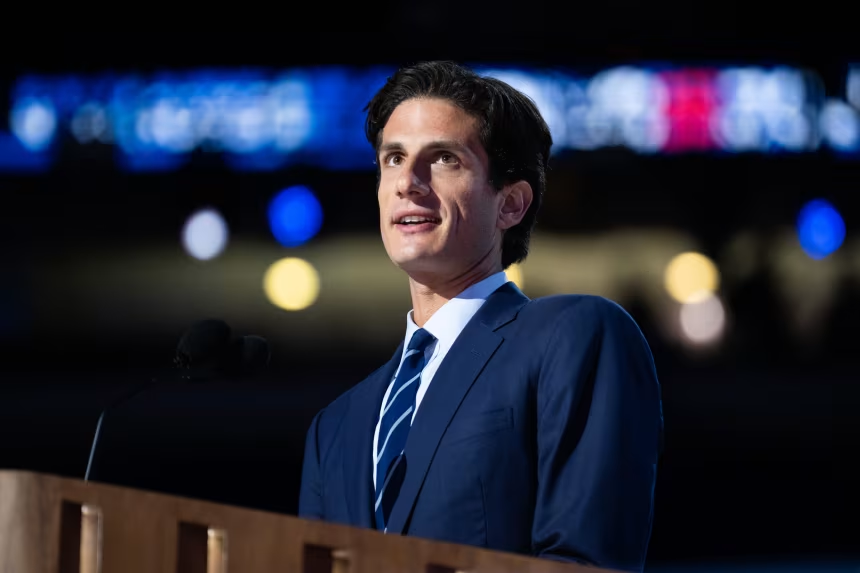
Jack Schlossberg — the grandson of former President John F. Kennedy and the only surviving male heir of the Kennedy political dynasty — has announced his campaign for the U.S. House of Representatives in New York’s 12th Congressional District, shaking up Manhattan’s Democratic establishment ahead of the 2026 midterms.
A Legacy Rekindled for a New Political Generation
In a campaign video that spread quickly across social media, the 32-year-old Harvard Law graduate and former speechwriter declared that America is facing “a crisis at every level” — from affordability to accountability.
“It’s not enough to talk about change; we need to make it real,” Schlossberg said. “This isn’t about nostalgia or family history. It’s about fighting for the future.”
His message — grounded in populist frustration over cost-of-living pressures and political corruption — marks a sharp generational contrast with older Democratic figures who have dominated New York politics for decades.
Running to Replace Jerry Nadler
Schlossberg is seeking to succeed longtime congressman Jerry Nadler, who announced his retirement earlier this year after representing the district for more than three decades. The 12th District stretches from Union Square through Midtown Manhattan and up to the Upper East and West Sides — one of the country’s most politically engaged urban centers.
Born and raised in the area, Schlossberg said he “rode the crosstown bus to school every day” while attending Manhattan’s Collegiate School, a detail his team highlights to reinforce his local roots in a city skeptical of celebrity outsiders.
Beyond the Kennedy Name: A Focus on Affordability and Reform
Schlossberg’s campaign platform emphasizes economic fairness, education, and political integrity. He’s pledged to tackle the housing affordability crisis, push for expanded access to childcare and healthcare, and introduce measures to strengthen ethics and transparency in Washington.
He’s also promised to modernize congressional communication by using digital media and open online town halls — an approach that could resonate with younger, first-time voters in Manhattan.
“We can’t fix the system with the same tools that broke it,” he told supporters in an early event streamed online.
Accountability and Ethics in Washington
Schlossberg has leaned on his legal training to make accountability a campaign theme — without diving into complex legal jargon. He argues that Congress has failed to enforce its own standards and that “no one should be above the law, especially those who write it.”
His campaign team says he will advocate for stronger disclosure laws, independent ethics oversight, and protections for whistleblowers in both public service and corporate settings.
Political analysts note that this subtle legal emphasis distinguishes Schlossberg from the largely policy-focused field — signaling a reform-minded approach grounded in legal principle rather than partisanship.
A Crowded Democratic Field
The Manhattan race is already one of the most competitive Democratic primaries in the nation. Among the contenders are:
-
Micah Lasher, state assemblyman and a close Nadler ally;
-
Liam Elkind, founder of a volunteer relief network launched during the pandemic;
-
Erik Bottcher, New York City council member;
-
and several young progressive candidates hoping to capture the post-COVID activist base.
While Schlossberg enjoys unmatched name recognition, rivals argue that “famous last names don’t guarantee fresh leadership.” Still, early polling suggests voters are curious — if not yet convinced — by the idea of a modern Kennedy in Congress.
The Digital Candidate
Unlike previous Kennedy campaigns steeped in traditional messaging, Schlossberg’s operation is fully digital. He frequently posts short, unscripted clips from his apartment or walks through Manhattan, tackling issues like rent, climate policy, and student debt in a conversational tone.
Supporters see him as an antidote to “stale politics.” Critics call him untested. Either way, his media fluency gives him an advantage in reaching voters who rarely engage with conventional campaigns.
Family Divides and Public Health Debate
Schlossberg hasn’t shied away from distancing himself from Robert F. Kennedy Jr., his uncle and the controversial Health and Human Services Secretary in the Trump administration. In September, he publicly blasted RFK Jr. on social media, calling him “a threat to science and public health.”
The move highlighted not only the family’s political rift but also Jack’s determination to define himself outside the shadow of Camelot. “He’s doing what many Democrats have wanted a Kennedy to do for years — take the legacy forward, not backward,” said one strategist close to the campaign.
What’s at Stake in the NY-12 Race
Democrats are betting that Schlossberg’s candidacy could energize younger voters and donors as the party seeks to regain control of the House in 2026. Though the 12th is a solidly blue district, the outcome could serve as a litmus test for generational politics — whether voters want experienced leadership or a fresh face tied to history but speaking a new language.
The contest will also test whether the Kennedy brand, once synonymous with hope and public service, still holds sway in an era defined by skepticism toward political dynasties.
The Road Ahead
-
Official campaign launch: Expected this week with a public rally in Midtown.
-
Fundraising push: Digital donations are being tracked closely by national Democrats.
-
Debate watch: Early spring debates will likely spotlight experience versus energy.
-
Voter outreach: The campaign plans to use interactive video forums to connect with residents from Union Square to the Upper East Side.
Bottom Line
Jack Schlossberg’s run for Congress is both symbolic and strategic — a generational re-entry of the Kennedy name into national politics, wrapped in the language of affordability, reform, and civic renewal.
Whether his mix of legacy, law, and digital strategy can translate into votes will determine not just his future, but whether the Kennedy mystique still carries power in 21st-century America.