Understand Your Rights. Solve Your Legal Problems



The Cost of Systemic Failure: Lily Whitehouse and the Collapse of Public Protection
The death of 19-year-old Lily Whitehouse, found dying on Park Street, Oldbury, on November 5, 2025, is not a tragedy of circumstance; it is the inevitable outcome of a British justice system that is fiscally bankrupt and institutionally broken. Her killing came just four days after the mass stabbing on a train near Huntingdon, in which Anthony Williams allegedly injured multiple victims in a rampage that followed several prior, failed police interventions.

Lily Whitehouse aged 19, was found with serious injuries in Park Street at around 9.50pm. Despite the best efforts of paramedics, she was sadly pronounced dead at the scene. Mohammed Azim, aged 41, will appear before Wolverhampton Magistrates court this morning.
The public has been shaken by a cascade of criminal justice failures — and by the horrifying revelation that violent offenders are being released early in a desperate attempt to conceal years of systemic decay.
Among the most alarming cases is that of a man freed from prison under the Government’s early release scheme who has now been charged with murder.
The man, who cannot be named for legal reasons, was released as part of the Government’s efforts to reduce prison overcrowding, according to The Times. It is the most serious offence yet linked to the early release policy, which allows some offenders to be freed after serving just 40% of their sentence, down from 50%.
The scheme, introduced shortly after Labour came to power, applies to prisoners serving determinate sentences — the most common type of custodial term — but excludes those convicted of sexual offences, domestic abuse, or national security-related crimes such as terrorism. Violent offenders sentenced to more than four years are also excluded.
Once freed, offenders remain on licence for the remainder of their sentence and can be recalled if they breach conditions or commit further offences.
A Ministry of Justice spokesperson said:
“Our thoughts are with the victim’s family. This Government inherited a prisons crisis, days away from running out of space which would have brought the justice system to a standstill, stopped the police from being able to make arrests and led to unchecked criminality on our streets.
Public safety will always be our top priority, and we are building 14,000 more prison places to keep dangerous offenders locked up.”
👉 Further Reading: Britain’s Hidden Dilemma: Why Thousands of Foreign National Offenders Remain in the UK After Their Sentences End 👈
The Ministry also confirmed that 38,042 prisoners have been released under the scheme since its introduction in September 2024. Officials had warned that male prisons were on track to completely run out of space before the policy was implemented by Shabana Mahmood, now Home Secretary, during her time as Justice Secretary.
Recent figures show that while the prison population has fallen from a February 2024 peak of 88,439 to 87,465 as of September 2025, this remains higher than the total prison population a year earlier.
Even more concerning, recalls to prison have surged — reaching 11,041 between April and June 2025, a 13% increase year-on-year. The Ministry admits that recalls are now at a “historically high” level, “likely to be associated” with the early release scheme.
A legal change under the previous Conservative government in April 2024 also worsened the situation, allowing offenders sentenced to less than 12 months to serve a short fixed term when recalled — instead of completing their original jail term. The result: repeat offenders cycling in and out of prison with minimal consequence.
The chaos extends far beyond one policy. At HMP Wandsworth, staff recently admitted they were “unable to confirm where all prisoners were.” Two inmates were mistakenly released in the same week — including Brahim Kaddour-Cherif, an Algerian sex offender facing deportation who walked free due to a simple clerical error.
These are not isolated incidents. In the year leading up to March 2025, 262 prisoners were released in error — more than double the previous year — meaning that every month, the British public is exposed to roughly 22 wrongly released offenders.
When questioned about the crisis, Justice Secretary and Deputy Prime Minister David Lammy was accused of being “dishonest” with Parliament after refusing to answer whether more mistaken releases had occurred — mere hours before the identity of the escaped offender was confirmed.
👉 Further Reading: The Invisible Tab: Why Britain’s Asylum Costs Skyrocket — And Why the Law Keeps the Public in the Dark 👈
The UK is spending astronomical sums to sustain failure. The prison expansion programme has ballooned to £9–10 billion, while keeping one inmate now costs over £51,000 per year.
Meanwhile, the £4.7 billion asylum support bill could fund the construction of up to ten new 1,000-place prisons annually. Instead, the government continues pouring billions into temporary measures, while violent offenders are released early for lack of space.
The National Audit Office (NAO) attributes the current prison crisis to “previous governments’ failure” to align sentencing with capacity.
The pledge to deliver 20,000 new prison places has already slipped to 2031 — five years behind schedule — creating a projected 12,400-place shortfall by 2027.
Key failures include:
Costs inflated by 80%, reaching up to £10.1 billion.
23,000 prison places failing fire safety standards.
A maintenance backlog doubling to £1.8 billion.
Operation Safeguard, renting police cells, costing five times more per day than standard imprisonment.
The numbers expose a system no longer merely inefficient — but irretrievably broken.
The most unforgivable element of this crisis is the culture of reward for failure. When offenders reoffend, when administrative chaos unleashes danger, when lives are lost — those in charge are promoted, not punished.
Nowhere is this moral collapse clearer than in the case of Mohammed Azim — a convicted killer who raped a homeless woman three times while she tried to sleep in a bus shelter. This individual is entirely unrelated to the Mohammed Azim currently charged with the murder of Lily Whitehouse in Oldbury on Wednesday night (5 Nov) 2025. They are two different men with no connection between their cases.

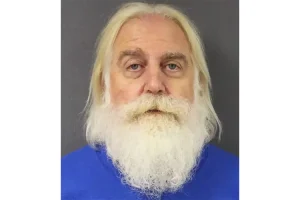
Mohammed Azim — a convicted killer who raped a homeless woman three times while she tried to sleep in a bus shelter
Azim, from Oldbury, had already served 11 years for manslaughter when he carried out the 2012 attack. He was jailed for 16 years, with an additional four years on licence, for what appeal judges described as an “unusually violent and sustained” assault.
Even after a video recording captured the brutal ordeal, Azim appealed against his sentence. The Court of Appeal rejected his challenge, calling his punishment “severe but wholly justified.”
This is precisely the kind of individual who should never again be freed.
These are not one-off monsters but repeat violent offenders whose histories prove that rehabilitation has failed.
Yet, while Azim’s crimes illustrate the need for lifelong incarceration for the most dangerous offenders, the Government’s early-release policies are instead focused on freeing thousands of inmates early — gambling with public safety to save face over its own mismanagement.
Caroline Corby, Chair of the Parole Board during key failures, was later appointed Chair of the Crown Prosecution Service (CPS). Shabana Mahmood MP, who oversaw the expansion of early-release schemes, was promoted to Home Secretary.
There are no consequences for bureaucratic negligence. Only for the victims — and their families — left behind.
👉 Further Reading: What Happens Legally If Courts Discover an Asylum Seeker Lied About Their Age? 👈
The alleged murder of Lily Whitehouse, the mistaken releases from Wandsworth, and the early-release killing all form part of one continuous chain of institutional rot. Britain is not safe because those charged with safeguarding it have failed — and been rewarded for doing so.
This is the only acceptable path forward:
All senior officials in the Ministry of Justice, Probation Service, and Parole Board who oversaw these failures must be sacked immediately and barred from future public service. The CPS must explore civil and criminal negligence charges where loss of life resulted from administrative incompetence.
Redirect the £4.7 billion asylum budget toward permanent safety infrastructure — enough to build between 11 and 15 secure prisons annually. Deport failed asylum seekers and foreign national offenders swiftly, ending the endless drain of temporary fixes.
Abolish the early release scheme. Every violent and sexual offender should serve 100% of their custodial sentence. The UK must reclaim full control over its justice and deportation policies, independent of international interference.
Until the culture of elite impunity ends, until Britain funds safety instead of chaos, and until political leaders face real accountability, tragedies like Lily Whitehouse’s will not be anomalies — they will be the predictable cost of a government that no longer protects its people.
For many, that accountability begins at the top. Sir Keir Starmer must take responsibility for the collapse in public safety under his government and resign immediately.
Britain cannot be rebuilt by those who allowed its justice system to crumble.