Understand Your Rights. Solve Your Legal Problems


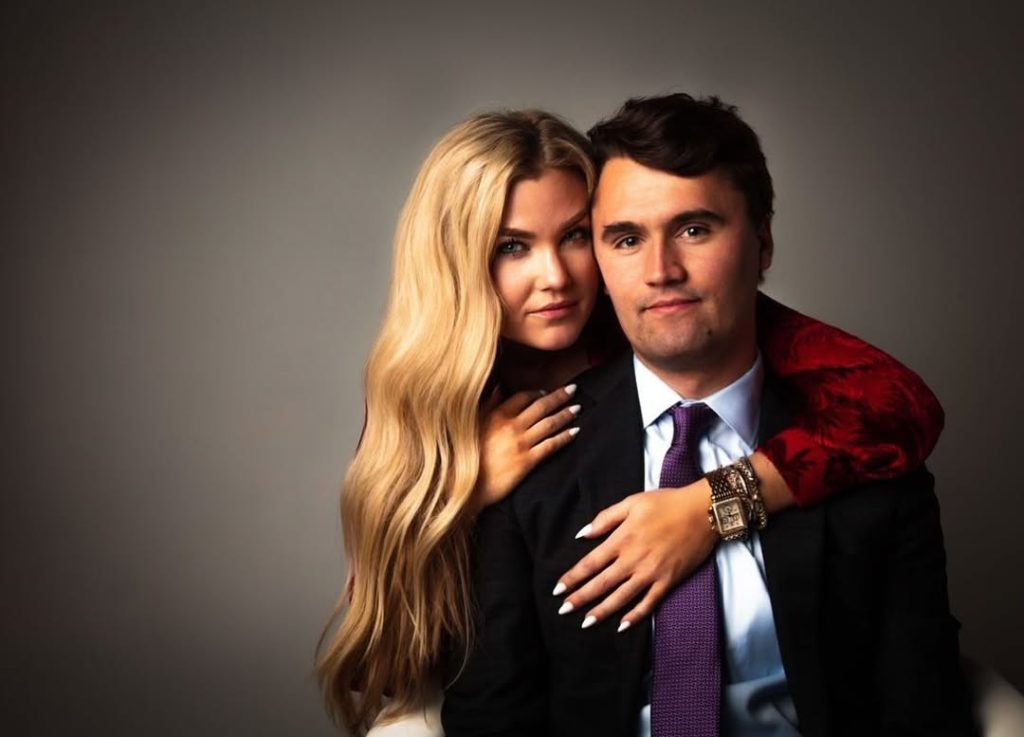
When Erika Kirk, widow of conservative activist Charlie Kirk, sat down with Fox News ahead of the murder trial of her husband’s accused killer, her voice trembled, but not with fear.
“There were cameras all over my husband when he was murdered,” she said.
“There have been cameras all over my family as we’ve grieved. We deserve to have cameras in there.”
Her plea isn’t about spectacle. It’s about truth and about letting the public witness what happens when justice is on trial.
Charlie Kirk, 31, co-founder of Turning Point USA and a powerful ally of Donald Trump, was shot and killed on September 10 at Utah Valley University while speaking to students.
Prosecutors allege that 22-year-old Tyler Robinson opened fire in a calculated act of political violence.
Within days, Robinson was charged with aggravated murder, and prosecutors confirmed they would seek the death penalty.
Videos of the shooting flooded social media before authorities could react, sparking outrage and disinformation in equal measure.
For many conservatives, Kirk’s killing symbolized a chilling escalation of violence against free speech. For others, it ignited a renewed debate about how media exposure can shape justice long before a jury is sworn in.
In an exclusive interview previewed by Jesse Watters Primetime (airing Nov 5 on Fox News), Erika Kirk said she refuses to let the trial unfold behind closed doors.
“There were cameras on every tear I cried,” she said. “So why should there be none when justice is being sought?”
Kirk, now CEO of Turning Point USA, insists that transparency is not a privilege but a right.
As the legal fight over cameras in the courtroom intensifies, the noise outside the courthouse has become deafening.
In recent filings, Tyler Robinson’s defense attorneys described a “content tornado” surrounding their client since the day of his arrest - a whirlwind of viral clips, tweets, and online commentary dissecting everything from his demeanor to the clothes he wore in court.
The defense argues that such saturation coverage threatens his right to a fair trial and has asked Judge Tony Graf to restrict or even ban cameras entirely.
Judge Graf, however, has so far declined to issue a blanket prohibition, telling lawyers that “the proceedings will remain open to the public.”
Still, he has asked both sides to submit detailed motions before a final decision expected in January 2026 signaling that transparency will guide the court, but not without limits.
At the same time, a different kind of storm erupted in Hollywood.
Jimmy Kimmel was briefly suspended from ABC’s “Jimmy Kimmel Live!” after remarks about the killing of Charlie Kirk that many viewers found deeply insensitive.
Kimmel suggested that “the MAGA gang” was trying to politicize the tragedy, comments that drew swift condemnation from media groups and even the Federal Communications Commission.
After days of backlash, Sinclair Broadcast Group and Nexstar Media pulled his show from their ABC affiliates and demanded a public apology and donation to the Kirk family.
Behind the scenes, Sinclair reached out to Erika Kirk directly.
“They asked, ‘Do you want Jimmy to give you an apology? Do you want to be on his show?’” she told Fox News. “I said, this isn’t my mess. If he’s sorry, let it be from the heart.”
Her composure and grace resonated across social media, earning millions of supportive comments. When Kimmel eventually returned to the air, his tone was somber.
He admitted his words were “ill-timed,” choked up while acknowledging the tragedy, and praised Erika Kirk’s forgiveness as a “selfless act of grace.”
Both the legal proceedings and the surrounding media debate now center on a single issue, the extent to which the public should have access to courtroom proceedings and how media outlets balance transparency with responsibility.
Will the trial of Tyler Robinson, accused of killing Charlie Kirk be fully televised, or will the public be kept in the dark? It’s not a media sideshow; it’s a constitutional question about how much justice Americans are allowed to see.
Under Utah Rule 4-401.01, cameras are generally allowed in courtrooms unless a judge finds a compelling reason to restrict them.
The state’s own media guide explicitly affirms this openness, describing courtroom coverage as “presumed permitted.”
But the defense claims saturation coverage threatens Robinson’s Sixth Amendment right to a fair trial—a cornerstone of American justice. Restricting cameras, they argue, protects impartiality. Allowing them, prosecutors counter, protects trust.
Former prosecutor and media-law analyst Joshua Ritter explained that when court proceedings are hidden from public view, it can undermine confidence in the justice system.
“When you hide proceedings from the public, you invite speculation. Justice has to be seen to be believed,” he said.
That principle aligns with the 1981 U.S. Supreme Court ruling in Chandler v. Florida, which upheld the legality of courtroom broadcasting provided it does not compromise fairness.
In the years that followed, most states including Utah, adopted rules that favor public access to judicial proceedings under similar safeguards.
The outcome of this dispute will determine how much direct access citizens have to one of the nation’s most closely watched trials.
Allowing cameras would provide an unfiltered view of courtroom proceedings and reinforce public confidence in the judicial process.
Restricting coverage, on the other hand, could limit transparency and shape how future high-profile cases are reported.
A ruling in favor of openness would strengthen Utah’s standing as one of the country’s most transparent court systems.
Conversely, a decision to limit access could set a new precedent for restricting media and public oversight in similar cases nationwide.
Attorney Randolph Rice, who has represented both journalists and defendants in high-visibility cases, summed it up with painful simplicity:
“When people stop seeing justice done, they stop believing in it. That’s how societies fracture.”
For Erika Kirk, the divide is already evident. Her call for cameras reflects a broader effort to restore public confidence in a justice system she believes should remain accountable to everyone it serves.
Judge Graf is expected to revisit media access in January, before jury selection begins.
Are cameras allowed in Utah courtrooms?
Yes. Under Utah Rule 4-401.01, courtroom photography and video are generally permitted unless a judge finds a compelling reason — such as jury prejudice or witness protection — to restrict coverage.
Why does Erika Kirk want cameras in the trial?
She believes transparency will help restore trust in the judicial process and ensure the public can witness how justice is carried out in her husband’s case.
Could cameras make the trial unfair for the defendant?
Defense attorneys argue that extensive media exposure could bias potential jurors. Courts must balance that concern with the public’s right to open proceedings.
When will a final decision on media access be made?
Judge Tony Graf is expected to rule on camera access before jury selection begins in early 2026.
Has public access ever changed the outcome of a trial?
While no case has proven a direct impact, studies show televised proceedings can influence public perception of fairness — one reason judges approach these decisions cautiously.