Black sites. Honeypots. Artificial intelligence.
Welcome to the side of espionage you were never meant to see.
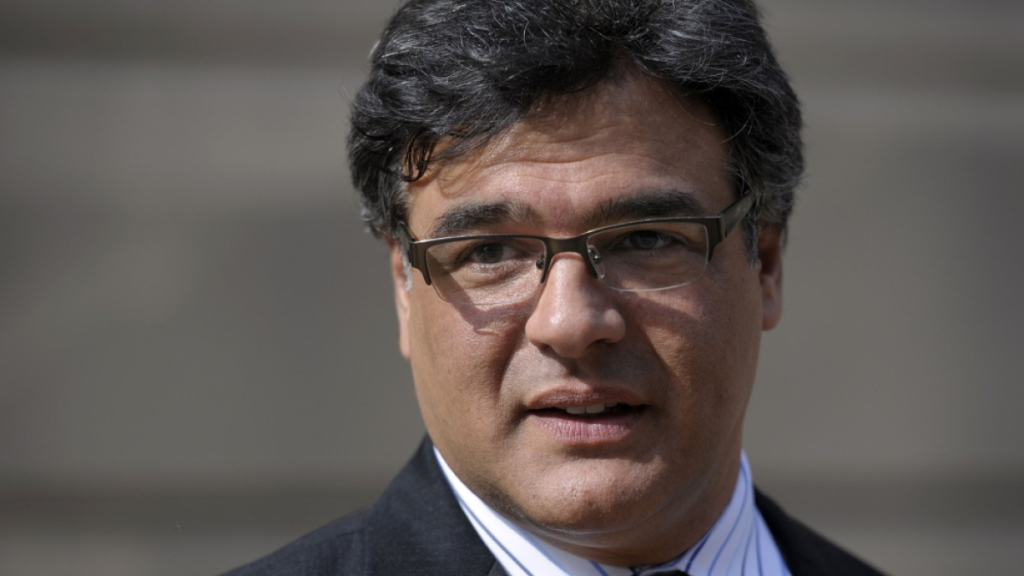
In a new conversation with host Mario Nawfal, former CIA officer John Kiriakou — the whistle-blower who exposed America’s post-9/11 torture program, describes a world of spycraft that has grown colder, smarter, and far more invasive than anything from the Cold War.
The trench-coated agent in a dark alley is gone. Today’s spies hide in code, in data streams, and in the “smart” devices inside our homes.
From Black Sites to Data Streams
Kiriakou knows that world better than most. Once part of the CIA’s Counterterrorism Center, he publicly confirmed in 2007 that U.S. interrogators had waterboarded prisoners, calling it, plainly, “a method of torture.”
“I blew the whistle on the CIA’s torture program in December 2007,” he recalled later.
🚨🇺🇸 INTERVIEW: CIA SECRETS, TORTURE, AND THE NEW AGE OF SPYING
Black sites. Honeypots. AI surveillance.
This is the world of espionage you were never supposed to see.Former CIA officer @JohnKiriakou, the whistleblower who exposed the agency’s torture program, reveals how… https://t.co/mq8VyTeebB pic.twitter.com/j3reTuQgwc
— Mario Nawfal (@MarioNawfal) November 1, 2025
The revelation shattered decades of silence and cost him his freedom. But his warning went deeper: what began as physical abuse has evolved into digital control. Surveillance, he says, has simply gone wireless.
“Even if torture works, it cannot be tolerated — not in one case or a thousand or a million,” Kiriakou once said. “If their efficacy becomes the measure of abhorrent acts, all sorts of unspeakable crimes somehow become acceptable.”
The Return of the Honeypot
During his talk with Nawfal, Kiriakou described how foreign intelligence agencies, particularly in China and Russia are turning to personal infiltration.
“Honeypot” marriages, business fronts, and long-term relationships have replaced dramatic spy exchanges.
Instead of stealing blueprints, agents now steal access.
Washington, he says, is quietly filling with well-placed foreign operatives who don’t need disguises — only LinkedIn profiles and marriage licenses. “Know your enemy,” he’s said before. “Understand his motivations. Know his friends.”
Why Torture Failed — And What Works Instead
Kiriakou remains blunt about America’s moral failure. Torture, he insists, produced nothing useful.
“Any monolithic bureaucracy will tend toward corruption without proper oversight,” he’s warned.
He advocates for rapport-based interrogation — the slow, patient work of earning trust and reading people, methods that require intelligence, not cruelty.
For him, the damage done by “enhanced interrogation” was twofold: it betrayed American ideals and polluted genuine intelligence work.
The Spy Next Door
Kiriakou’s deeper concern, though, is how surveillance has come home.
Every connected phone, smart speaker, and camera is now a possible listening device.
You don’t need to be a spy to get spied on, you just need Wi-Fi.
He points to the merger of AI and mass data collection as the next frontier of espionage. No more wiretaps or stakeouts; algorithms do the watching now.
“The crime was committed by the CIA,” he’s said. “The crime was committed by the torturers.”
But in today’s context, he adds, the crime may be complicity — our willingness to trade privacy for convenience.
The Cost of Truth
After Kiriakou’s revelations, the government came for him. Federal prosecutors charged him not for exposing torture, but for sharing classified information with journalists.
“It’s not a crime to reveal a crime,” he told one interviewer.
He spent 23 months in federal prison, the only CIA officer to serve time in connection with the torture program, though not for committing it.
“Talking to The New York Times and … ABC News is not espionage,” he said later. “It’s just not.”
His story became a warning to other truth-tellers: in the intelligence world, loyalty often trumps law.
AI Surveillance, National Security & the Legal Frontline
As the intelligence front moves from black sites to bytes, domestic law and policy must keep pace.
According to veteran privacy lawyer Marc Rotenberg, president of the Center for AI & Digital Policy and a longtime figure in U.S. privacy law, the rise of AI-enabled surveillance is eroding core democratic safeguards. He warns:
“It must be our governance of AI and not governance by AI … Democracy, human rights and the rule of law, those are the foundations for AI governance.”
In the American context, this presents multiple legal vectors:
-
Intelligence agencies now have access to vast data-streams, biometric systems and predictive analytics tools, raising fresh Fourth-Amendment and due-process questions.
-
Lawyers advising national-security clients face new ethical pressure: past doctrine focused on battlefield rules, but now the terrain includes devices in U.S. homes and live algorithmic decision-making. As one legal article puts it, national-security attorneys “must still… focus on the practical aspects of AI that risk drifting off the ethical midfield.”
-
Oversight remains patchy. Rotenberg’s warning—that democracy’s foundations are the very values being assailed by unchecked algorithmic surveillance—highlights a disconnect between technology deployment and public-law frameworks.
In short: as the espionage war shifts into data-streams and connected lives, the legal architecture tasked with protecting individual rights is under strain. Without strong AI-governance anchored in law, the “smart home” could become the next black-site.
The Future of Espionage: When AI Turns Every Citizen Into a Target
Kiriakou believes the U.S. intelligence community has strayed dangerously far from its original mission.
“The CIA has transformed from an organization created to recruit spies to steal secrets into a paramilitary force,” he’s argued. “It needs to return to its roots.”
Those roots, he insists, lie in human analysis — not coercion, not algorithms. Yet artificial intelligence now drives surveillance systems, drone reconnaissance, and global data mining.
Each innovation, he warns, blurs the line between national security and mass monitoring.
His message is chillingly simple: the next great spy war won’t be fought in a desert or a foreign capital. It’s already unfolding in your apps, your camera lens, and your private data.
In Kiriakou’s eyes, the tools of espionage haven’t disappeared, they’ve been upgraded.
And unless oversight catches up with technology, the future of intelligence may look less like democracy and more like digital control.
Frequently Asked Questions (FAQ)
Who is John Kiriakou, and what did he expose about the CIA?
John Kiriakou is a former CIA counterterrorism officer who, in 2007, became the first U.S. official to publicly confirm that the agency had used waterboarding — a form of torture — during interrogations after 9/11. His disclosure led to major public debate and ultimately to his imprisonment for revealing classified information, though he has long maintained, “It’s not a crime to reveal a crime.”
What does Kiriakou say about modern espionage and AI surveillance?
Kiriakou argues that the age of traditional espionage has been replaced by digital surveillance. He warns that the same agencies once running secret prisons now run vast data systems, using artificial intelligence to track, predict, and influence human behavior. As he put it, the future of spycraft “won’t be fought in a desert or a foreign capital — it’s already unfolding in your apps, your camera lens, and your private data.”
How is AI changing national security in the United States?
Artificial intelligence now powers everything from drone reconnaissance to threat detection and domestic data monitoring. According to privacy lawyer Marc Rotenberg, president of the Center for AI & Digital Policy, “It must be our governance of AI and not governance by AI … Democracy, human rights and the rule of law, those are the foundations for AI governance.” His point underscores the growing tension between protecting citizens and protecting their privacy.
What legal challenges does AI surveillance create for U.S. intelligence agencies?
AI-driven intelligence collection raises Fourth Amendment and due process issues — particularly when data gathered from private devices or social media is used for national security purposes. Lawyers in this field are calling for clearer oversight, transparency requirements, and ethical guidelines for the use of predictive analytics and biometric tracking. Without reform, experts warn that the U.S. risks sliding into a system of “automated overreach.”
Why does Kiriakou believe the CIA has lost its way?
Kiriakou contends that the CIA has strayed from its founding purpose — gathering intelligence through human networks — and has instead evolved into a “paramilitary force.” He believes the agency’s dependence on technology and covert military operations has blurred its moral and strategic compass. His call is simple: a return to human insight and accountability over automation and coercion.
Can AI surveillance ever be ethical?
Experts say it can — but only with rigorous safeguards. Rotenberg and other legal scholars argue for strict limits on data collection, independent oversight committees, and transparency around algorithmic decision-making. Without such checks, AI surveillance threatens to outpace both the law and the Constitution.
Why does this conversation matter now?
As AI becomes embedded in national security, the boundaries between defense, privacy, and democracy are eroding. Whistleblowers like Kiriakou and lawyers like Rotenberg are warning that the tools meant to protect the nation could, if left unchecked, become instruments of control. Their message is a call for vigilance — not just from government, but from every citizen with a device in their pocket.