Understand Your Rights. Solve Your Legal Problems


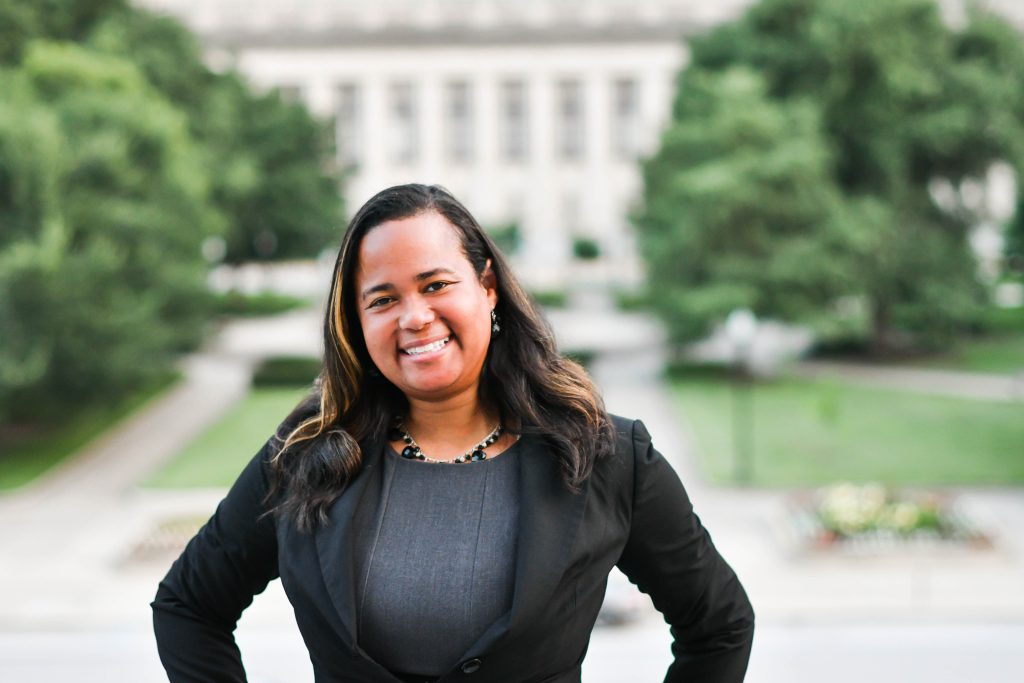
Few experiences shape a lawyer’s purpose as powerfully as seeing injustice up close. For Indianapolis criminal defense attorney Denise Laureen Turner from DTurner Legal, LLC, that moment came as a teenager watching her younger brother walk into juvenile court in handcuffs — a memory that still drives her every day.
Since earning her J.D. from George Washington University Law School in 2010, Turner has built her career around advocating for those who feel unheard within Indiana’s criminal justice system. From her early years as a Marion County Public Defender to her current work handling major felonies and federal death penalty cases, Turner has become known for her compassion, direct communication, and tireless defense of clients facing the most serious charges imaginable.
In this candid conversation with Lawyer Monthly, Turner reflects on how personal experience shaped her empathy for clients and their families, the realities of public versus private defense in Indiana, and what true justice means in a system often misunderstood by those outside the courtroom.
Denise Turner: Being on the other side of the desk has had a profound impact on how I connect and communicate with clients and their families. Having been the big sister in the gallery, or the one who vets and pays for the lawyer, or the one whose calls go unanswered, gives me a unique perspective on what clients and their families go through.
I share my experience with clients and their families all the time, so they can feel comfortable knowing I’ve been where they’re at. I make it a point to keep lines of communication very open — that means paying for calls from the jail, meeting families in person, answering texts when true emergencies arise.
As many of my clients are young African-American men, I often see my little brother in each of them. It makes me work that much harder to get the best possible outcome for them and to reassure their families that their loved one is a priority.
Denise Turner: In theory, there should be no difference in the representation, but the reality is that there are not enough lawyers doing public defense work. That leads to higher caseloads and less time to spend with clients and work on cases.
A private attorney, by contrast, can choose what and how many cases to take. Oftentimes, those represented by appointed counsel feel rushed — like they’re not being heard or that their lawyer is too busy for them. Private attorneys generally have more time to investigate their cases, to talk with the families, and to keep them updated.
However, public defense lawyers often have access to more resources without being limited by a client’s income. Most public defense offices have in-house investigators, social workers, and court reporters on staff. Funding for experts is also easier to obtain. The difference in having access to these resources can have a profound impact on the outcome of a case. Clients represented by private attorneys may get more of their lawyer’s time, but they can be limited in obtaining the resources needed to fully defend themselves.
Denise Turner: Hands down, the most misunderstood aspect of criminal defense work is the assumption that everyone accused is guilty. I can’t tell you how many times I’ve been asked, “How do you do it?” or “How do you represent those people?”
What people don’t realize is that everyone who’s accused isn’t always guilty. Another misconception is that our only goal is to “get people off.” Truly, the goal of any criminal defense attorney is to protect the client’s rights and hold the government accountable.
It’s our job to make sure that police and prosecutors are doing their work according to the law and not taking shortcuts or cheating to get the outcome they want. Defense attorneys care just as much about the community, safety, and justice as anyone else — we simply express that commitment in a different, but equally vital, way.
“Winning” doesn’t always mean a not-guilty verdict. It’s defined by the client — for some, that means a shorter sentence; for others, it may mean treatment or simply having their voice heard in court.
Denise Turner: First, I’d like to see bail and case data made fully transparent statewide. The process involving bail and whether someone qualifies for appointed counsel is extremely subjective and varies widely between counties. Transparency in data would make it easier to expose bias and develop fairer solutions.
Each county in Indiana has its own bail schedule, so there’s no statewide standard. Second, I’d like to see a statewide program to help those who are partially indigent find private attorneys willing to take their cases at reduced rates.
Currently, the IndyBar Modest Means Program in Marion County helps people who can’t afford full private representation connect with attorneys who charge reduced fees. Judges must refer eligible clients, and it currently only covers misdemeanors and low-level felonies. Expanding this program statewide and including higher-level felonies could help relieve public defender caseloads and improve access to justice.
Denise Turner: Being open and honest with my clients and their families from day one is pivotal to building trust. Only when a client has all the information can they make the right decisions for themselves and their loved ones.
I make sure my clients know as much as possible about their case and my advice — that always includes telling the truth, no matter how hard it may be to hear. I often tell clients, “There’s too much at stake. It’s not fair for me to blow smoke.”
I’ve found that clients respect and appreciate honesty more than empty promises. Many families come to me after hearing false assurances from other lawyers, and they can tell when someone isn’t being truthful. Strangely enough, being the bearer of bad news often builds more trust — it shows the client that their lawyer is serious, invested, and not just collecting a paycheck.
Denise Turner: Federal and capital cases are more complex and take longer to resolve. They demand more investment — not just in legal work but in understanding the client and their family on a deeper level.
Because these cases are so detailed, organization and time management are critical. Staying focused, knowing when to ask for help, and maintaining structure are key.
The emotional toll is another challenge. In federal and death penalty cases, the stakes are so high that humanizing the client is essential but difficult. I make a point to learn my client’s full story — the good, the bad, and especially the ugly. I meet their family and friends to understand who they are beyond the charges.
Managing that emotional load requires discipline. I stay centered by keeping my end goals clear, staying organized, and knowing when to pause and reset.
Denise Turner: My advice is to find something to relate to in your clients. The case and the client have to mean something to you.
For me, it’s seeing my little brother in my clients that fuels my drive. For others, it might be standing up for the underdog because you once were one. Finding that personal connection gives your work purpose and drive.
But it’s equally important to protect your own well-being. Emotional fatigue is real in this field. Practice self-care — schedule a massage, go to the gym, take a vacation. Taking care of yourself helps you better take care of your clients.
Turner’s commitment to criminal defense is rooted in humanity — a belief that everyone deserves to be seen, heard, and defended with integrity. Whether she’s answering a late-night text from a worried mother or preparing for a complex federal trial, her focus remains on giving clients the same respect and attention she once wished for her own family.
Her advice to the next generation of lawyers is as personal as her mission: “Find something that resonates with you,” she says. “When your work means something to you, that’s where purpose and resilience begin.”
From the gallery of a juvenile courtroom to the forefront of Indiana’s defense bar, Denise Laureen Turner has never lost sight of what first inspired her — the belief that justice must begin with understanding.