Understand Your Rights. Solve Your Legal Problems



Update – October 31, 2025:
Darius McCrary has been released from custody following a Michigan court hearing. According to court filings, his child support arrears were restructured under a probationary agreement. This article has been updated to reflect the latest developments.
By George Daniel — Legal Affairs Correspondent, Lawyer Monthly
(Published October 31, 2025)
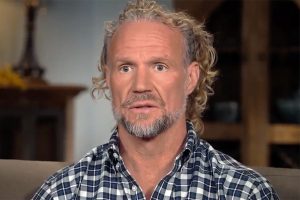
Few stories bridge Hollywood and the courtroom like this one. When Family Matters actor Darius McCrary, 49, was arrested while trying to enter Mexico, it didn’t just shock fans — it reignited a legal debate about how far family-law enforcement can reach when state borders get involved. His weary mug shot from Oakland County Jail became an image of more than exhaustion; it became a reminder that celebrity status doesn’t exempt anyone from accountability.
Weeks before the arrest, McCrary was on the 2024 Emmys red carpet, smiling and promoting new projects. By October 5, 2025, he stood before a California Superior Court judge after U.S. Customs and Border Protection officers detained him at the San Ysidro Port of Entry.
According to Oakland County Circuit Court records, Michigan authorities had issued a felony warrant tied to missed child-support hearings. Once entered into the National Crime Information Center (NCIC) database, that warrant triggered an automatic border alert under 18 U.S.C. § 3182, compelling officers to act.
McCrary initially attempted self-representation but later accepted a public defender. His bail was denied under California Penal Code § 1552.2, which allows detention when a defendant poses interstate flight risk.
Prosecutors allege he was evading court obligations. His team claims a charitable misunderstanding, saying McCrary was heading to Tijuana to help with the Esperanza Housing Initiative, a nonprofit that builds homes for families in need.
“Mr. McCrary was fulfilling a charitable commitment, not fleeing justice,” a representative told People magazine. Public defender Jessica Lopez emphasized that he “maintains permanent residence in Los Angeles and no ties in Mexico.”
Legal experts stress that intent will decide the case. “Flight risk is determined by conduct, not celebrity,” says Professor Ellen Jacobs, Loyola Law School. “Once a warrant is active, border agents must detain — intent rarely matters.”
What began as a domestic dispute is now a criminal matter. Under Michigan Compiled Laws § 750.165, willful nonpayment of court-ordered child support is a felony punishable by up to four years in prison.
Once issued, a Michigan warrant enters shared state and federal systems. The U.S. Extradition Clause (Article IV, § 2) mandates cooperation between states in returning defendants. Because McCrary was intercepted near the border, his case drew the attention of Customs and Border Protection, whose integrated databases flag any active felony warrant.
Unlike true international extradition—requiring diplomatic certification under the U.S.–Mexico Extradition Treaty of 1978—McCrary’s case is considered domestic rendition, managed between California and Michigan courts.
McCrary’s troubles trace back to his 2017 divorce from former Harlem Globetrotter Tammy Brawner, finalized by the Los Angeles Superior Court in 2019. The judgment ordered $1,366 per month in child support, plus substance-abuse and domestic-violence programs, and limited visitation.
Legal analysts note that Michigan’s action likely stems from accrued arrears under that same California order. Repeat violations often trigger custody or probation under Michigan precedent (People v. Monaco, 474 Mich. 48 (2006)), which confirmed imprisonment for willful nonpayment.
McCrary is expected in Pontiac, Michigan, on November 14, 2025, for an extradition and arrears review. Outcomes may range from probation and fines to short-term custody.
San Diego attorney Raul Mendoza believes the case “illustrates how automated databases and human narratives collide.” He adds, “Fame changes public perception, not procedure.”
This intersection—between technology, accountability, and public scrutiny—has made McCrary’s arrest a textbook study in modern enforcement mechanics.
Jurisdictions:
Issuing: Oakland County Circuit Court (Michigan)
Receiving: California Superior Court (San Diego County)
Statutes:
Michigan Penal Code § 750.165 (Non-payment of support)
Federal Extradition Act 18 U.S.C. § 3182
California Penal Code § 1552.2
Case Law:
People v. Monaco, 474 Mich. 48 (2006) — imprisonment for willful nonpayment
Sources:
People Magazine, Oct 2025
ABC 10 News San Diego, Oct 2025
Oakland County Court Docket #25-A-1037 (Child Support Arrears Filing)
What does Darius McCrary’s arrest reveal about the law?
It demonstrates how civil non-compliance—especially in child-support cases—can escalate into criminal enforcement when state and federal databases converge.
Key Takeaway:
McCrary’s experience underscores a fundamental rule of modern justice: jurisdiction travels faster than reputation.