Understand Your Rights. Solve Your Legal Problems


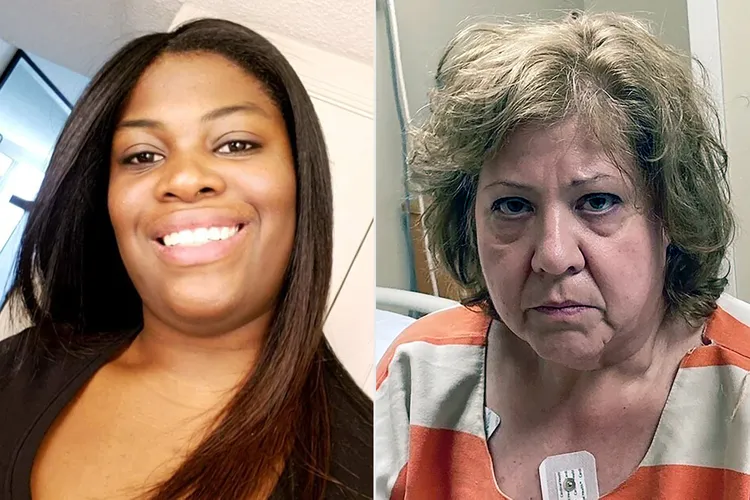
The shocking true-crime story of the fatal neighborhood feud that inspired the Netflix documentary The Perfect Neighbor continues to be a national flashpoint, demanding a closer look at the terrifying escalation and the legal failures that preceded the murder of Ajike “AJ” Shantrell Owens.
The tragic shooting of AJ Owens was not a random act of violence, but the final, fatal climax of a long-running, racially charged feud. Central to this grim timeline were the habitual emergency calls made by the killer, Susan Lorincz—a pattern of behavior that painted a picture of a neighbor determined to weaponize law enforcement against the children next door.
The question of "How many times did Susan Lorincz call 911?" is vital, not only to understand the sheer escalation of the conflict but also to expose how the system repeatedly failed to de-escalate it before a life was lost.
While the fatal night itself involved two crucial 911 calls made by Lorincz, the true number detailing her escalating complaints over the years is far higher.
According to the Marion County Sheriff’s Office and subsequent court records:
A Deeper, More Disturbing Number:
Filmmakers and civil rights lawyers involved with the case, who used the Freedom of Information Act (FOIA) to obtain full police records, suggest the actual number of times Lorincz called police over the children may be even higher. Accounts from neighbors and people involved in the documentary The Perfect Neighbor claim Lorincz called the police "dozens of times" about noise, litter, and "trespassing" on a vacant lot, with some community members alleging she sometimes called as many as 10 times a day—a potential flood of reports that often resulted in police body-cam footage but few actual crime findings.
The evidence presented to the jury showcased a woman using emergency services not for immediate life-saving aid, but to escalate a protracted neighborhood conflict into a perceived legal crisis.
Before examining the tragic chain of events that led to the death of Ajike “AJ” Shantrell Owens, it’s vital to understand the legal framework that shaped—and later failed to protect—her killer, Susan Lorincz.
Florida’s Stand Your Ground law, codified in Florida Statutes S 776.012 and S 776.013, gives residents the right to use deadly force in self-defense without a duty to retreat, provided they are lawfully present and reasonably believe such force is necessary to prevent imminent death or great bodily harm.
“A person who is not engaged in unlawful activity and who is in a place where he or she has a right to be has no duty to retreat and has the right to stand his or her ground and meet force with force,” — Florida Statute S 776.013(3).
However, this protection has limits. The immunity only applies if the victim was “unlawfully and forcibly entering” the dwelling. The law also bars aggressors from claiming its protection.
Criminal defense attorney Eric T. Schwartzreich, of the Florida firm Schwartzreich & Associates, explains:
“Florida’s Stand Your Ground law allows individuals to use force, including deadly force, to defend themselves if they reasonably believe they are in imminent danger. But there’s no immunity if the person claiming self-defense was the aggressor or provoked the confrontation.”
— Schwartzreich & Associates, 2024 statement to Local 10 News.
These nuances became central to the State of Florida v. Susan Lorincz—a case that reignited debate over whether Stand Your Ground has created more confusion than clarity in cases involving neighborhood disputes and race.
Ajike “AJ” Shantrell Owens, a 35-year-old mother of four, was shot and killed through a locked door by her neighbor, Susan Lorincz, in Ocala, Florida, on June 2, 2023. The incident shocked the nation and inspired the Netflix documentary The Perfect Neighbor, which chronicles how years of escalating tension ended in tragedy.
Lorincz moved into her Ocala rental apartment in 2020. Within months, she began complaining about local children playing in a nearby field. Her complaints ranged from noise and trespassing to alleged threats from neighborhood kids—including Owens’s children.
Neighbors told NBC News that Lorincz was known for “harassing” the children, filming them with her phone, and placing “No Trespassing” signs on land she didn’t own. Court records later confirmed that Lorincz admitted to using racial slurs toward the children—including the n-word—out of anger.
“Everybody in this neighborhood has feuded with this lady over our children,” said neighbor Phyllis Wills in 2023.
The fatal night began with another confrontation. Owens’s children were outside playing near the field when Lorincz accused them of leaving toys behind. Witnesses said she yelled racial slurs and threw a roller skate that struck a child’s foot. When the child asked for his iPad—which he claimed she had taken—Lorincz reportedly threw it to the ground and shouted at him again.
At 8:54 p.m., Lorincz called 911 for the first time that evening:
“I’ve got kids trespassing… leaving all their toys around… I feel threatened in my own home.”
The dispatcher instructed her to remain inside and lock her doors while officers were on their way.
Moments later, AJ Owens—informed by her children of what happened—went to Lorincz’s apartment to confront her. She knocked several times, demanding Lorincz come outside. Instead, Lorincz retrieved her .380-caliber handgun, pointed it at the closed door, and fired a single shot.
At 9:04 p.m., Lorincz placed her second 911 call:
“Oh my God, this lady just tried to break down my door. I shot through the door. I thought she was going to kill me.”
Owens was struck in the chest while her 9-year-old son Israel stood beside her. She was pronounced dead later that night at the hospital.
Initially, Lorincz was not arrested. Police cited the need to determine whether Florida’s Stand Your Ground law applied—a pause that drew national outrage, especially given the racial undertones and the fact that Owens was unarmed.
But investigators soon determined that Lorincz’s actions were “not justifiable under Florida law.” Owens had not forcibly entered Lorincz’s home, and the 911 dispatcher had explicitly told Lorincz to stay inside and wait for police.
On June 7, 2023, Lorincz was charged with manslaughter with a firearm, culpable negligence, battery, and two counts of assault. In August 2024, a jury found her guilty of manslaughter, and she was sentenced to 25 years in prison.
Legal analysts point out that Lorincz’s invocation of Stand Your Ground failed on several grounds:
The jury agreed with prosecutors that Lorincz’s fear was neither reasonable nor imminent—core tests under Florida self-defense law.
The case of State v. Lorincz has become a cautionary study for both prosecutors and defense attorneys navigating Florida’s self-defense laws.
1. Immunity Is Not Absolute
Stand Your Ground offers protection from prosecution only when all statutory conditions are met. As attorney Robert Malove notes on his legal blog:
“The right to stand your ground is not an open invitation to use deadly force. The threat must be immediate and the response proportionate.”
2. The Importance of Proportionality
Deadly force can only be used when a reasonable person would believe that death or serious injury is imminent. Here, Lorincz was safe behind a locked door with police minutes away.
3. Aggressor Exception
Under S 776.041, an aggressor cannot claim self-defense unless they withdraw from the conflict and clearly communicate that intent. Lorincz’s prior pattern of aggression weakened her claim.
4. Race and Perception in Legal Context
The case reignited national discussions about how racial bias can distort perceptions of threat—an issue civil rights lawyers have repeatedly warned could make Stand Your Ground inherently unequal in practice.
The tragedy of AJ Owens reveals both the limits and the dangers of Stand Your Ground laws. While designed to protect those genuinely in fear for their lives, these statutes can also embolden individuals to use deadly force when lesser options exist.
Lorincz’s conviction sends a clear legal message: self-defense is a shield, not a sword. The law demands restraint, proportionality, and reason—qualities that were absent on the night Owens was killed.
As attorney Eric Schwartzreich succinctly put it:
“The Stand Your Ground law is meant to protect those in true danger—not to justify shooting through a door because of anger or bias.”
Ajike “AJ” Shantrell Owens was a 35-year-old mother of four who was fatally shot by her neighbor, Susan Lorincz, in Ocala, Florida, on June 2, 2023. Owens had gone to Lorincz’s door after her children were reportedly yelled at and insulted. Lorincz fired a single shot through her locked door, striking Owens in the chest. Owens later died in hospital. In 2024, Lorincz was convicted of manslaughter with a firearm and sentenced to 25 years in prison.
The Perfect Neighbor is a 2025 Netflix true-crime documentary examining the relationship between Susan Lorincz and Ajike “AJ” Owens, exploring how neighborhood tensions, racial hostility, and Florida’s Stand Your Ground law culminated in a fatal shooting. The series includes police audio, neighbor interviews, and courtroom footage highlighting broader issues of race and self-defense in America.
The Perfect Neighbor is available to stream exclusively on Netflix worldwide. Subscribers can find it under the True Crime category or by searching “The Perfect Neighbor.” The documentary premiered in October 2025 and is accessible in both the U.S. and U.K. Netflix catalogs.
Susan Taraskiewicz was a 27-year-old airline ramp supervisor for Northwest Airlines who was murdered in 1992 in Revere, Massachusetts. Her body was found in the trunk of her car outside an auto repair shop. Despite multiple leads suggesting workplace harassment and extortion, her killer has never been brought to justice. The case remains one of Massachusetts’ most enduring unsolved murders, still under review by state authorities.