Understand Your Rights. Solve Your Legal Problems



When Amazon Web Services (AWS) stumbled this week, half the internet followed it down.
From Snapchat and Fortnite to Lloyds Bank, GOV.UK, and countless smart home devices, the outage revealed an unsettling reality: the modern world’s digital infrastructure is concentrated in the hands of a few private providers.
The disruption served as a stark reminder of the legal, operational, and regulatory vulnerabilities built into today’s cloud-dependent economy.
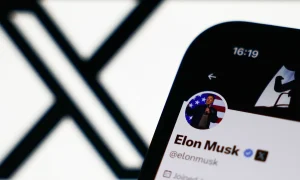
As global services went dark, Elon Muskcouldn’t resist a subtle jab, posting a two-word remark on X that instantly went viral:
𝕏 works
— Elon Musk (@elonmusk) October 20, 2025
His dry observation captured both the irony and the fragility of the moment, one in which a single cloud outage briefly exposed how dependent the world has become on Amazon’s digital infrastructure.
Beyond the technical failure, it exposed broader questions of accountability, resilience, and data governance that will shape how both public institutions and private companies approach cloud computing in the years ahead.
The failure originated in AWS’s North Virginia (US-East-1) region - a U.S. hub quietly powering thousands of UK and European systems. That detail instantly set off alarm bells for privacy lawyers.
What is data sovereignty?
Data sovereignty means that information is governed by the laws of the country where it’s stored or processed. In simple terms, if your customers’ data lives on U.S. servers, U.S. rules can apply even if your business is in London or Paris.
Professor James Davenport from the University of Bath warned that the reliance of UK banks on U.S. data centers is “worrying,” hinting at potential GDPR breaches if customer data or usage patterns were routed abroad without proper safeguards.
For a deeper look at how organisations can manage cross-border risks and maintain compliance, see How Digital Strategy Can Help Companies Be Compliant - an in-depth feature on data governance, localisation, and corporate accountability.
The Information Commissioner’s Office (ICO) may now press affected institutions for clarity on data transfer mechanisms and third-party oversight, especially under the post-Schrems II framework.
Every major AWS client signs a Service Level Agreement (SLA) guaranteeing near-constant uptime. Yet when the cloud fails, many discover that the fine print is less protective than they thought.
Can you sue AWS for downtime?
Technically yes, but in practice almost never. AWS limits its liability to minor service credits, meaning that even businesses losing millions from an outage usually have no realistic route to compensation.
Tech law barrister Dan Leckie notes that these contracts rely heavily on force majeure clauses and liability caps, insulating AWS from most financial consequences.
That imbalance of power between vendor and client, especially for banks, hospitals, and government agencies, could become the next frontier for contract reform and regulatory oversight.
When GOV.UK, Lloyds and Halifax all went dark, a more sobering question emerged: should critical national infrastructure rely on a single private network?
Under the UK’s NIS2 Directive implementation, major cloud providers already face duties around cyber-resilience and incident reporting.
Yet the outage shows how a single regional failure in the U.S. can paralyze essential services across Europe.
Cybersecurity analysts say the incident exposes a structural weakness in the internet’s backbone, raising concerns about whether governments have sufficient legal oversight of privately controlled infrastructure.
The event underscores how legal accountability for uptime and resilience remains thin, even as public services depend more heavily on corporate cloud systems.
For additional context on how EU regulations are evolving to curb big-tech dominance and protect data privacy, read How the EU Digital Markets Act Affects GDPR, which explores the intersection between competition law, platform power, and data protection.
Expect lawmakers to revisit whether hyperscale cloud companies should be regulated more like public utilities, with mandatory redundancy and transparency requirements baked into law.
Millions of homes discovered the downside of “smart” living as Alexa stopped responding, Ring cameras froze, and voice-activated lights refused to turn on.
Do consumers have rights when connected devices stop working?
Under the UK Consumer Rights Act 2015, digital products must be “fit for purpose” and delivered with “reasonable care.”
If your smart device depends on a cloud that fails, you could have grounds to demand repair, refund, or partial compensation, though enforcing it is complex.
The outage blurs the line between product defect and service disruption, an area consumer lawyers expect to become increasingly litigated as households grow more reliant on cloud connectivity for security, healthcare, and daily routines.
Beyond gaming and social media, the outage disrupted AI-powered platforms such as Perplexity AI, Smartsheet, and Xero. For businesses, that raised an unexpected compliance nightmare.
What happens if AI compliance tools go offline?
If a regulated firm’s AI system for risk or fraud monitoring fails during an outage, it may unknowingly breach legal reporting obligations. In effect, a cloud failure can cause a company to break the law without human error involved.
As the EU AI Act and UK’s emerging AI governance framework come into force, firms will need to show they can maintain operational continuity even when external models go dark.
Legal accountability for algorithmic outages could soon mirror the standards now applied to cybersecurity failures.
For in-house counsel, compliance teams, and regulatory lawyers, the AWS outage is a sharp reminder that operational resilience is a legal obligation, not just a technical one.
Organisations should ensure their contracts include clear provisions for multi-region or multi-cloud redundancy, robust cross-border data audits, and transparent incident disclosure mechanisms in line with NIS2 and GDPR standards.
Beyond contract wording, companies must also maintain offline contingencies and governance frameworks capable of sustaining critical operations during large-scale digital failures.
The broader lesson is clear: reliance on a handful of hyperscale providers creates systemic legal risk.
As regulators push for greater accountability, enterprises that proactively strengthen resilience, both technically and contractually will be best positioned to navigate the next global outage.
What caused the AWS outage in October 2025?
The outage was traced to Amazon Web Services’ North Virginia (US-East-1) region — one of the world’s busiest cloud hubs. A technical failure in that data-centre cluster disrupted core networking and storage systems, triggering cascading downtime across platforms like Snapchat, Fortnite, GOV.UK and several UK banks.
Could AWS face legal action for the outage?
In theory yes, but in practice very unlikely. AWS’s Service Level Agreements (SLAs) cap liability at limited service credits, meaning clients suffering financial losses rarely receive full compensation. However, repeated failures could attract contractual scrutiny or regulatory review under NIS2 and consumer-protection frameworks.
What is data sovereignty and why does it matter here?
Data sovereignty means digital information is subject to the laws of the country where it’s stored or processed. When UK or EU data passes through U.S. servers, it can fall under U.S. jurisdiction — raising questions about GDPR compliance and cross-border transfer safeguards.
Do consumers have rights when Alexa or Ring devices go offline?
Yes. Under the UK Consumer Rights Act 2015, digital products must be “fit for purpose” and provided with “reasonable care.” If a connected device stops working because of a third-party cloud failure, consumers may seek repair, replacement, or partial refund, though enforcement is complex.
What does Elon Musk’s reaction have to do with the outage?
As millions struggled to access online services, Elon Musk posted a two-word comment — “X works.” The viral remark underscored how dependent the internet has become on Amazon’s cloud infrastructure and highlighted the competitive and regulatory implications of such concentrated control.
How might this outage change cloud-computing law?
The incident is likely to accelerate debate on treating hyperscale cloud providers as critical infrastructure. Lawmakers may push for stricter redundancy, transparency, and accountability requirements, reshaping future contracts and compliance obligations across finance, tech, and government sectors.