Understand Your Rights. Solve Your Legal Problems


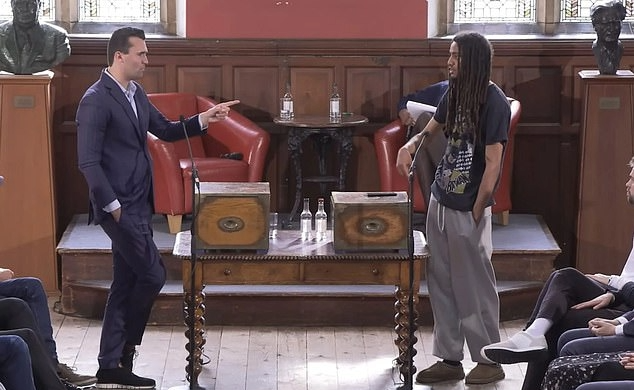
The Oxford Union president who celebrated Turning Point USA founder Charlie Kirk’s shooting is now facing removal from office this Saturday, after a no-confidence poll on his future was opened to tens of thousands of proxy voters around the world.
George Abaraonye, 20, sparked outrage last month after posting a WhatsApp message appearing to celebrate the violence against the Turning Point USA figurehead and conservative commentator. He later deleted the message after learning of Kirk’s death and admitted he had “acted poorly” without knowing the full situation.
Now, the controversy has evolved into a test case for institutional accountability and reputational governance at one of Britain’s oldest debating societies. Alumni and members argue that the Oxford Union’s leadership must decide whether freedom of expression can coexist with speech perceived as endorsing violence — and how the society’s disciplinary framework can respond when its president-elect triggers a motion of no confidence against himself.
Following reports that U.S. conservative activist and Turning Point USA founder Charlie Kirk had been shot, George Abaraonye posted a WhatsApp message that, according to campus and national outlets, included: “Charlie Kirk got shot, let’s f—ing go.” He deleted the message and later told Cherwell he had not realized at the time that Kirk had died, calling his reaction “poor judgment.”
For the Oxford Union, a 200-year-old debating society that operates independently of the university, the controversy has reignited debate about the limits of free expression and the duty of officeholders to uphold institutional neutrality. The Union’s governance framework—rooted in internal rules rather than university oversight—now faces scrutiny over whether it provides sufficient mechanisms to hold its president to account.
In an unprecedented move, Abaraonye triggered the no-confidence process himself, describing it as an act of “true accountability.” The Union’s decision to allow proxy voting for thousands of alumni worldwide raises questions about procedural fairness, constitutional authority, and electoral legitimacy under its governing documents.
Legal observers within Oxford’s student body have noted that this expansion of the electorate is “without precedent,” highlighting gaps between the Union’s traditions and its formal governance instruments. While the vote’s outcome will be symbolic, it may also set a procedural precedent for how the society handles misconduct or reputational crises in the future.
For the Oxford Union, this is not merely a reputational issue—it’s a test of leadership liability. Although the Union is a private society, its actions are subject to English civil law standards when allegations involve defamation, harassment, or incitement. Even without litigation, the incident underscores the legal tension between freedom of speech and responsible expression by officers of public-facing organizations.
If alumni or external speakers claim reputational harm from association with the remarks, the Union could theoretically face claims of breach of implied duty or reputational negligence, though such actions would be rare and difficult to prove.
This episode highlights a broader legal question: what duty of care does a private educational society owe to its members and invitees? The Union’s trustees and officers hold fiduciary responsibilities for its reputation and governance. Failure to act decisively—or transparently—could expose the organization to reputational and even fiduciary scrutiny under the Charities Act 2011, should donors or members allege mismanagement.
1. Removal and Reset:
A decisive vote against Abaraonye would affirm the Union’s capacity to self-regulate. It would also strengthen its legal standing by showing that internal governance mechanisms can address misconduct effectively.
2. Survival With Reform:
If Abaraonye remains, the Union may need to introduce a formal code of conduct, clearer social media policies, and a written disciplinary procedure to protect against future governance challenges.
3. Prolonged Division:
A contested or inconclusive result could invite external scrutiny, with pressure from alumni or media to reform the Union’s disciplinary rules and clarify accountability pathways under English association law.
Q: Does freedom of speech protect Abaraonye’s messages?
A: In principle, yes—private citizens enjoy speech rights. However, as an elected officer of a public-facing society, he is bound by institutional codes of conduct and English civil law restrictions against speech that could be construed as glorifying violence.
Saturday’s vote at the Oxford Union is no longer just about student politics—it’s about institutional governance, reputational liability, and the boundaries of free speech under organizational law.
For Abaraonye, the result will determine whether a moment of impulsive expression permanently defines his record of leadership. For the Oxford Union, it’s a live test of how 19th-century rules function in the 21st-century age of digital accountability.
1. Could the Oxford Union face legal exposure?
Potentially. If donors, speakers, or members claim reputational harm or procedural unfairness, the Union could face civil claims, though such cases are rare.
2. Is this a free speech issue or a conduct issue?
Both. It raises the legal question of how far elected officers of private institutions can express personal opinions that appear to condone violence.
3. What legal reforms could follow?
The Union may be urged to codify clearer disciplinary and election rules, aligning its procedures more closely with UK charity and association law standards.