Understand Your Rights. Solve Your Legal Problems


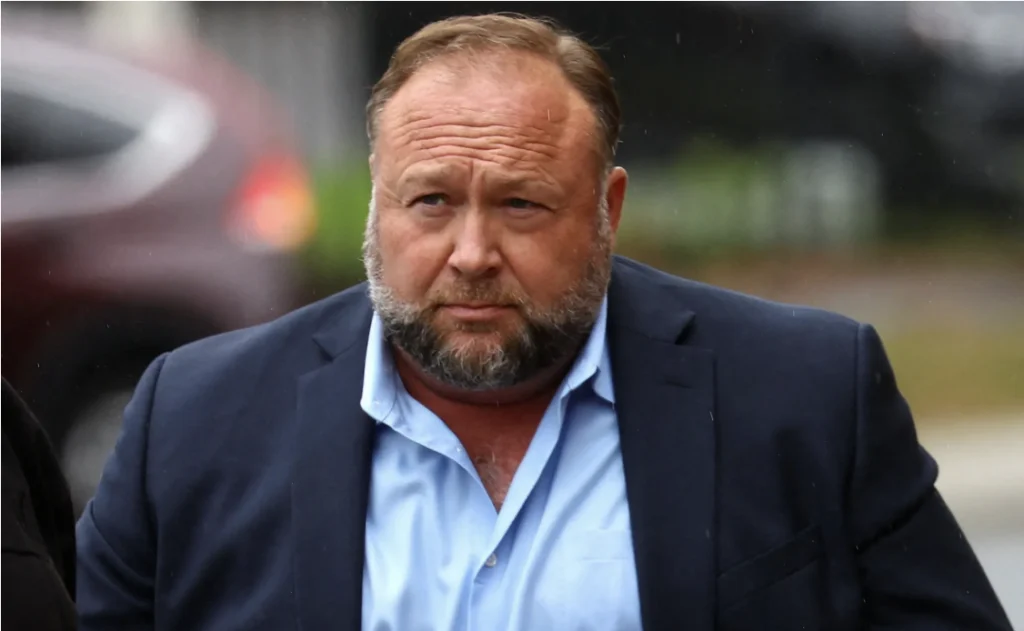
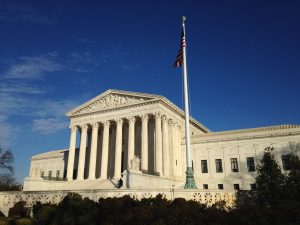
Alex Jones has petitioned the U.S. Supreme Court to pause enforcement of a staggering $1.4-1.5 billion defamation judgment so that he can appeal, while also fighting to block the forced sale of InfoWars to The Onion.
His lawyers argue that selling the platform to what he calls an “ideological adversary” would inflict irreparable harm on him and his audience even as courts have repeatedly affirmed the underlying verdict.
Jones was hit with a massive judgment in 2022 after a Connecticut court found he had defamed the families of the 2012 Sandy Hook victims by claiming the massacre was a hoax.
The ruling ordered him to pay damages and authorized the liquidation or sale of assets to satisfy the award.
Last year, The Onion
submitted the winning bid in the bankruptcy auction for InfoWars, offering $1.75 million in cash along with approximately $5 million in credit secured by the Sandy Hook families’ outstanding judgments.
However, a U.S. bankruptcy judge later declined to approve the transaction, citing procedural irregularities and uncertainty over whether the proposed sale would achieve the highest possible recovery for creditors.
In his recent emergency stay application to the U.S. Supreme Court, Jones contends that the transfer of InfoWars prior to the resolution of his appeal would cause irreparable harm, depriving him of both operational control and the ability to defend his interests effectively.
Counsel for Jones characterize him as a media defendant whose platform falls within the ambit of First Amendment protections.
They argue that upholding such an unprecedented judgment without appellate scrutiny risks creating a “chilling effect” on other journalists and commentators who report or comment on contentious public issues.
The Supreme Court is expected to review the stay motion in private conference, regardless of whether the justices ultimately agree to hear the case.
On appeal, lower courts have largely affirmed the core findings against Jones.
In December 2024, the Connecticut Appellate Court upheld nearly $1.3 billion in damages, vacating only about $150 million tied to state trade claims on the basis of extensive evidence that Jones’s false statements contributed to harassment and threats directed at the Sandy Hook families.
Separately, a Texas bankruptcy court appointed a receiver to oversee the liquidation and sale of InfoWars’ assets, further constraining Jones’s control over his media empire.
At this stage, Jones’s legal strategy appears focused on maintaining the status quo long enough to persuade the Supreme Court to intervene and potentially reconsider the underlying constitutional and procedural questions raised by his case.
To judge the merits of Jones’s request, it helps to understand how U.S. law balances free speech and defamation liability.
Defamation is a false statement of fact about a person or entity that injures their reputation.
It encompasses libel (written or published statements) and slander (spoken statements), though in modern law the distinction is somewhat blurred.
To succeed, a plaintiff usually must prove that the defendant published or otherwise communicated the statement to a third party, that it was false, and that it caused harm.
The defendant may invoke defenses such as truth, privilege, opinion, or hyperbole meaning not all statements, even harsh ones, are actionable.
Because of the First Amendment, defamation law in the U.S. is more restrictive than in many jurisdictions. Key principles:
The Supreme Court has held that libel is not exempt from constitutional constraints: speech—even by press—must satisfy certain standards before defamation liability may attach.
In the landmark Gertz v. Robert Welch (1974), the Court allowed states to set defamation standards for private individuals so long as liability is not imposed without fault (i.e. at least negligence).
But for public figures or matters of public concern, plaintiffs must prove “actual malice” that the defendant knew the statement was false or acted with reckless disregard for truth.
That standard protects robust debate on public issues by requiring higher proof when speech involves matters of public interest.
Courts also limit injunctive relief against speech, plaintiffs must usually rely on monetary damages rather than prior restraints — unless the speech crosses a higher threshold.
Thus, when public figures or controversial commentators are sued for defamation, they face both balancing tests and heightened burdens.
Jones’s petition to the Supreme Court represents far more than a procedural delay. If the stay is granted, he would retain control of InfoWars pending appeal, preventing its liquidation and preserving his ability to challenge the underlying judgment.
If denied, the receivership and asset sale could proceed immediately, rendering his appeal largely moot.
Counsel for the Sandy Hook families oppose the stay, arguing that the verdict has already withstood multiple levels of appellate scrutiny and rests on extensive factual findings of harassment, threats, and coordinated defamation tied to Jones’s statements.
Should the Court decline to intervene, Jones is likely to permanently lose control of InfoWars, effectively ending his broadcasting operations.
Conversely, if the justices agree to hear the case and ultimately narrow the scope of the defamation ruling, the decision could reshape the boundaries of First Amendment protection—particularly for media figures who monetize controversial or conspiratorial speech.
What is Alex Jones asking the U.S. Supreme Court to do?
Jones is requesting that the Supreme Court issue a stay to pause enforcement of the $1.5 billion defamation judgment against him and prevent the sale of InfoWars while his appeal is pending.
Why does Alex Jones claim the ruling threatens free speech?
His legal team argues that the unprecedented damages and the closure of his platform could have a “chilling effect” on other journalists or commentators who discuss politically sensitive issues.
How have lower courts ruled so far?
Appellate courts in Connecticut and Texas have largely upheld the defamation judgments, concluding that Jones’s false statements caused direct harm and were not protected by the First Amendment.
What happens if the Supreme Court refuses to intervene?
If the Court declines to grant a stay or hear the case, control of InfoWars will likely pass to a court-appointed receiver, effectively ending Jones’s ownership and influence over the platform.
Could this case change U.S. defamation law?
Potentially. If the Supreme Court accepts review and redefines how the First Amendment applies to high-profile or controversial media defendants, it could reshape future defamation litigation across the country.