Diesel Brothers Star Arrested After Defying Clean Air Act Judgment
David “Heavy D” Sparks best known for transforming diesel trucks on Discovery Channel’s hit series Diesel Brothers — was arrested in Salt Lake City this week after a federal judge found him in contempt of court for failing to pay more than $843,000 in environmental fines.
The case, which began as a Clean Air Act enforcement action, now raises fundamental questions about how far courts can go to compel compliance in civil disputes.
An Arrest Years in the Making
David Sparks’ problems didn’t start overnight.
The Utah entrepreneur and television personality first landed in legal trouble in 2017, when the nonprofit group Utah Physicians for a Healthy Environment sued him and several associates for allegedly modifying diesel trucks to disable pollution controls - a violation of the Clean Air Act, one of the United States’ most powerful environmental statutes.
Environmental enforcement actions like this often mirror the complexities of large-scale contamination and toxic-tort litigation.
In a recent feature on our site, 3 Legal Pitfalls in Environmental Contamination Lawsuits we explored how proving liability in environmental cases can be particularly challenging when multiple defendants, overlapping federal and state statutes, and technical expert evidence all converge.
The Diesel Brothers case is remarkable precisely because citizen plaintiffs, not federal regulators, managed to secure a decisive injunction and a substantial financial judgment against a national television figure - a rare outcome that highlights how powerful citizen suits can be when the law is on their side.

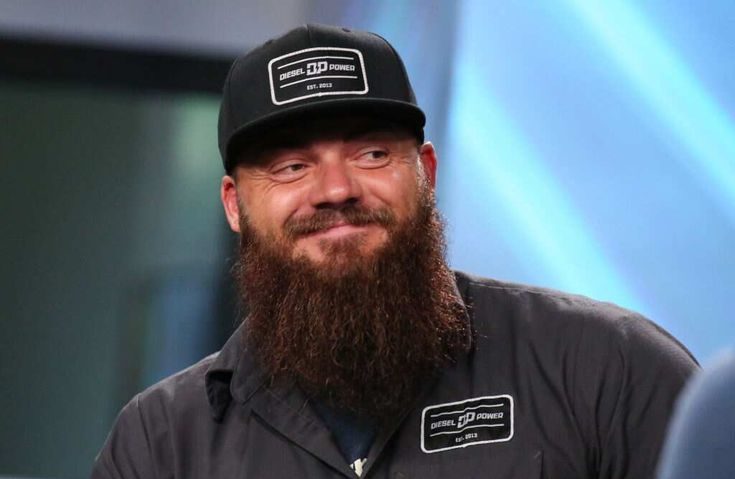
David “Heavy D” Sparks, co-host of Diesel Brothers, during a shoot featuring his custom-built Goliath diesel truck. (Photo: @heavydsparks)
By 2020, federal judge Robert J. Shelby ruled that Sparks and his co-defendants had violated the Clean Air Act hundreds of times.
The court issued a permanent injunction banning them from further modifications and levied roughly $850,000 in fines and fees, sending a clear message: environmental compliance applies to everyone, including reality stars who make a living pushing limits.
On October 2, 2025, Judge Shelby issued a contempt order and an arrest warrant, noting that Sparks had “repeatedly and willfully violated” previous orders.
Five days later, federal marshals took Sparks into custody in Salt Lake City.
“No Crime Has Been Charged,” Says His Attorney
Sparks’ attorney, Cole Cannon, insists that his client is being unfairly portrayed as a criminal.
“Mr. Sparks was not arrested for a crime,” Cannon told People Magazine earlier this week.
“No crime has been alleged or charged. The arrest stems from a civil matter involving zealous environmental attorneys seeking collection of attorney’s fees.”
It’s true, Sparks has not been charged with any offense under criminal law.
Instead, his arrest falls under a rarely used power of the federal judiciary: civil contempt.
Unlike criminal contempt, which punishes past behavior, civil contempt aims to force compliance. In other words, the court is saying: Do what you were ordered to do, or you will stay in custody until you do.
Civil Contempt: When Defiance Meets Judicial Authority
The arrest of David Sparks wasn’t criminal in nature, but it was still serious. His detention stems from a civil contempt order, a judicial tool used to compel obedience rather than to punish.
Under 18 U.S.C. § 401, federal courts have the inherent authority to hold a party in contempt if they “disobey or resist” a lawful order.
Unlike criminal charges, which focus on past misconduct, civil contempt is forward-looking — its purpose is to make someone comply.
The individual effectively “holds the keys to their own jail cell,” because they can secure release by doing what the court ordered, such as paying fines or fulfilling other obligations.
As the U.S. Supreme Court explained in Shillitani v. United States, 384 U.S. 364 (1966), civil contempt “is remedial, and for the benefit of the complainant.” Once the contemnor complies, the sanction must end.
In Sparks’ case, Judge Robert J. Shelby’s order was just that: coercive. The court’s message was unmistakable — comply with the prior judgment, pay the sums owed, and demonstrate good faith, or remain in custody until compliance is achieved.
Sparks’ arrest shows how even civil proceedings can lead to detention when defendants repeatedly ignore binding orders.
We’ve seen similar questions of judicial authority arise in other high-profile contempt proceedings, such as Rudy Giuliani’s ongoing New York case, where the former mayor claimed memory lapses while facing a civil contempt finding over financial disclosure failures.
Though the circumstances differ, both cases illustrate how courts balance due process with enforcement — and how contempt powers, including fines, asset freezes, or temporary detention, become essential when compliance breaks down.
The broader lesson for legal practitioners and business owners is clear: once a court issues an injunction or monetary order, compliance isn’t optional.
Whether it’s a celebrity defendant in an environmental case or a political figure resisting court directives, the judiciary’s contempt power ensures the rule of law doesn’t depend on voluntary participation.
The Law Behind the Case: Citizen Enforcement Under the Clean Air Act
The Clean Air Act (42 U.S.C. § 7401 et seq.) allows private citizens and organizations to file lawsuits against individuals or companies believed to be violating emissions standards if regulators fail to act.
These “citizen suits” have become a cornerstone of environmental enforcement, especially when government agencies lack resources or political will.
In Utah Physicians for a Healthy Environment v. Diesel Brothers, the plaintiffs used this mechanism to target what they described as a public health threat.
Expert testimony presented in the case showed that vehicle modifications promoted on the show released up to 36 times more pollutants than allowed under federal law, contributing to respiratory illnesses and worsening air quality across Salt Lake County. (Salt Lake Tribune, Feb. 2020)
The court’s decision not only fined Sparks and his co-defendants but also permanently barred them from engaging in any future emissions tampering.
When Sparks allegedly continued selling or promoting diesel modifications, the plaintiffs returned to court setting off the contempt proceedings that culminated in this week’s arrest.
A Clash Between Celebrity Image and Environmental Law
The Diesel Brothers brand was built on outlaw flair oversized trucks, roaring engines, and rebellious humor. But that same persona may have clashed with the strict liability framework of U.S. environmental law.
Unlike negligence cases, Clean Air Act violations do not require intent. Once a prohibited modification is made or sold, liability is automatic.
For public figures like Sparks, the reputational fallout can be as damaging as the legal one.
His YouTube channel, which boasts more than 4 million subscribers, has continued to post content unrelated to the lawsuit.
But legal commentators suggest that ongoing contempt findings could harm future licensing, partnerships, or brand deals particularly with companies sensitive to sustainability optics.
Lessons for Business Owners and Influencers
For entrepreneurs operating in regulated sectors, Sparks’ case serves as a cautionary tale: compliance orders are binding, even if the case feels political or excessive.
Once a final judgment is entered, ignoring it can transform a financial dispute into a deprivation of liberty.
Corporate counsel often warn clients that failing to pay ordered damages or attorney’s fees can trigger the “coercive side” of civil law — especially in federal environmental cases where courts view public health as a matter of ongoing harm.
“Civil contempt is the last resort,” says environmental law professor Dana Remington of the University of Utah (interviewed via faculty press release, Oct. 2025).
“But when a defendant repeatedly ignores orders, the judiciary will act. It’s not about punishment, it’s about restoring the rule of law.”
Key Takeaway
Civil contempt may not be criminal, but it is far from harmless. Under U.S. law, when an individual repeatedly ignores or defies a federal court order, the court has the power to compel compliance through detention not as punishment, but as a coercive measure.
Unlike criminal prosecution, where the state seeks to penalize wrongdoing, civil contempt is designed to force action: pay the fines, comply with the injunction, or stay behind bars until you do.
That distinction, while subtle, carries profound consequences. Someone like David “Heavy D” Sparks hasn’t been accused of a new offense — he’s being reminded that no one, celebrity or not, is beyond the reach of a federal judgment.
His case shows that even in civil proceedings, judicial authority is not symbolic; it has real, enforceable power.
The Diesel Brothers saga is a striking reminder that environmental enforcement can reach well beyond corporate fines and reputational damage.
When a court issues an injunction, compliance isn’t optional, it’s legally binding. Failure to honor it can result in a very tangible loss of freedom.
People Also Ask
Why was Diesel Brothers star David “Heavy D” Sparks arrested?
David Sparks was arrested after a federal judge in Utah found him in civil contempt for refusing to comply with a prior court order under the Clean Air Act. He owes more than $843,000 in unpaid fines and attorney fees from a 2017 environmental lawsuit filed by Utah Physicians for a Healthy Environment.
Is civil contempt a criminal charge?
No. Civil contempt isn’t a criminal offense — it’s a coercive tool courts use to enforce compliance with their orders. A person held in civil contempt can avoid or end custody by meeting the court’s conditions, such as paying fines or performing required actions.
Can someone be jailed for not paying court-ordered fines in a civil case?
Yes, but only under limited circumstances. Federal judges may order civil detention when a person willfully refuses to comply with a court order. The goal isn’t punishment but compliance — once the person fulfills the order, they must be released.
What did the Diesel Brothers environmental case involve?
The case accused Sparks and his associates of violating the Clean Air Act by modifying diesel trucks to disable emissions systems — a practice known as “rolling coal.” In 2020, Judge Robert J. Shelby ruled against them, issuing an injunction and fines totaling nearly $850,000.
What does the Clean Air Act say about modifying vehicles?
The Clean Air Act (42 U.S.C. § 7522) prohibits tampering with or removing emissions-control equipment on vehicles. Both selling and installing “defeat devices” — hardware or software that alters emissions — are federal offenses subject to civil penalties.
Could David Sparks face additional legal trouble?
Possibly, if he continues to ignore the court’s orders. Persistent defiance could escalate the contempt proceedings or result in new injunctions. However, no criminal charges have been filed, and his attorney maintains the matter is purely civil.