Understand Your Rights. Solve Your Legal Problems



California is a global economic powerhouse, home to millions of workers and consumers who drive innovation, industry, and commerce.
This high-octane environment, however, comes with a critical legal responsibility: ensuring safe products, protective workplace standards, and strong legal recourse when safety measures fail.
But when things inevitably go wrong, whether it’s a defective tool on a bustling construction site, a negligently maintained piece of industrial machinery, or a recalled automobile part on a major freeway, the fallout can be devastating and life-changing.
Understanding the intricate mechanics of product liability and workplace injury claims in California is not merely a matter of legal curiosity; it is a critical necessity for protecting your health, securing your finances, and asserting your legal rights in one of the most dynamic legal environments in the United States.
Below, we embark on a comprehensive, in-depth exploration of the major types of cases, ranging from workers’ compensation disputes and third-party negligence claims to complex defective product lawsuits.
We will not only break down how California law addresses these scenarios but also provide the essential context for why the Golden State stands out as a beacon of strong consumer and worker protection.
For a broad overview of the state’s current legal landscape regarding compensation for accident victims, a comprehensive guide to California Personal Injury Law in 2025 offers additional insight.
The immediate aftermath of a workplace injury in California typically leads the injured employee down one of two distinct legal paths. The most common and direct route is the Workers’ Compensation System.
California’s workers’ compensation system is designed as a mandatory, no-fault insurance program.
This means that an injured employee is generally entitled to coverage for medical care and partial wage replacement (Temporary Disability benefits) without having to prove that the employer was negligent or at fault for the accident.
The trade-off for this guaranteed, streamlined recovery is a limitation on the types of damages available.
For a comprehensive overview of the system and its benefits, the official California Division of Workers' Compensation website is the authoritative source.
Workers’ comp benefits are specifically restricted to:
Crucially, workers’ comp benefits explicitly exclude non-economic damages such as compensation for pain and suffering, emotional distress, and loss of consortium. This limitation is the central reason why many injured workers seek out alternative legal recourse.
In a typical workplace injury scenario, the employer is granted immunity from civil lawsuits by the employee under the "exclusive remedy" rule of workers’ compensation.
This rule generally bars the employee from suing the employer for negligence.
However, there are limited, yet crucial, exceptions to this immunity where an employee can sue their own employer:
Knowing whether your case qualifies for a lawsuit beyond workers’ comp is one of the most important and complex legal questions an injured worker can ask, and it is here that the concept of the Third-Party Claim becomes paramount.
When an employee is injured on the job, and the cause of that injury can be attributed, in whole or in part, to the negligence or defectiveness of someone other than their direct employer, that worker may have a viable third-party personal injury claim.
This is a critical legal maneuver because it allows the injured worker to bypass the limitations of workers’ compensation and pursue a full spectrum of common law damages.
This right of action against a third party is explicitly reserved to the employee under California Labor Code § 3852.
A third party is any entity or individual, other than the injured employee and their employer, that contributed to the accident. Examples are manifold and occur across all industries:
The central advantage of a third-party claim is the availability of full compensation, which is not subject to the caps or limitations of workers’ compensation. Compensation recovered in a successful third-party lawsuit can include:
The ability to recover these non-economic and full economic damages makes the difference between a life of financial strain and one of security for a severely injured worker.
California has cultivated one of the strongest and most protective legal environments for consumers in the United States, particularly regarding product liability, as codified in the California Civil Jury Instructions (CACI) Series 1200.
This area of law holds manufacturers and sellers strictly accountable when defective products harm consumers.
Unlike most negligence lawsuits, a plaintiff in a strict product liability case in California often does not need to prove that the manufacturer acted carelessly; they only need to prove that the product was defective and that the defect caused the injury.
The foundation of product liability rests on three major categories of defects:
A design defect exists when the product is manufactured exactly as the designer intended, but the design itself renders the product inherently dangerous. The entire product line, not just a single item, is flawed.
In California, a plaintiff can prove a design defect using one of two tests:
Examples include a car model with a roof that consistently crushes in rollovers, or a power tool lacking necessary internal safety mechanisms.
A manufacturing defect occurs when an error, mistake, or anomaly arises during the assembly, production, or testing phase.
In this case, the product that caused the injury deviates from the manufacturer’s own intended specifications and from the other units in the product line.
This is the most straightforward form of strict liability. If a batch of headache medicine is accidentally contaminated with a toxic chemical, or if a single ladder rung breaks because of an improperly welded joint, the product is defective.
The plaintiff only needs to show the single item was defective when it left the manufacturer’s control.
A warning defect, often called a "failure to warn," occurs when a product carries inherent, non-obvious risks that the manufacturer knew or should have known about, and the manufacturer failed to provide adequate instructions or warnings to the user.
A manufacturer has a continuing duty to warn consumers, even after the product has been sold, if they become aware of a post-sale danger.
This category is particularly important for products like prescription drugs, industrial chemicals, or complex machinery.
The warning must be conspicuous, easily understandable, and must clearly communicate the nature and magnitude of the risk.
In California, an injured consumer can pursue product liability damages under one or more of three theories:
California courts frequently handle specialized categories of product liability that involve unique regulatory and scientific complexity.
These high-stakes cases often require deep expertise in fields far beyond general manufacturing, compelling the legal system to address issues like federal preemption, post-market surveillance, and the learned intermediary doctrine.
The state is a nexus for medical technology and healthcare, leading to a high volume of complex litigation involving defective medical devices.
These claims can involve products ranging from permanent implants like metal-on-metal hip replacements, transvaginal surgical mesh, and pacemakers to temporary devices such as defective insulin pumps or surgical tools.
Injured patients can sue for a multitude of complications, including:
Because medical device cases involve interactions with the U.S. Food and Drug Administration (FDA) approval processes (particularly the 510(k) "clearance" path for devices similar to existing ones), these lawsuits tend to be highly complex.
They require legal teams skilled in both FDA regulations and California’s nuanced product liability and medical malpractice standards.
The concept of "preemption," a defense where a manufacturer argues federal law prevents state-level claims, is often a major battleground in these cases.
California's vast network of highways and massive driving population make it a focal point for defective automobile part litigation and vehicle recalls.
From high-profile, nationwide failures like the Takata airbag debacle (which involved shrapnel-like injuries from exploding inflators) to more common issues like faulty brakes, defective ignition switches, seat belts, or steering systems, automakers and parts manufacturers can be held strictly liable if their defects lead to injury or death.
Beyond the general product liability framework, California consumers have additional, powerful rights:
Compensation in these auto cases can cover the cost of vehicle repairs or replacement, extensive medical costs, lost wages, and, tragically, wrongful death damages in fatal accidents.
The dangers in product liability are not limited to industrial sites or hospital operating rooms; they exist in every home.
Everyday household products, including cleaning chemicals, power tools, children's furniture, toys, and recreational equipment can cause catastrophic injuries if defectively designed, manufactured, or labeled.
The application of strict liability is a huge advantage for consumers in these cases. An injured consumer does not need to delve into the manufacturer’s internal quality control records or prove that the company was careless; they only need to show that the product contained a defect and that this defect was a substantial factor in causing the harm.
This strong standard is a deliberate mechanism by California’s legislature and courts to place the burden of injury from defective products on the manufacturer who profits from them, rather than the innocent consumer.
California workers and residents have historically been at the forefront of toxic exposure litigation due to the state's industrial history, large agricultural sector, and dense urban development.
These cases, often characterized by long latency periods between exposure and the onset of illness, are some of the most medically and legally complex claims.
Asbestos lawsuits remain common, especially due to the prevalence of mesothelioma (a rare cancer almost exclusively caused by asbestos exposure) and lung cancer.
Because the symptoms of these diseases can take decades to appear, lawsuits often involve companies that stopped using asbestos materials many years ago.
California Department of Public Health’s asbestos program provides guidance on the risks of asbestos exposure, while the courts allow plaintiffs to seek compensation from any company that manufactured, distributed, or supplied asbestos-containing products to which the worker or consumer was exposed.
Cases involving exposure to industrial chemicals, solvents, pesticides (particularly in the Central Valley’s agricultural areas), and industrial waste often target employers, property owners, or the chemical manufacturers themselves.
These lawsuits require sophisticated expert testimony from toxicologists and medical specialists to establish the causal link between the chemical exposure and the resulting illness, which can range from neurological damage to cancer.
Mold litigation frequently arises in the context of rental housing, schools, and workplaces where landlords or employers fail to remediate water intrusions and resulting mold growth.
When black mold (like Stachybotrys chartarum) or other toxic molds are allowed to flourish, they can cause respiratory problems, severe allergic reactions, and potentially long-term health issues.
These cases often blend personal injury claims with breaches of habitability and negligence.
Toxic exposure lawsuits can result in substantial compensation, covering decades of past and future medical expenses, loss of earning capacity, pain and suffering, and loss of quality of life, due to the devastating and often terminal nature of the illnesses they cause.
While workers’ compensation covers most workplace accidents, certain high-risk industries generate a disproportionate number of third-party product liability claims.
Construction Equipment Accidents in California show that construction remains one of California’s most vibrant yet dangerous industries. Accidents involving heavy machinery are a frequent source of catastrophic injury..
Equipment like cranes, scaffolding, bulldozers, excavators, and forklifts can cause crushing injuries, amputations, or fatal falls when they are poorly maintained, defectively designed, or manufactured with substandard components.
If a worker is injured because a crane boom snapped due to a metal fatigue flaw (a manufacturing defect), or because a forklift lacked an industry-standard safety guard (a design defect), that worker can pursue a product liability claim against the equipment manufacturer or supplier, thereby circumventing the limited benefits of workers’ compensation.
Furthermore, they may sue a subcontractor who negligently maintained the equipment or failed to secure it.
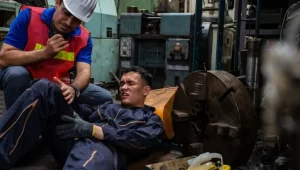
Factories, warehouses, and workshops rely on high-speed, high-power industrial machinery and power tools.
Defective equipment such as improperly guarded saws, stamping presses, grinders, conveyor systems, or automated welding machines, can lead to horrific injuries, including amputations, severe burns, and crushing trauma.
When a worker’s injury is caused by a machine that was either sold without necessary safety interlocks or guards (a design/warning defect) or was improperly assembled (a manufacturing defect), the case shifts immediately into the realm of product liability law.
The injured victim may seek recovery from multiple defendants, including the equipment manufacturer, the component part manufacturer, and the distributor or seller, maximizing the chances of recovering full damages.
When a defective product, be it a dangerous prescription drug, a mass-recalled automobile part, or a consumer electronic device with a fire hazard, harms thousands of consumers across the state or nation, the judicial system often consolidates these individual claims.
In California, this consolidation can take the form of either a state-level class action or, more commonly for national products, participation in federal Multi-District Litigation (MDL).
For a detailed overview of how these cases work and the laws governing defective product claims in the state, see California Class Actions for Defective Products.
A class action allows a large group of people with similar injuries caused by the same product to combine their claims into a single lawsuit, represented by a few named plaintiffs. This system offers significant advantages:
While similar, a mass tort (often managed as an MDL) differs from a class action. In a class action, a single verdict or settlement resolves all claims. In an MDL mass tort, claims are consolidated only for pre-trial discovery and motions; if they are not settled, they are ultimately sent back to their home courts for individual trials.
This structure is often preferred for personal injury claims (like those involving drugs or medical devices) because each victim’s injury and resulting damages are unique, requiring individual damage assessments.
California's legal infrastructure and experienced judiciary make it a frequent venue for overseeing and administering these large-scale mass product liability cases, ensuring justice can be served even against the largest defendants.
California law provides some of the broadest and strongest protections in the country for people injured by defective products or unsafe workplaces.
The state’s commitment to consumer protection, codified by its strict liability standard, and its intricate framework for workplace injury claims allowing for both guaranteed workers’ comp and, where applicable, full third-party personal injury recovery offers multiple, robust paths to justice.
Whether you are an employee hurt by defective equipment on the job, a patient harmed by a faulty medical device, a driver injured by a recalled auto part, or a resident suffering from toxic exposure, it is imperative to understand that your legal journey may not be limited to a single avenue of recovery.
The intersection of workers’ compensation and product liability claims, in particular, can be a complex but highly rewarding legal territory.
In a state defined by dynamism and risk, the law stands as an essential safeguard, demanding accountability from manufacturers and employers and ensuring that innocent victims have the legal and financial means to rebuild their lives.
The key takeaway remains clear: pursuing the right legal claim, whether through workers’ comp, a personal injury lawsuit, a product liability action, or a mass tort is crucial to securing the comprehensive compensation you deserve.
How long do I have to file a workplace injury claim in California?
Most workplace injury claims fall under the workers’ compensation system, which requires reporting the injury within 30 days and filing a claim within one year. For third-party lawsuits or product liability claims, California generally applies a two-year statute of limitations from the date of injury.
What is the difference between workers’ comp and a personal injury lawsuit in California?
Workers’ comp provides medical care and partial wage replacement regardless of fault but excludes pain and suffering. A personal injury lawsuit, often against a third party, allows for full compensation, including non-economic damages like emotional distress and loss of consortium.
Can I sue my employer directly for a workplace injury in California?
Generally, no. The workers’ comp “exclusive remedy” rule protects employers from civil lawsuits. However, exceptions exist for cases involving employer assault, fraudulent concealment of an injury, or knowingly removing safety devices.
What qualifies as a defective product under California law?
Defective products fall into three categories: design defects, manufacturing defects, and failure-to-warn (labeling) defects. California applies strict liability, meaning you only need to prove the defect existed and caused your injury, not that the manufacturer was negligent.
What are examples of toxic exposure lawsuits in California?
Common toxic exposure cases include asbestos-related illnesses (like mesothelioma), chemical or pesticide exposure in agricultural and industrial settings, and mold-related health issues in homes, schools, or workplaces.
Can Californians join class action lawsuits for defective products?
Yes. California frequently consolidates large-scale claims into class actions or joins national Multi-District Litigation (MDL) involving defective drugs, auto parts, or consumer electronics. This allows victims to pool resources and pursue compensation more effectively.