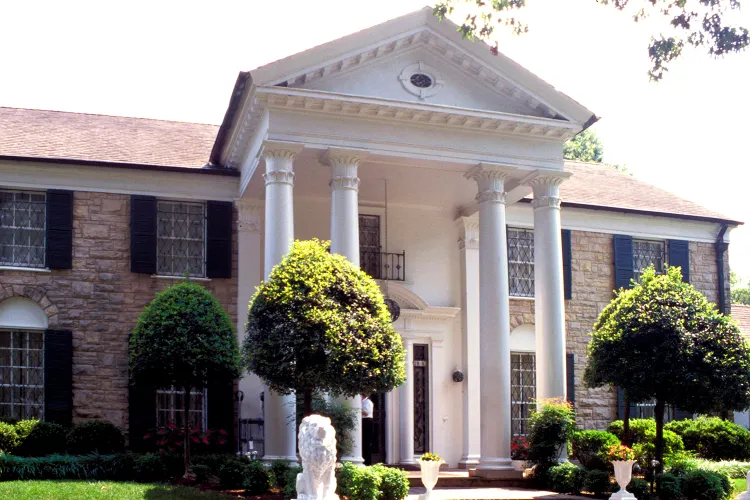
Missouri Woman Sentenced for Elaborate Graceland Fraud Scheme
Lisa Jeanine Findley attempted to sell Elvis Presley’s iconic Memphis estate using forged documents and a fake company.
Memphis, Tenn. — Sept. 24, 2025 — A Missouri woman who attempted to orchestrate a multimillion-dollar sale of Elvis Presley’s Graceland estate has been sentenced to federal prison.
Lisa Jeanine Findley, 54, of Kimberling City, Mo., received four years and nine months behind bars, plus three years of probation, after pleading guilty to mail fraud earlier this year.
U.S. District Judge John T. Fowlkes Jr. described the plot as a “highly sophisticated scheme to defraud.” Findley declined to speak at her sentencing.
The Graceland Scam
According to federal prosecutors, Findley fabricated documents claiming that Lisa Marie Presley — Elvis’s only child — had used Graceland as collateral for a $3.8 million loan in 2018.
Operating under aliases, Findley posed as a fictitious lender called Naussany Investments & Private Lending LLC and later claimed Lisa Marie defaulted on the loan before her death in 2023. She then attempted to force the Presley family to settle for $2.85 million.
As part of the deception, Findley published a public notice in the Memphis Commercial Appeal announcing that Graceland would be auctioned in May 2024.

Elvis Presley outside Graceland, the Memphis estate he purchased in 1957 and lived in until his death in 1977.
Presley Family Pushback
The Presley family swiftly took legal action in Tennessee state court to block the sale. Riley Keough, Elvis’s granddaughter and heir to Graceland, denounced the claims as “fraudulent and unenforceable,” while Priscilla Presley publicly called the sale attempt a scam.
A judge halted the auction just one day before it was scheduled, and Naussany Investments dropped its claim shortly afterward.
Shifting Blame
Once the fraud collapsed and attracted national media attention, Findley attempted to deflect responsibility by falsely blaming the scheme on an alleged Nigerian identity thief. Federal investigators later confirmed she was behind the documents.
Findley pleaded guilty to mail fraud in February 2025. A second charge of aggravated identity theft was dropped as part of a plea agreement, significantly reducing her potential prison time from a maximum of 20 years.
Criminal Law Lessons
Legal experts say the case is a stark reminder of how criminal law applies not only to violent crimes but also to white-collar schemes involving forgery, identity theft, and fraud. This prosecution underscores how cultural landmarks can be targeted and how courts step in to protect both historic property and families’ legal rights.
Where Personal Injury and Fraud Intersect
While this case was prosecuted under fraud statutes, it also highlights how victims of schemes may seek civil remedies under personal injury law. In Tennessee and elsewhere, personal injury doesn’t only apply to physical harm — it can also encompass emotional distress, reputational damage, and financial loss caused by another party’s misconduct. For heirs like Riley Keough, the attempt to seize Graceland wasn’t just a financial threat; it represented an emotional injury tied to her family’s history.
Graceland’s Legacy
Purchased by Elvis Presley in 1957 for $102,500, Graceland has since become one of the most visited private homes in the United States, second only to the White House. Elvis lived there until his death in 1977, and the estate opened to the public in 1982.
Today, Graceland is both a museum and a shrine to Presley’s enduring legacy. Elvis, his parents Vernon and Gladys Presley, grandmother Minnie Mae Presley, daughter Lisa Marie, and grandson Benjamin Keough are all buried on the grounds.
A Reminder of Cultural Value
Prosecutors described Findley’s fraud as not only a financial crime but an attack on a national landmark. “This was a brazen attempt to exploit one of America’s most cherished cultural sites for personal gain,” said Principal Deputy Assistant Attorney General Nicole M. Argentieri.
For fans and the Presley family alike, the sentencing closes a bizarre chapter in the long history of Graceland — reaffirming that, nearly 70 years after Elvis purchased it, the estate remains firmly in the hands of his descendants.