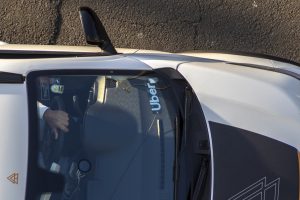
Rideshare Accidents: Uber & Lyft Liability in California
In California, the ride-hailing revolution has made getting around easier than ever. But when convenience turns into a crisis - a collision on a busy freeway or a sudden stop at an intersection, the aftermath is anything but simple.
For legal professionals and their clients, a rideshare accident is not just another car crash; it’s a modern legal challenge with its own set of rules. The reason?
Unlike traditional cab companies, rideshare giants like Uber and Lyft classify their drivers as independent contractors, a designation that has carved out a unique and often confusing path for liability and insurance claims.
This isn't a simple case of one car hitting another. It's a deep dive into a tiered insurance system, an exercise in proving nuanced negligence, and a strategic battle against well-funded corporations.
To successfully represent a client, you must understand the rules of this new game.
The Insurance Puzzle: A Three-Tiered System
The legal framework governing rideshare insurance in California is a multi-layered one, defined by the driver's "app status" at the exact moment of impact. It’s the first question to ask and the most critical factor in determining who pays for the damages.
California Vehicle & Traffic Accident Claims
- Period 0: The Driver Is Offline. If the rideshare driver is not logged into the app, their personal car insurance is the sole source of coverage. This is a standard California Vehicle & Traffic Accident Claims case. The rideshare company is not liable, and the claim proceeds as a typical car accident, governed by the same principles of fault and negligence.
- Period 1: The App Is On, Waiting for a Match. This is the grey area - a period of limited coverage. The moment a driver logs into the rideshare app and waits for a ride request, a modest policy from the rideshare company activates. However, this policy is secondary to the driver's personal insurance. It provides up to $50,000 in bodily injury liability per person, $100,000 per accident, and $30,000 for property damage. This is often woefully inadequate for serious injuries and highlights a critical gap that a skilled attorney must navigate.
- Period 2 & 3: En Route or on a Trip. This is where the protection is most robust. Once a driver accepts a ride request and is en route to pick up a passenger, or when a passenger is in the vehicle, a $1 million commercial insurance policy takes over as the primary coverage. This substantial policy is a game-changer, covering not just the passengers but also other drivers, pedestrians, and cyclists. It also includes a robust $1 million in Uninsured/Underinsured Motorist (UM/UIM) coverage, a crucial safety net if the at-fault driver has no or limited insurance. The specifics of these insurance requirements are regulated by the state, and a full understanding can be found on the California Department of Insurance's website.
Establishing Fault: More Than Just the Crash
California's legal system, rooted in California Car Accident Laws: Fault, Insurance, and Compensation, is based on "pure comparative negligence."
This doctrine allows for the apportionment of fault among multiple parties, which is a frequent occurrence in rideshare cases. Even if a client is found partially at fault, they can still recover damages, albeit in a reduced amount.
This makes a meticulous investigation a necessity, as every percentage point of fault can impact the final compensation. For a complete understanding of the legal codes that govern these situations, refer to the California Legislative Information's official Vehicle Code.
Liability in these cases can extend far beyond the rideshare driver. A thorough investigation might reveal:
- Driver Negligence: This is the most common cause. A rideshare driver can be held liable for standard negligence, such as speeding, reckless lane changes, or failing to yield.
- Distracted Driving: A rideshare driver's use of a smartphone to navigate or interact with the app is a common source of negligence. These cases fall squarely under Distracted Driving Cases in California: The Role of Cell Phones.
- Other At-Fault Parties: The rideshare driver might be a victim themselves. The responsible party could be a truck driver (leading to Truck Accident Claims in California: Complex Liability Issues), a motorcyclist (covered by Motorcycle Accidents in California: Legal Rights of Riders), or a vulnerable road user. Collisions involving pedestrians and cyclists are particularly common, bringing to light the complexities of Pedestrian Accidents in California: What Victims Should Know and Bicycle Accident Lawsuits in California: Shared Road Responsibilities.
- Extreme Negligence: If the at-fault driver was intoxicated, the case becomes a Drunk Driving Accident Lawsuits in California. If they fled the scene, it becomes a Hit-and-Run Accidents in California: Civil and Criminal Remedies case, where the rideshare company’s UM/UIM policy can be a powerful tool for your client.
- Government Entities: On rare occasions, a rideshare vehicle may collide with public transportation. Suing a government entity for a Public Transportation Accidents: Suing a Government Agency in California introduces unique procedural rules and shorter deadlines.
When to Sue Uber or Lyft Directly
While the primary claim is typically against the driver's insurance, a direct lawsuit against the rideshare company is an option in specific, limited circumstances.
This requires proving corporate negligence, a high bar to clear. Examples include:
- Negligent Hiring: Proving the company knew or should have known a driver had a history of dangerous behavior but hired them anyway.
- Negligent Supervision: Showing the company’s internal policies or lack of oversight directly contributed to the accident.
- App Malfunction: Demonstrating that a defect in the rideshare app itself, such as a faulty GPS, caused the collision.
It's a challenging legal battle, given the independent contractor classification and arbitration clauses, but not an impossible one.
The First 72 Hours: Essential Steps for Your Client
The actions a client takes immediately following a crash are foundational to their legal claim. Advise them to:
- Prioritize Safety: Move to a safe location, if possible, and check for injuries.
- Call 911: A police report is invaluable, as is medical documentation.
- Document the Scene: Use a smartphone to photograph and video the vehicles, damage, and injuries.
- Gather Key Information: Secure contact and insurance information from all involved parties. Crucially, your client must confirm the rideshare driver’s app status at the time of the crash.
- Seek Medical Care: Injuries like whiplash or concussions may not be immediately apparent. A professional medical evaluation establishes a clear link between the crash and the injuries.
- Contact Your Firm: Advise them not to give a recorded statement to any insurance company without legal counsel. For additional resources and information on driver and vehicle regulations, the California Department of Motor Vehicles (DMV) website is an excellent resource.
Maximizing Damages and Beating the Clock
Victims of rideshare accidents can pursue compensation for a wide range of damages. This includes economic damages like medical expenses, lost wages, and lost future earning capacity.
It also encompasses non-economic damages, such as pain and suffering and emotional distress. In rare cases of gross negligence, punitive damages may be awarded to punish the at-fault party.
The clock starts ticking the moment the accident occurs.
In California, the statute of limitations for a personal injury claim is generally two years from the date of the accident.
This window can be even shorter as little as six months, if a government entity is involved. This tight deadline reinforces the urgency of retaining experienced counsel.
Ultimately, these cases are a testament to the evolving nature of personal injury law.
They require an attorney who understands not just the rules of the road, but also the intricacies of a legal landscape where technology and corporate policy are key players in the pursuit of justice.
People Also Ask
Who is liable in an Uber or Lyft accident in California?
Liability depends on the driver’s app status at the time of the crash. If the driver was offline, only their personal insurance applies. If the app was on but no passenger was in the car, Uber or Lyft provides limited coverage. Once a ride is accepted or a passenger is onboard, the rideshare company’s $1 million commercial insurance policy typically applies.
Can you sue Uber or Lyft directly after an accident?
Yes, but only in limited cases. You may be able to sue if you can prove corporate negligence, such as negligent hiring, lack of driver oversight, or an app malfunction that caused the crash. These claims are challenging due to independent contractor rules and arbitration clauses but are not impossible.
What should I do after an Uber or Lyft accident in California?
Prioritize safety, call 911, document the scene with photos and videos, gather insurance and rideshare app details, and seek medical attention. It’s also critical to confirm the driver’s app status and contact a lawyer before speaking with insurance adjusters.
What insurance coverage applies to rideshare accidents in California?
California uses a three-tiered system:
-
Period 0 (offline): Only the driver’s personal insurance applies.
-
Period 1 (app on, waiting for a ride): Limited coverage up to $50k per person, $100k per accident, and $30k property damage.
-
Period 2 & 3 (ride accepted or passenger onboard): Uber/Lyft’s $1 million liability and UM/UIM coverage applies.
How long do I have to file a claim after a rideshare accident in California?
Most personal injury claims must be filed within two years of the accident. However, if a government vehicle or agency is involved, the deadline can be as short as six months. Acting quickly ensures you don’t miss your chance to recover damages.
What damages can I recover from an Uber or Lyft accident?
Victims can seek compensation for medical bills, lost wages, property damage, and future earning capacity. Non-economic damages, such as pain, suffering, and emotional distress, are also available. In rare cases involving gross negligence, punitive damages may be awarded.