How to Win a Distracted Driving Lawsuit: A Lawyer's Guide to Proving Negligence
Distracted driving is more than just a public safety problem; it's a profound ethical failing that turns the simple act of getting behind the wheel into a lethal gamble.
It is a critical issue for Vehicle & Road Safety. Every year, we see the tragic results of this negligence, not just in statistics, but in the shattered lives and mourning communities left behind.
The numbers from the National Highway Traffic Safety Administration (NHTSA) are sobering: 3,275 people lost their lives in 2023 alone in crashes involving distracted drivers.
Each one of those figures represents a family forever changed by a driver’s split-second decision to look away from the road.
We saw this devastating reality unfold in a particularly tragic way in August 2025.
A tour bus, full of people returning from a trip to Niagara Falls, overturned on Interstate 90 in western New York. Five lives were lost and dozens were injured, all because investigators believe the driver became distracted, lost control, and overcorrected.
It was a textbook case of a small lapse with massive, irreversible consequences. The human element of this story is what hits home: a Columbia University student, four residents from New Jersey and India, and a scene of chaos and heartbreak for survivors.
The incident serves as a painful reminder that when a driver's attention drifts, the consequences can ripple out to endanger dozens of others. For a detailed guide on the legal aftermath of such events, including California Vehicle & Traffic Accident Claims, see our complete legal resource here.
The Anatomy of a Distraction
For legal professionals, it is imperative to deconstruct the aetiology of a collision to assign liability.
A key element of this analysis is the concept of driver distraction, which the National Highway Traffic Safety Administration (NHTSA) defines as any activity that diverts attention from the primary task of operating a motor vehicle.
This is not limited to the use of electronic devices; rather, it is a multi-faceted form of negligence that can be categorized into three distinct, yet often overlapping, types:
- Visual Distractions: Taking your eyes off the road—even for a moment—to glance at a GPS, a billboard, or a text message.
- Manual Distractions: Taking your hands off the wheel to eat, drink, or adjust the radio.
- Cognitive Distractions: Taking your mind off driving to think about a conversation or a problem at work.
The most dangerous distractions, such as texting while driving, are often a synthesis of all three categories, simultaneously impairing the driver's visual, manual, and cognitive functions.
This comprehensive impairment is why such behaviors carry an elevated risk of causing a catastrophic incident.
The Peril of Texting: A Case for Gross Negligence
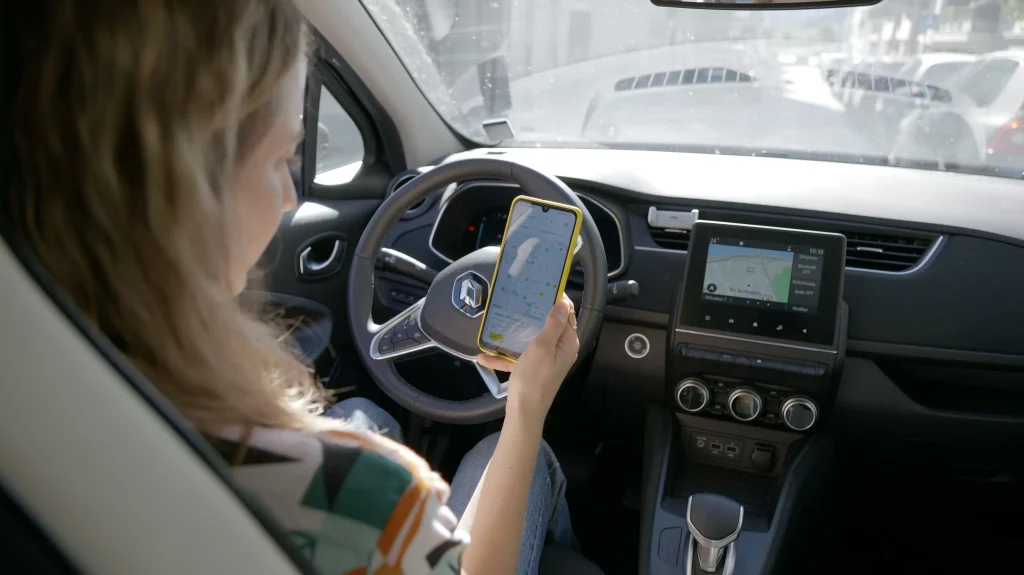
In legal practice, the most perilous form of distraction is texting. This behavior transcends mere negligence and often constitutes a catastrophic act of inattention.
The statistical data is compelling: according to NHTSA, the five seconds it takes to send or read a text equates to driving the length of a football field at highway speed while blindfolded - a fact that serves as a powerful illustration of the breach of the duty of care.
This is not a minor infraction; it is a profound display of willful disregard for safety.
The AAA Foundation for Traffic Safety has further substantiated the severity of this issue by reporting that distracted driving contributes to over a third of all crashes involving adolescent drivers.
For us in the legal profession, this statistic underscores a critical, generational challenge and provides a clear evidentiary basis for arguing gross negligence and pursuing punitive damages in relevant cases.
A Systemic Response: Enforcement, Education, and Technology
The legal and public policy communities have long engaged in a coordinated effort to mitigate the risks of distracted driving. A cornerstone of this strategy is deterrence, spearheaded by initiatives from the National Highway Traffic Safety Administration (NHTSA).
Campaigns such as "Put the Phone Away or Pay" merge widespread public awareness messaging with targeted, high-visibility law enforcement crackdowns.
These efforts, particularly those amplified during Distracted Driving Awareness Month each April, are designed to reinforce a clear message: this form of negligence carries tangible and significant consequences.
Beyond these federal campaigns, a decentralized approach has enabled states to implement their own localized initiatives, often supported by federal grants.
This cooperative framework has fostered a societal shift, with a notable increase in companies and educational institutions adopting formal policies and pledges that promote distraction-free driving as a cultural norm, rather than merely a regulatory compliance issue.
Simultaneously, the automotive industry has made significant advancements in safety technology.
The proliferation of Advanced Driver Assistance Systems (ADAS), including features such as lane-keeping assist and automatic emergency braking, has introduced new layers of crash prevention.
For legal practitioners, this technological evolution presents a new challenge. An over-reliance on these systems can foster a false sense of security, potentially leading to driver inattention.
In the event of a collision, this raises complex questions of liability and may constitute a new avenue for litigation.
The Legal Framework: From Liability to California Vehicle & Traffic Accident Claims
The legal system mandates accountability as a primary response to distracted driving.
When such negligence causes injury or death, the civil justice system provides a remedy for victims, holding at-fault drivers responsible for their failure to exercise reasonable care. This framework ensures that civil liability serves as a powerful deterrent.
In California, where a pure comparative negligence system governs, the legal process is particularly nuanced.
The pursuit of California Vehicle & Traffic Accident Claims requires meticulous execution of well-defined legal steps, which can lead to justice and compensation for victims.
- Incident Reporting: Any serious accident must be reported to the California DMV.
- Evidence is Everything: To prove negligence, we must gather compelling evidence. This can include police reports, photos of the scene, medical records, and witness testimony. In a distracted driving case, this might extend to subpoenaing a driver's phone records—a critical tool for establishing a clear link between the distraction and the collision.
- Proving Fault: California’s pure comparative negligence system means a driver can still recover damages even if they were partially at fault. Their compensation is simply reduced by their percentage of fault. This nuance requires careful legal strategy to accurately assign fault and maximize a client's recovery.
- Pursuing a Lawsuit: If an insurance settlement isn't possible, a formal lawsuit is the next step. The statute of limitations for personal injury claims in California is generally two years from the date of the accident, a strict deadline that we must respect.
Furthermore, a distracted driving claim can extend beyond the driver. If the bus company in the New York crash had a history of poor training or policies that contributed to the incident, a lawsuit could name the company as a defendant.
This pursuit of justice can include seeking punitive damages, a powerful message that such recklessness will not be tolerated.
A Call for Cultural Change
Ultimately, the tragic bus crash in New York serves as a powerful reminder of the profound consequences of inattention. It underscores a fundamental truth we must convey to every client and jury: the act of driving demands a driver's full and undivided attention.
While legal statutes and enforcement efforts are crucial, they alone cannot solve this public health crisis.
The long-term solution lies in a fundamental shift in our collective mindset. As legal professionals and leaders within our communities, we have a unique responsibility to advocate for this change.
We must encourage our clients, peers, and family members to adopt a culture of safe driving. By supporting policies that enhance road safety and modeling responsible behavior, we contribute to a broader cultural transformation.
In the end, our commitment to this issue transcends winning a case; it's about altering a culture of negligence and, in doing so, saving lives.
People Also Ask
Q: What is the statute of limitations for a distracted driving lawsuit in California?
A: In California, the general statute of limitations for personal injury claims, including those resulting from distracted driving, is two years from the date of the accident. This means you have two years to file a lawsuit in civil court. There are limited exceptions, so it's best to consult with a legal professional as soon as possible.
Q: Can you get punitive damages for distracted driving in California?
A: Yes, it's possible to be awarded punitive damages in a California distracted driving case, but it's not a common occurrence. Unlike standard damages that compensate a victim for their losses, punitive damages are intended to punish the at-fault driver for egregious, reckless, or malicious conduct and to deter others from similar behavior. To be awarded punitive damages, a plaintiff must prove by "clear and convincing evidence" that the driver acted with "malice, oppression, or fraud," which in the context of a distracted driving accident, often requires demonstrating a conscious disregard for the safety of others. For example, a driver who was repeatedly looking at their phone and weaving through traffic right before a crash may be more susceptible to punitive damages than a driver who had a single momentary distraction.
Q: What is the difference between negligence and gross negligence in California law?
A: In California, the main difference between negligence and gross negligence is the level of carelessness.
- Negligence is the failure to act as a reasonable person would in similar circumstances, such as being distracted and causing a collision. This is based on carelessness or unintentional oversight.
- Gross negligence is a more extreme form of negligence that shows a reckless disregard for the safety of others. It goes beyond simple carelessness and borders on willful misconduct. A distracted driving case may rise to gross negligence if the driver's conduct was particularly egregious, such as texting while speeding through a school zone or having a prior history of distracted driving violations. Proving gross negligence can make it more likely for a court to award punitive damages.
Q: How does California's "no-touch" phone law affect liability?
A: California's "no-touch" phone law (Vehicle Code § 23123.5) makes it illegal for a driver to physically hold or operate a phone for any reason while driving, even at a stoplight. This law is a powerful tool in a personal injury lawsuit because violating it can be used as direct evidence of a breach of the duty of care. This may even establish negligence per se, which means the driver's negligence is presumed because they violated a safety statute designed to protect the public. This makes it significantly easier for a plaintiff to prove liability and secure a favorable outcome.