Understand Your Rights. Solve Your Legal Problems


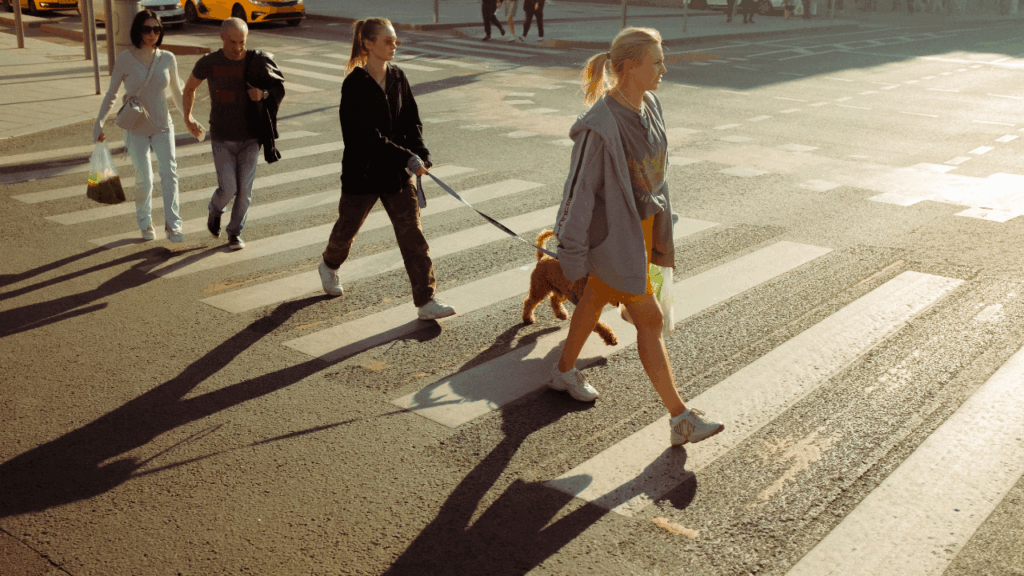
We all love to walk in California. Maybe it's a quick trip to the corner store in the city or a relaxing stroll through a suburban neighborhood. But for many, that simple act of walking has a terrifying side.
The sad truth is, our state leads the country in pedestrian fatalities and serious injuries year after year.
Whether you're dodging traffic in a busy Los Angeles crosswalk or just trying to enjoy a quiet evening walk in Orange County, the risk is real. We're all sharing the road with drivers who are distracted, speeding, or simply not paying attention, and that creates a dangerous reality for us on foot.
But the real cost is so much more than a number. Beyond the headlines, these accidents can turn a person's life upside down with permanent injuries, lost mobility, and severe emotional trauma.
If you’ve been through this, you know that dealing with the legal aftermath can feel impossible. Trying to get justice and compensation through California's legal system can be a total nightmare.
That's why we put together this guide. It’s here to walk you through the complicated legal landscape, help you understand your rights, and show you the critical steps you need to take to protect yourself.
To understand the scale of the problem, one must look at the data. Pedestrian fatalities in California have consistently ranked among the highest in the nation.
According to the California Office of Traffic Safety (OTS), pedestrian deaths accounted for a significant portion of all traffic fatalities in recent years.
This stark reality underscores the urgency of pedestrian safety efforts and the need for victims to understand their legal recourse.
"Every step we take towards greater pedestrian safety is a step towards saving lives," said Glendora Police Department Captain Chris Stabio.
"We want to remind everyone that safety begins with you, whether you're behind the wheel or on foot. Small actions, like slowing down, putting away distractions and yielding at crosswalks can make a life-saving difference.”
Any successful pedestrian accident claim in California hinges on the legal concept of negligence. In simple terms, negligence is the failure to act with the care that a reasonable person would exercise in a similar situation.
For a victim to win their case, their legal team must prove four key elements:
California follows what’s called a “pure comparative negligence” system. In plain English, this means that even if you share some of the blame for the accident, you can still recover compensation.
The catch is that your award will be reduced by your percentage of fault.
Imagine this: a jury decides you were 20% at fault because you crossed the street against the light, but the driver was still 80% responsible.
If your total damages came to $100,000, you would still walk away with $80,000. In many other states, however, you’d get nothing if your share of the blame passed a certain threshold, often 50%.
This is why having a strong advocate on your side matters so much. Insurance companies and defense lawyers will do everything they can to push more blame onto the pedestrian.
A skilled attorney can push back, highlight the driver’s misconduct, and work to keep your share of fault as low as possible maximizing the compensation you deserve.
When a pedestrian is injured, they can pursue compensation for a wide range of damages, which are generally categorized as economic and non-economic.
While every accident is unique, there are several common factors that lead to pedestrian crashes, each with its own legal implications.
These causes often overlap with other areas of California Vehicle & Traffic Accident Claims.
Pedestrian accidents aren’t always caused by passenger cars. A crash could involve a motorcycle, a rideshare vehicle, a commercial truck, or even public transportation and each type of case comes with its own legal twists.
For example, truck collisions may involve company liability, while accidents with Uber or Lyft drivers raise tricky insurance questions.
If a bus or train is involved, victims face special rules when filing claims against government agencies.
The circumstances matter too, whether the driver was distracted, drunk, or fled the scene can greatly affect both liability and compensation. That’s why no two pedestrian cases are ever alike, and why understanding these unique dynamics is so important.
Just like pedestrians, motorcyclists are highly vulnerable on the road. They lack the structural protection of a car, making them susceptible to severe injuries from even minor impacts.
The laws governing negligence and shared responsibility that apply to pedestrians often mirror those for motorcyclists, as both groups rely on drivers to be cautious and aware of their surroundings.
Cyclists and pedestrians face many of the same dangers. They share the road, often use the same crosswalks and bike lanes, and depend on drivers following traffic laws.
Programs run by the California Office of Traffic Safety for Pedestrian and Bicycle Safety emphasize not only driver responsibility but also awareness of rights and safe behaviors for vulnerable road users. (California OTS: Pedestrian and Bicycle Safety)
Bicycle Accident Lawsuits in California often involve disputes over who had the right-of-way, which is a common issue in pedestrian claims as well.
If a pedestrian is struck by a commercial truck, the legal process becomes significantly more complex.
Unlike a personal vehicle accident, a Truck Accident Claim in California may involve multiple parties.
Liability can extend beyond the driver to the trucking company, the truck’s owner, and even the manufacturer of defective parts. These cases require a deep understanding of federal trucking regulations and corporate liability.
The actions you take immediately following a pedestrian accident can have a profound impact on the outcome of any future legal claim.
The rising incidence of pedestrian accidents in California underscores not only a troubling public safety trend but also the inherent vulnerability of individuals engaged in the most routine daily activities, such as walking to work, school, or the store.
The legal system does provide a way forward for victims, but getting justice often means piecing together a complicated puzzle of laws, from comparative negligence rules to rideshare liability and even claims against public transportation agencies.
For victims and families, knowledge really is power. Understanding your rights, documenting what happened, and getting the right legal help can make all the difference in protecting your future.
At the same time, California cities are investing in safety initiatives like Vision Zero, which aims to eliminate traffic deaths altogether.
That future hasn’t arrived yet—but until it does, staying informed and prepared is the strongest protection pedestrians have.
How much is the average settlement for a pedestrian-car accident in California?
The average settlement for a pedestrian-car accident in California can range from tens of thousands to millions of dollars, depending on the severity of injuries, medical costs, lost income, and pain and suffering.
What is the statute of limitations for a pedestrian accident in California?
The statute of limitations for a personal injury claim in California is generally two years from the date of the accident. However, for claims against a government entity (like a public bus), the deadline is significantly shorter, often just six months.
Who is at fault if a pedestrian is hit in a crosswalk?
In most cases, the driver is presumed to be at fault for hitting a pedestrian in a crosswalk, as California law requires drivers to yield the right-of-way. However, California's comparative negligence rule means the pedestrian could be found partially at fault if they were, for instance, distracted or failed to follow traffic signals.
Can a pedestrian be at fault for an accident in California?
Yes. While drivers are typically held responsible, a pedestrian can be found partially or fully at fault for an accident if their negligence contributed to it. Examples include jaywalking, ignoring a "Don't Walk" signal, or suddenly running into traffic.
What should I do if an insurance adjuster calls me after the accident?
You should not give a recorded statement or accept any settlement offer from an insurance adjuster without first consulting with an attorney. Adjusters may try to use your statements against you to devalue or deny your claim.
How is "pain and suffering" calculated in a pedestrian accident claim?
"Pain and suffering" is calculated by considering the severity of the injuries, the duration of recovery, and the impact on the victim's life. It is often determined using a multiplier method, where the total economic damages are multiplied by a number (typically 1.5 to 5) to arrive at a non-economic damages value.