Understand Your Rights. Solve Your Legal Problems


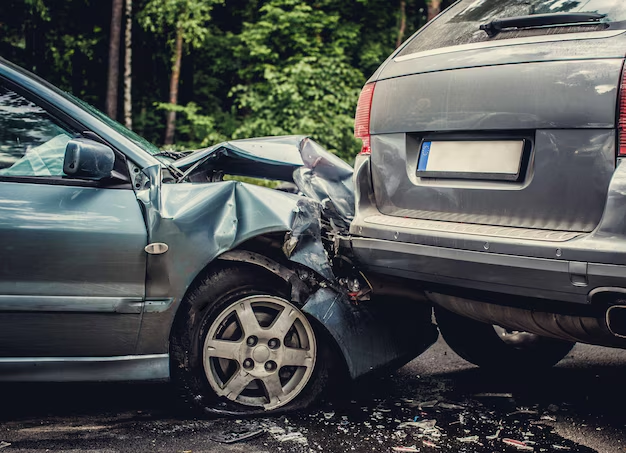
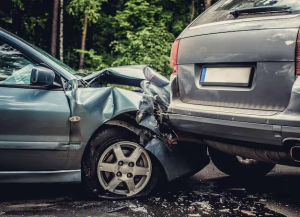
California's legal system for car accidents is rooted in the principle of "at-fault" liability, which means that the person who is determined to be at fault for a crash is responsible for the damages.
This system is governed by a framework of state laws that define negligence, insurance requirements, and the process for seeking compensation.
Unlike "no-fault" states, where drivers turn to their own insurance first regardless of who caused the crash, California's system requires proving who was negligent in order to recover damages from the at-fault driver's insurance.
The foundation of any car accident claim in California is the concept of negligence. To prove negligence, an injured party must demonstrate that the other driver:
A key aspect of California's fault system is pure comparative negligence. This legal doctrine allows you to recover damages even if you were partially at fault for the accident, with total compensation reduced by your percentage of fault.
For instance, a person found 20% responsible for a collision with $100,000 in damages can only recover up to $80,000.
This principle applies across all traffic incidents, highlighting the importance of a thorough investigation to accurately determine each party's degree of fault.
The process for pursuing a car accident claim in California begins with reporting the accident and gathering evidence.
This includes obtaining a police report, taking photos of the scene, and getting contact and insurance information from all involved parties.
Victims have several options for seeking compensation: filing a claim with their own insurance (a "first-party claim"), filing a claim directly with the at-fault driver's insurance (a "third-party claim"), or, if necessary, filing a personal injury lawsuit. F
or more information on what to expect during the legal process, you can visit the California Courts' Self-Help Guide on Civil Cases.
The statute of limitations for filing a personal injury lawsuit in California is generally two years from the date of the accident. For claims involving only property damage, the statute of limitations is three years.
It is critical to be aware of these deadlines, as missing them can result in the loss of your right to sue. There are, however, exceptions, such as for minors, whose two-year clock does not begin until they turn 18.
Navigating the claims process, especially with the tactics often used by insurance companies to minimize payouts, makes seeking legal counsel a wise decision.
An attorney can help you negotiate with insurers, establish the full extent of your damages, and represent you in court if a fair settlement cannot be reached.
These damages can include both economic losses like medical expenses, lost wages, and future earning capacity, as well as non-economic losses such as pain and suffering, emotional distress, and loss of enjoyment of life.
Motorcycle riders are often at a disadvantage due to the lack of physical protection and the prevailing bias among some drivers and insurance companies.
Despite this, they have the same legal rights as other motorists and are entitled to seek compensation for their injuries.
Proving negligence in a motorcycle accident case often involves demonstrating how the other driver's actions, such as failing to check blind spots, making an illegal turn, or tailgating, led to the crash.
Due to the severe nature of motorcycle accident injuries, claims often involve substantial medical bills and lost wages, making an accurate determination of fault even more critical.
The pure comparative negligence rule is particularly important here, as it allows riders to recover damages even if they were found to have contributed to the accident in some way, such as by not wearing a helmet.
Pedestrians are among the most vulnerable individuals on the road, and when they are involved in an accident, the resulting injuries can be catastrophic.
California law protects pedestrians and requires drivers to yield the right-of-way at marked and unmarked crosswalks. When a driver's negligence leads to a pedestrian accident, the pedestrian can pursue a claim for damages.
Pedestrians are not immune from the comparative negligence rule, however. If a pedestrian is found to have been jaywalking or otherwise acting unsafely, their compensation may be reduced by their percentage of fault.
Given the high risk of serious injury or wrongful death in these accidents, gathering evidence and consulting with a legal professional is vital.
California law treats bicycles as vehicles, affording cyclists the same rights and responsibilities as drivers. Drivers must share the road safely and are required to provide a minimum of three feet of space when passing a cyclist.
Claims for bicycle accidents often center on a driver's failure to adhere to these rules. Because cyclists are exposed, they often suffer severe injuries.
Proving the driver's negligence is key, especially when their insurer attempts to place blame on the cyclist for failing to use a bike lane or wearing dark clothing at night.
A successful claim can provide compensation for medical bills, rehabilitation, and the profound impact of injuries on a cyclist's quality of life.
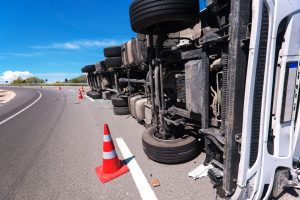
Truck accidents are far more complex than typical car accidents due to the size and weight of the vehicles and the potential for multiple at-fault parties. In addition to the truck driver's negligence, liability may also extend to:
These cases involve a specialized body of law, including federal and state trucking regulations, which make identifying all liable parties and seeking full compensation particularly intricate.
In addition, many modern trucks are equipped with "black boxes" that record vital data like speed, braking, and steering, which can be critical evidence in establishing fault.
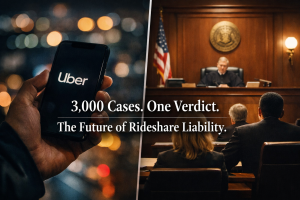
The liability in an Uber or Lyft accident is determined by the driver's status at the time of the crash. The rideshare company's insurance policy provides coverage only when the driver is logged into the app and either waiting for a ride request or has a passenger in the vehicle.
The coverage limits can be substantial, with a $1 million policy applying once a ride is accepted. If the driver was off-duty at the time of the crash, their personal auto insurance is the only policy in play.
Navigating these claims requires understanding these specific insurance periods to ensure the proper policy is engaged.
California law permits victims of drunk driving accidents to pursue civil lawsuits against the at-fault driver in addition to any criminal charges they may face.
A civil claim can help victims recover both economic damages (medical bills, lost wages) and non-economic damages (pain and suffering).
In cases where the driver's conduct was particularly egregious, victims may also be able to seek punitive damages.
California has very limited "dram shop" laws, which generally protect commercial establishments from liability for serving an intoxicated person who then causes a crash, with a key exception for serving alcohol to a minor.
A driver who flees the scene of an accident can face serious criminal penalties, ranging from a misdemeanor (for property damage) to a felony (for injury or death).
From a civil perspective, a hit-and-run presents a major challenge for the victim. Since the at-fault driver is unknown, a victim must typically rely on their own uninsured motorist (UM) coverage to pay for damages.
This coverage is designed to protect you from drivers who are either uninsured or, in hit-and-run cases, cannot be identified.
To qualify for UM coverage in a hit-and-run, you must report the accident to police within 24 hours and have physical contact between the vehicles.
An experienced attorney can also work with law enforcement to find the at-fault driver, allowing the victim to pursue a civil lawsuit against them.
When an accident involves a public transportation vehicle, such as a city bus or train, special rules apply.
The legal process is governed by the California Tort Claims Act, which provides a very short statute of limitations for filing a claim.
A formal claim must be presented to the government agency within six months of the incident.
This is a much stricter deadline than the standard two-year statute of limitations, and failure to meet it will almost certainly result in the claim being barred.
For more information on this process, you can review the California Courts' guidance on suing a government agency.
California has strict laws against distracted driving, particularly the use of cell phones. It is illegal for drivers to hold a cell phone or similar electronic device while operating a vehicle.
Proving that a driver was distracted can be crucial in a negligence claim.
Evidence such as cell phone records, which can be obtained through the discovery process in a lawsuit, can show that the at-fault driver was texting, calling, or using data at the time of the collision.
This evidence can be instrumental in establishing fault and securing a favorable outcome, often making the difference between a denied claim and a significant settlement.
To understand the legal process for obtaining such information, you can read more about civil discovery from the California Courts.
Is California an at-fault or no-fault state for car accidents?
California is an at-fault state, meaning the driver responsible for causing the accident must pay for damages through their insurance.
What is comparative negligence in California car accident cases?
California follows a pure comparative negligence rule, allowing you to recover damages even if you were partly at fault. Your compensation is reduced by your percentage of fault.
How long do you have to file a car accident lawsuit in California?
In most cases, you have two years to file a personal injury lawsuit and three years for property damage claims. Claims against government agencies must be filed within six months.
What types of damages can car accident victims recover in California?
Victims can seek economic damages (medical bills, lost income, property repairs) and non-economic damages (pain and suffering, emotional distress, loss of enjoyment of life).
Can you sue if you’re hit by an uninsured or hit-and-run driver in California?
Yes, but you may need to rely on your own uninsured motorist (UM) coverage if the at-fault driver cannot be identified or is uninsured.
What happens if you’re partly at fault for a car accident in California?
You can still recover compensation, but it will be reduced based on your percentage of fault. For example, being 20% at fault in a $100,000 claim limits recovery to $80,000.
Are Uber and Lyft accidents covered by the rideshare company’s insurance?
Yes, but coverage depends on the driver’s status. A $1 million policy applies when a ride is accepted and during trips, while only limited coverage applies if the driver is waiting for a request.
Do California’s “dram shop” laws apply in drunk driving accident cases?
Generally no—bars and restaurants are not liable for overserving adults. The exception is if alcohol is served to a minor who later causes an accident.
What should you do if you’re injured in a public transportation accident in California?
You must file a formal claim with the government agency within six months under the California Tort Claims Act, which is a much shorter deadline than standard injury cases.
Is it illegal to use a cell phone while driving in California?
Yes, California law prohibits holding a cell phone while driving. Proving distraction through phone records can be crucial in accident lawsuits.