
Candace Owens, Brigitte Macron, and the Weirdest Defamation Case of 2025.
Of all the wild conspiracy theories bouncing around the internet, few are as jaw-dropping as the claim that France’s First Lady is secretly a man—yet somehow that rumor has now exploded into an international courtroom drama.
Yes, we are talking about the conspiracy theory—so absurd it makes lizard people look tame—that French First Lady Brigitte Macron is secretly a man. And yes, Candace Owens, never one to miss an opportunity to add gasoline to the dumpster fire, has made it her hill to die on.
The result? The Macrons have now filed a massive defamation lawsuit in Delaware, of all places, against Owens and her companies. What started as internet nonsense has become a very real, very serious legal showdown that raises hard questions about free speech, defamation law, and what happens when you mix conspiracy culture with high-stakes politics.
Let’s unpack how a fringe rumor in France turned into an American lawsuit—and why this could become one of the most bizarre defamation battles in recent memory.
The Origins: From Scandal to Conspiracy
Like many conspiracy theories, this one didn’t come out of nowhere. Emmanuel Macron’s relationship with Brigitte was tabloid fodder long before the internet decided to go full “transvestigation.”
Here are the facts that nobody disputes: Emmanuel was a 15-year-old student when he fell for his drama teacher, Brigitte, who at the time was 39 and married with three kids. The age gap was scandalous enough, especially in Catholic France, and the story has followed them ever since. Years later, she divorced her husband and married Emmanuel, who by then had become one of the most ambitious men in French politics.
But conspiracy theorists love to turn facts into fiction. In the late 2010s, a small group of French far-right activists—most notably Natacha Rey, an essential oils seller who reinvented herself as an “independent journalist”—began promoting the claim that Brigitte wasn’t Brigitte at all. Instead, they alleged, she was secretly her own brother, Jean-Michel, who stole his sister’s identity after some shadowy cover-up.
Rey gave an interview in 2021 with a self-proclaimed “spiritual medium,” and without offering a shred of evidence, they speculated that Brigitte Macron was actually Jean-Michel. Within hours, the clip racked up half a million views on YouTube, fueled hashtags across French social media, and planted the seeds of a conspiracy that would metastasize worldwide.
The Macrons didn’t take it lightly. Brigitte and her brother sued Rey and her co-host in Paris. A trial court found them guilty of defamation, but an appeals court later acquitted them, holding that their wild speculations didn’t technically meet the French legal definition of defamation. The case is still winding through higher appeals. But if the Macrons hoped litigation would end the rumors, they were mistaken.
Enter Candace Owens
Candace Owens has never met a conspiracy she couldn’t supercharge. After falling out with Ben Shapiro and the Daily Wire—largely over her repeated flirtations with anti-Semitic tropes—Owens needed a new lane. She found it in the Brigitte Macron “is a man” theory, which she imported wholesale from the French far right into the American culture wars.
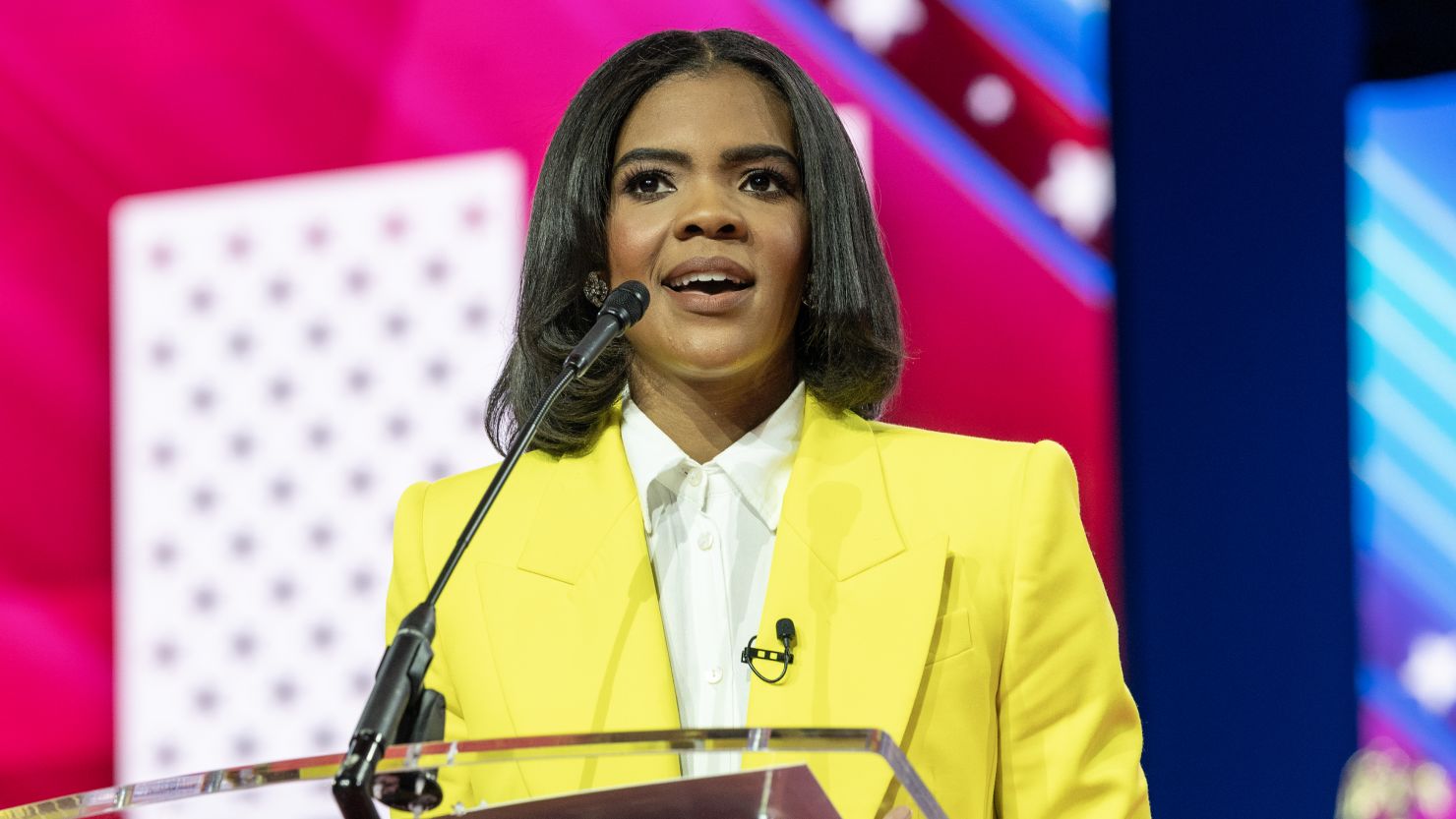
Candace Owens, who has amplified conspiracy theories about France’s First Lady, now faces a defamation lawsuit filed by Emmanuel and Brigitte Macron in Delaware.
Owens didn’t just reference the rumor in passing. She built it into the foundation of her podcasting empire. She declared publicly that she would “stake her entire professional reputation” on Brigitte Macron being male. She mocked up “Man of the Year” T-shirts featuring Brigitte’s face. She even ran an eight-part podcast series titled Becoming Brigitte, laying out what she insisted was the “biggest political scandal in human history.”
Her claims got wilder as she went. Not only was Brigitte supposedly her brother Jean-Michel, but Emmanuel Macron was allegedly being groomed from adolescence by globalist elites, possibly under a CIA-style MKUltra mind-control program. Owens linked the Macrons to occult practices, pedophilia rings, and the Rothschild banking family. At one point, she speculated that the couple’s relationship might even be incestuous.
This wasn’t fringe internet muttering anymore. Owens was broadcasting these theories to millions, appearing on other shows, and amplifying her reach across Twitter, YouTube, and Rumble. Joe Rogan himself mused on-air that Owens “might be right,” showing how far the claims had seeped into mainstream discourse.
The Macrons responded by sending multiple retraction letters. These weren’t half-hearted; they included birth records, family photos, a marriage certificate, and the rather undeniable fact that Brigitte had given birth to three children. Owens brushed it all aside and doubled down.
The Lawsuit: Delaware, 2025
On July 23, 2025, Emmanuel and Brigitte Macron filed a 219-page defamation complaint in Delaware state court as reported in The New York Times (full transcript available). Why Delaware? Two reasons: both of Owens’s companies are incorporated there, giving the court jurisdiction, and Delaware’s two-year statute of limitations allowed the Macrons to sweep in Owens’s older statements along with her more recent podcast rants.
The complaint lays out 22 counts of defamation and false light, focusing on Owens’s eight-part series and related promotional material. It is, essentially, a greatest-hits compilation of MAGA conspiracy talking points dressed up in legal citations.
To understand their chances, let’s look at what the Macrons have to prove.
Defamation 101
In Delaware, a defamation claim has four baseline elements:
-
A defamatory statement;
-
About the plaintiff;
-
Published to a third party;
-
Understood by a reasonable person as defamatory.
Owens’s statements easily clear the first three. She flatly stated as fact that Brigitte is a man, that she stole her sister’s identity, and that she and Emmanuel are part of a pedophilic cult. She named the Macrons directly. She blasted these claims to millions of listeners, not scribbled them in a diary.
The fourth prong—whether a reasonable person would see the statements as defamatory—is almost laughably easy to satisfy. Accusing someone of incest, identity theft, grooming, and membership in a global cabal of satanic pedophiles? Yeah, that qualifies.
But because the Macrons are public figures, they face two extra hurdles. Thanks to the landmark New York Times v. Sullivan (1964), public figures must show:
-
Falsity: the statements are factually untrue.
-
Actual malice: the defendant knew they were false, or acted with reckless disregard for the truth.
This is a deliberately high bar, designed to protect free speech as seen in the recent Steven Tyler Lawsuit —even when it’s nasty, inaccurate, or hyperbolic. That’s why most public-figure defamation suits fail.
Do the Macrons Have a Case?
On falsity, the Macrons are standing on bedrock. They can produce documentary evidence that Brigitte was born female, lived her early life publicly as a girl, and gave birth to three children. They’ve already submitted photos, announcements, and legal documents. Unless Owens has a hidden vault of DNA tests, this prong is a slam dunk.

Emmanuel and Brigitte Macron have filed a defamation lawsuit in Delaware against Candace Owens over false claims spread on her platforms.
The real fight is over actual malice. Did Owens know she was lying, or was she recklessly blind? That’s where the retraction letters become powerful. The Macrons sent her detailed evidence disproving the claims. She ignored it and kept broadcasting. Courts often treat that as evidence of “reckless disregard.”
Owens may argue that she genuinely believed the theory, citing sources like French bloggers or the Daily Mail (which she hilariously misread—the article she cited was debunking the conspiracy, not endorsing it). But belief alone won’t save her if the court decides she had ample reason to know better.
There’s also an interesting question: is Owens “media”? If the court treats her as a journalist or commentator, the burden may fall on the Macrons to prove falsity. If not, Owens may have to prove her claims true—a burden she obviously cannot meet. The Macrons’ complaint directly challenges her self-styled title of “independent journalist,” painting her instead as a grifter peddling misinformation for clicks and merch sales.
Owens’s Legal Missteps
If there’s a handbook titled How Not to Handle a Defamation Suit, Owens seems to be following it religiously.
-
Talking to Tucker Carlson: In a lengthy interview, she announced she had no intention of seeking dismissal, because she wanted discovery against the Macrons. Lawyers everywhere cringed. The first rule of defamation defense is usually “try to get it tossed.”
-
Publicly mocking the lawsuit: Owens has taunted the Macrons, inviting them to sue and declaring she’ll take it “all the way to the Supreme Court.” That may play well on social media, but it gives the plaintiffs’ attorneys mountains of usable material.
-
Confusion about civil procedure: At one point she claimed she looked forward to “asking Emmanuel questions in my deposition.” That’s not how depositions work; when you’re the deponent, you answer questions, not the other way around.
-
Fundraising theatrics: Owens has used the lawsuit to solicit donations, presenting herself as a free-speech martyr. That may help her bank account, but it underscores the Macrons’ claim that she’s motivated by personal gain, not journalism.
The Bigger Picture
Even if the Macrons clear the high hurdles of U.S. defamation law, they face another challenge: the Streisand effect. By suing Owens, they’ve ensured that the “Brigitte is a man” conspiracy will dominate headlines far beyond the far-right corners of Telegram. Owens has already pumped out hours of new content since the suit, gleefully tying the Macrons to Jeffrey Epstein and other conspiratorial bogeymen.
But the Macrons may not have had much choice. Allowing Owens to endlessly repeat the claim without response could normalize it. In an era where conspiracy theories metastasize into “truth” through sheer repetition, public figures sometimes sue not because they expect to win big damages, but to draw a legal line in the sand.
What Comes Next
The case will crawl forward in Delaware, with early skirmishes over motions to dismiss, jurisdiction, and discovery. Owens will likely keep talking, because that’s her brand. The Macrons will keep presenting evidence, hoping to prove reckless disregard. The court will have to balance America’s broad free-speech protections against the undeniable reputational harm of being accused of incestuous, occult-worshipping, body-snatching pedophilia.
Win or lose, the lawsuit illustrates how conspiracy culture has become one of America’s most toxic exports. What began as a French tabloid rumor has morphed into an international legal battle, all because U.S. pundits saw an opportunity to monetize outrage.
And if nothing else, it proves one thing: in 2025, reality is often stranger—and stupider—than fiction.
Candace Owens Macrons FAQs
1. What conspiracy theory is Candace Owens being sued over?
Owens repeatedly claimed that Brigitte Macron, the First Lady of France, is secretly a man named Jean-Michel who stole his sister’s identity. She presented it as fact in podcasts, tweets, and merchandise — sparking the Macron family’s defamation lawsuit.
2. Why did the Macrons file their lawsuit in Delaware?
Both of Owens’s businesses are incorporated in Delaware, which gives the state’s courts jurisdiction. Delaware also has a two-year statute of limitations for defamation, allowing the Macrons to sweep in nearly all of Owens’s public statements on the topic.
3. What makes defamation cases involving public figures harder to win?
Under the U.S. Supreme Court’s New York Times v. Sullivan standard, public figures must prove “actual malice” — meaning the defendant knew their statements were false or acted with reckless disregard for the truth. That’s a much steeper hill to climb than in cases involving private citizens.
4. Could Candace Owens actually lose millions over this case?
Yes. If the Macrons convince the court that Owens acted with actual malice, a jury could award substantial damages. Even if she ultimately avoids liability, the cost of defending a multi-year defamation battle could be financially devastating.