Understand Your Rights. Solve Your Legal Problems


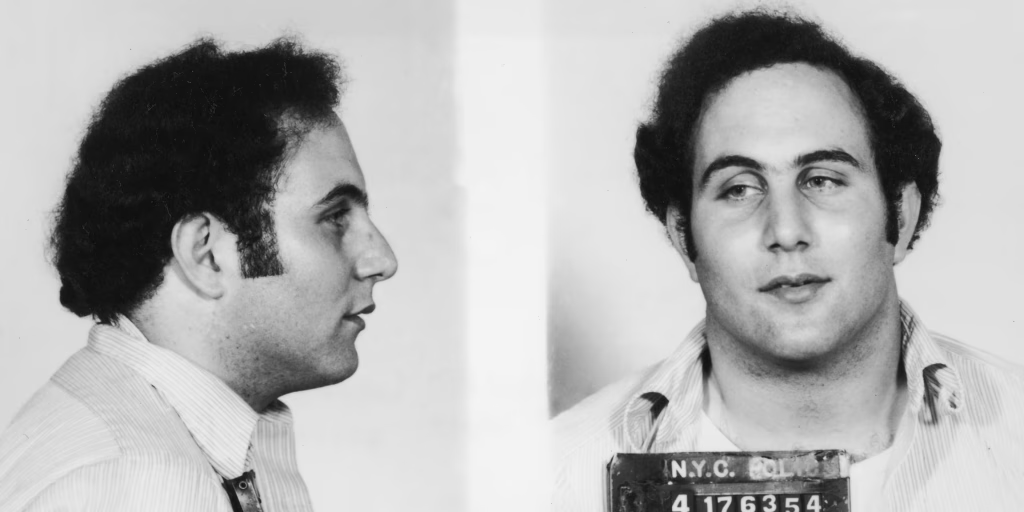
By the summer of 1977, New York was suffocating — not just from the heat, but from the dread of a killer who struck without warning.
A serial gunman was prowling the boroughs, striking without warning, leaving couples dead or maimed in parked cars and on sidewalks. He called himself “Son of Sam.” Newspapers fed the panic with every headline, and the NYPD waged one of the largest manhunts in the city’s history.
Behind the chilling moniker “Son of Sam” stood David Berkowitz, a quiet postal worker whose hidden rage would plunge New York into terror. a 24-year-old postal worker from Yonkers.
His yearlong spree would claim six lives and wound seven more, but the story that emerged after his arrest was not just about bloodshed. It was about madness, loneliness, and the blurred line between mental illness and evil.

Police sketch released after the July 31, 1977 Son of Sam shooting — one of several composite drawings that kept New York City on edge before David Berkowitz’s capture.
Berkowitz was born Richard David Falco in 1953, the child of an affair. His biological mother gave him up shortly after birth, and he was adopted by Nathan and Pearl Berkowitz, a working-class couple in the Bronx. Though they loved him, David grew up with a gnawing sense of abandonment.
He was told early on that his real mother had died, a lie that festered into resentment when he later discovered the truth. Teachers noted his intelligence, but also his volatility — angry outbursts, bullying tendencies, and a fixation on setting small fires. By adolescence, he was already showing what criminologists call the “fire-setting triad,” one of the red flags often found in the backgrounds of violent offenders.
When his adoptive mother died of cancer while he was still a teenager, the fragile support system holding him together collapsed.
Berkowitz enlisted in the U.S. Army in 1971 with one clear goal: to see combat. Friends later recalled that he believed fighting would give him an outlet for his anger — even a chance to “vent” his frustrations through killing.
But instead of the battlefield, he was stationed in South Korea near the Demilitarized Zone. The anticlimax fueled his resentment, and in the long stretches of boredom and isolation, he turned to drugs, including marijuana and LSD. What the Army had given him in structure, it quickly stripped away in disillusionment. By the time he was honorably discharged in 1974, Berkowitz was just 21 — rootless, bitter, and utterly alone.
By this point, he was struggling with feelings of invisibility. He bounced through menial jobs, lived in a rundown Yonkers apartment, and filled his nights with compulsive arson — over a thousand fires by his later admission. The flames gave him control, a twisted outlet for rage he couldn’t articulate.
Then came the gun. In 1976, he purchased a .44 caliber Charter Arms revolver. Within weeks, the Son of Sam shootings began.
His first known attack came in July 1976 in the Bronx, when he shot two young women sitting in a car. Over the next year, the pattern repeated: couples parked late at night, lone women returning home, random victims cut down without warning.
The randomness was part of the terror. New Yorkers saw themselves in the victims. Anyone could be next.
:max_bytes(150000):strip_icc():focal(749x0:751x2)/David-Berkowitz-son-of-sam-34-072925-3ffbc121158040d3ab80d793a20d39a7.jpg)
Police officers and detectives at a Bronx crime scene tied to the Son of Sam shootings in 1977. The nighttime attacks left New Yorkers terrified until David Berkowitz’s arrest weeks later.
Berkowitz taunted police and media with rambling letters signed “Son of Sam,” filled with biblical references, dark humor, and threats of continued slaughter. He craved not just blood, but recognition. The city, he believed, finally had to look at him.
After months of failed leads and dead ends, Berkowitz’s downfall came from something remarkably mundane. On the night of his last shooting in Brooklyn, a woman walking her dog noticed a car parked illegally near a fire hydrant. She remembered it because she nearly tripped over her leash trying to avoid the hydrant. That car belonged to David Berkowitz.
When detectives cross-checked parking summonses issued near the scene, his name surfaced. A quick look at his record showed prior summonses and complaints. It was enough for suspicion.
Armed with a warrant, police searched his car and discovered maps of the crime scenes, ammunition, and the .44 revolver used in the murders. The case cracked not from sophisticated profiling, but from a parking ticket.
Criminologists still speculate whether Berkowitz, who had successfully eluded capture for a year, was subconsciously sabotaging himself. Was he tired of killing? Did he want to be caught before he escalated further?
Behind every headline and police bulletin were real people whose lives were shattered by Berkowitz’s attacks. His victims were young, often couples, and mostly targeted while sitting in cars late at night. Their names and stories remind us that the “Son of Sam” case was never just about a killer — it was about stolen futures.
Donna Lauria, 18, and Jody Valenti, 19 – On July 29, 1976, Berkowitz struck for the first time in the Bronx. Donna was killed instantly as she sat in a car outside her home, talking with her best friend Jody, who was wounded but survived.
Carl Denaro, 20, and Rosemary Keenan, 18 – That October in Queens, Berkowitz fired into a parked car. Carl was shot in the head but lived; Rosemary escaped serious injury. At the time, doctors thought Carl’s wounds came from a bat — the idea that a serial gunman was loose hadn’t yet taken hold.
Donna DeMasi, 16, and Joanne Lomino, 18 – In November, the two friends were chatting on a porch in Queens when Berkowitz approached. Both were shot; Donna survived her injuries, but Joanne was left paralyzed.
Christine Freund, 26, and John Diel, 30 – In January 1977, Berkowitz fired through the passenger window of their car in Queens. Christine was fatally struck, while John managed to drive them to safety.
Virginia Voskerichian, 19 – Only weeks later, Virginia, a Columbia student, was walking home from class in Queens when she was shot in the head with the same .44 revolver.
Alexander Esau, 20, and Valentina Suriani, 18 – In April, Berkowitz returned to the Bronx. Valentina died instantly, while Alexander succumbed to his wounds hours later.
Sal Lupo, 20, and Judy Placido, 17 – In June, after leaving a nightclub in Queens, the pair were shot while sitting in their car. Both survived, but the attack deepened the city’s panic.
Stacy Moskowitz, 20, and Robert Violante, 20 – The final attack came in Brooklyn in July 1977. Stacy was killed, Robert was blinded in one eye, and police pressure finally began to close in.
Eight young people killed, seven others wounded, and an entire city left paralyzed with fear. Berkowitz himself would later claim he was driven by a demonic voice — but the names above remind us of the true legacy of his crimes.
On August 10, 1977, police surrounded Berkowitz outside his Yonkers apartment. He greeted them calmly, reportedly smiling as he said: “Well, you got me.”
Inside his car were letters addressed to law enforcement, more weapons, and incriminating notes. The trial that followed was marked by spectacle: his smirking courtroom outbursts, his insistence on demonic influences, and the surreal blending of horror and theater.
Convicted on multiple counts of murder, Berkowitz was sentenced to life in prison.

David Berkowitz, dubbed the 'Son of Sam,' being arrested in Yonkers on August 10, 1977. Detectives had traced him through a parking ticket, ending a year-long reign of terror in New York City
The debate over whether Berkowitz was insane or simply evil echoes in other infamous cases. The Menendez brothers, for example, argued that years of parental abuse drove them to murder, while prosecutors painted them as cold-blooded killers seeking an inheritance.
More recently, Brian Kohberger — accused in the Idaho college murders — has raised similar questions about psychological compulsion versus calculated violence. These comparisons show how society still struggles with the same central dilemma: are such killers driven by mental illness, or by something darker?
On one hand, the early narratives made him sound like a lunatic in the grip of psychosis. The idea of a dog giving commands from the neighbor’s yard captured headlines precisely because it sounded absurd and terrifying — the embodiment of madness in the suburbs. When detectives entered his Yonkers apartment, they found a chaotic mess: scrawled notes, satanic graffiti, and journals filled with strange ramblings. To many, this was the unmistakable imprint of mental illness.
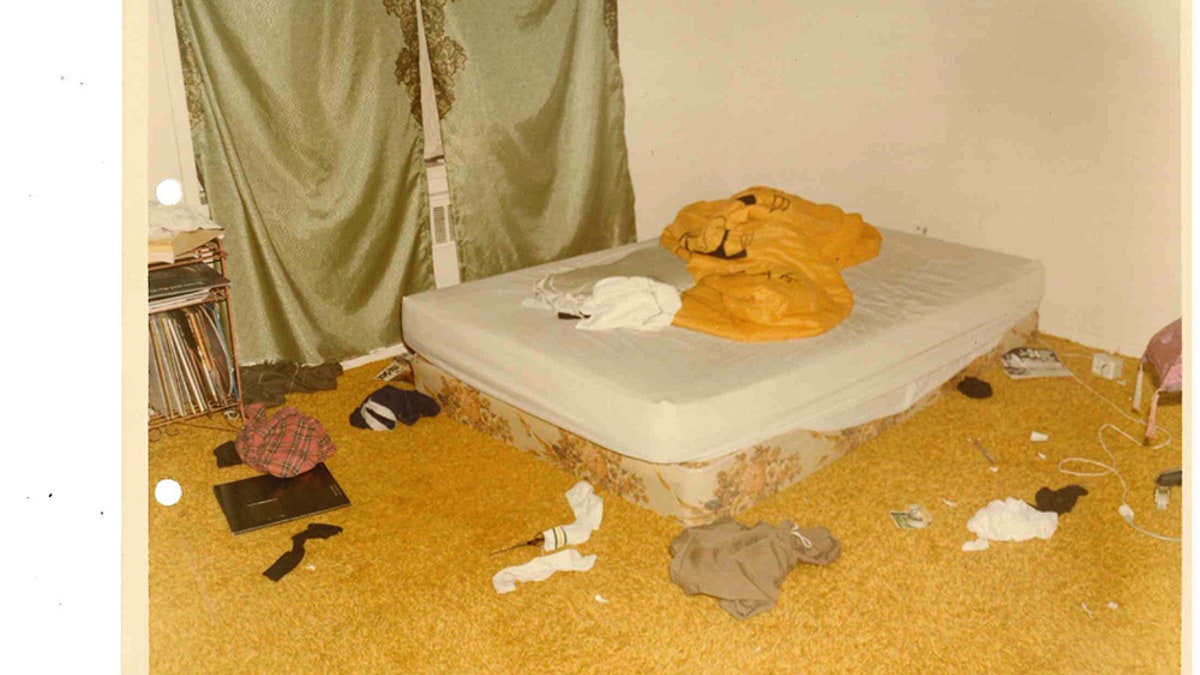
Inside David Berkowitz’s Yonkers apartment, where investigators discovered handwritten letters, weapons, and evidence tying him to the Son of Sam shootings.
Yet the deeper investigators dug, the harder it was to sustain that narrative. Berkowitz was meticulous in some respects. He cleaned shell casings, he switched boroughs to avoid predictable patterns, and he went to great lengths to disguise his movements. His letters to the police and press were riddled with twisted humor and literary references. Far from incoherent, they suggested someone who knew exactly how to stoke fear — and who relished it.
Criminal psychologist Dr. Harvey Schlossberg, one of the NYPD’s own experts at the time, made a blunt assessment: “The Son of Sam was not insane in the medical sense. He was manipulative. He created the dog story because it made him sound untouchable, even mythic.”
Other psychiatrists, such as Dr. David Abrahamsen, echoed that conclusion after extensive prison interviews. Berkowitz, he argued, wasn’t lost in hallucinations. He was driven by rage, resentment, and a need for recognition. “He knew right from wrong. He also knew what fear meant in a city already on edge — and he played into that with every note he sent,” Abrahamsen wrote.
Still, some mental health experts believe that dismissing his claims outright oversimplifies the picture. They point to his history of arson, compulsive behavior, and reports of hearing voices during lonely nights in Yonkers. Was the “dog” a literal hallucination, or a metaphorical way of externalizing urges he couldn’t face as his own?
Dr. Katherine Ramsland, a forensic psychologist who has studied serial killers extensively, once noted: “Many offenders split themselves psychologically. They attribute their darkest compulsions to something outside themselves — a demon, a voice, a higher power — because admitting it’s truly them is unbearable.”
The legal system, of course, doesn’t allow for metaphors. Under the M’Naghten Rule, Berkowitz was competent: he could tell right from wrong. That was enough for the jury and for the judge. But the question lingers in criminology classrooms and true crime forums alike: was he sick, or simply evil?
To understand Berkowitz’s violence, one has to step inside his loneliness.
He was not the handsome, confident predator depicted in crime dramas. He was awkward, overweight, socially alienated, and pathologically envious of intimacy. Most of his targets were couples — people who represented everything he lacked and resented. For him, killing was less about sexual gratification than about punishing the world for excluding him.
In his later writings, Berkowitz admitted the “talking dog” story was a fabrication. He confessed he wanted to appear larger-than-life, to frighten a city already trembling. The myth was a performance. But behind that performance was a more chilling truth: he was ordinary, invisible, forgettable. The killings gave him an identity.
Criminal psychologist Dr. Stanton Samenow, author of Inside the Criminal Mind, explains this mindset: “People like Berkowitz create a sense of power by destroying what they cannot have. They feed on the fear they inspire. For them, the act of terrorizing becomes more intoxicating than the act of killing itself.”
Berkowitz himself seemed to confirm this. In one prison interview, he admitted: “I didn’t want to hurt them personally. They never did anything to me. I just wanted to kill. I wanted to kill them all.” The absence of personal animosity reveals a chilling truth: his rage was diffuse, not targeted. The victims were symbols — of rejection, of happiness, of everything he believed life had denied him.
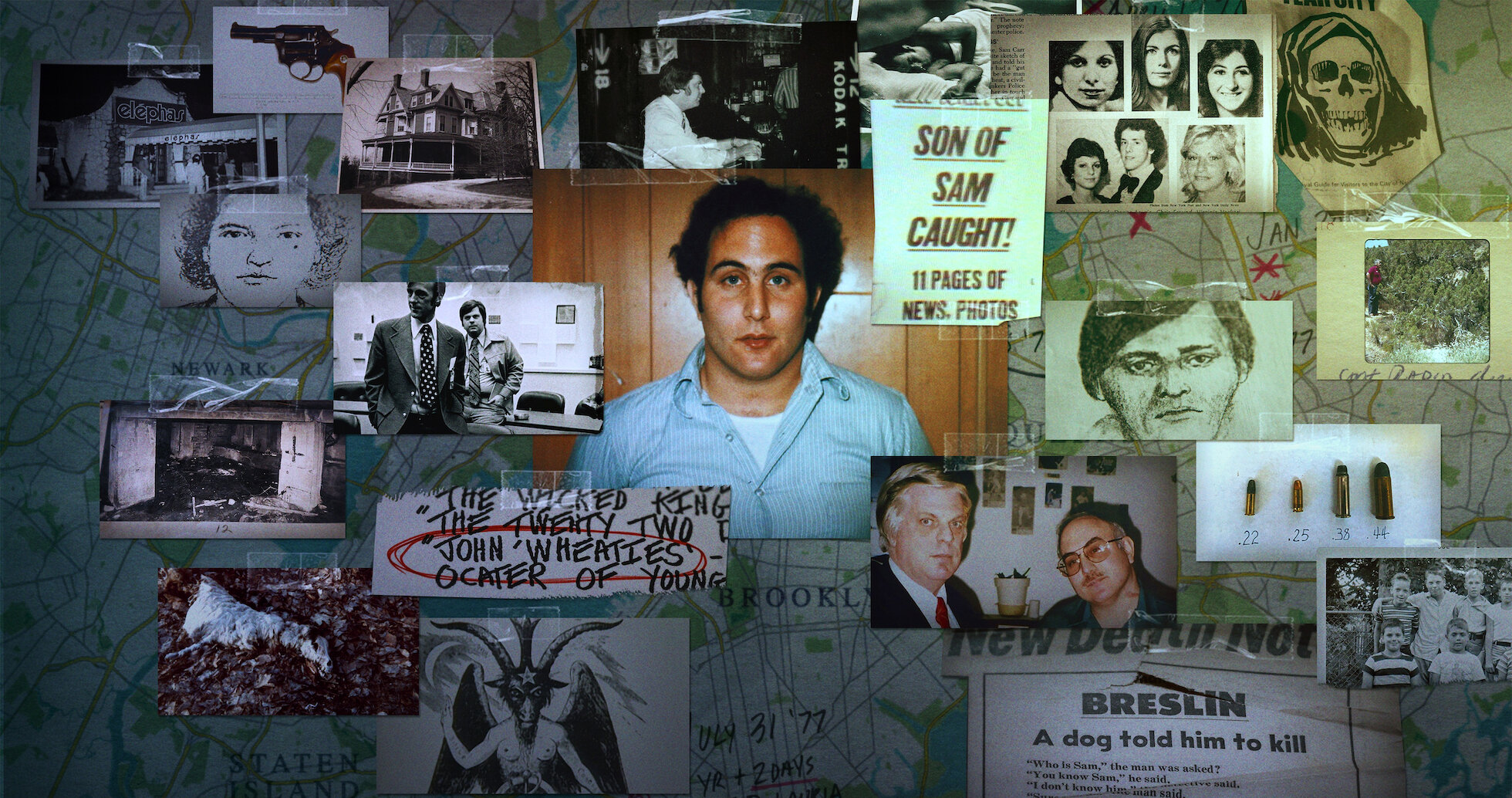
The Son of Sam case dominated 1970s New York headlines, sparking fear, shaping police investigations, and leaving a lasting mark on American true crime culture
The compulsion was not limitless, however. By the summer of 1977, he had grown sloppy. Parking illegally by a fire hydrant, leaving maps and weapons in his car — these were not the choices of a man determined to evade capture forever. Many experts argue that Berkowitz’s subconscious wanted to be caught, that the thrill of the hunt had run its course.
The idea that serial killers secretly crave their own downfall has long fascinated psychologists. Dr. Harvey Schlossberg once remarked: “They want to be stopped. Somewhere, deep down, they are testing the world to see if anyone will notice, if anyone will care enough to end it.”
Today, looking back from prison, Berkowitz has acknowledged this paradox. He describes his arrest not with anger, but with relief. His flat statement — “Well, you got me” — said as officers surrounded his car, may have been the most honest words he ever spoke.
Since 1978, Berkowitz has lived behind bars, moving between maximum security facilities in New York State. He is now in his early 70s, serving out six consecutive life sentences at Shawangunk Correctional Facility.
In prison, he has reinvented himself as a born-again Christian, even adopting the moniker “Son of Hope.” He writes letters to ministers, records testimony videos, and insists he has been redeemed. The transformation is common among serial offenders; prison chaplains often remark that faith provides structure, forgiveness, and a narrative of rebirth that appeals to men who once thrived on destruction.
:max_bytes(150000):strip_icc():focal(741x322:743x324)/david-berkowitz-then-now-72925-883ca5edd08148039ffd68117547799a.jpg)
David Berkowitz, known as the ‘Son of Sam,’ seen in a 1970s photo (left) compared with his appearance decades later in prison (right).
Still, victims’ families have dismissed his religious awakening as a performance, just another mask over the same manipulative personality. His repeated parole bids have been denied, each time reminding him that redemption in the spiritual sense does not erase earthly consequences.
The Berkowitz case left more than bodies in its wake. His trial spurred the creation of the “Son of Sam” laws, designed to prevent criminals from profiting off book or movie deals about their crimes. It also reshaped how media covers serial killers, showing the dangers of turning them into celebrities.
For New Yorkers, the memory lingers of a time when simply parking your car or walking home at night felt like a gamble with fate. The panic of 1977 was not just about bullets — it was about the terrifying idea that evil could hide in the quietest corners of ordinary life.
For a deeper dive into Berkowitz’s crimes and the panic they caused, Netflix’s documentary trailer captures the atmosphere of 1970s New York. 'Conversations with a Killer: The Son of Sam Tapes'.
Though separated by time and motive, David Berkowitz and Mark David Chapman, who murdered John Lennon in 1980, share striking psychological parallels. Both were alienated men who craved notoriety and constructed warped inner narratives to justify violence.
As Dr. Katherine Ramsland notes, “They externalize blame onto forces beyond themselves — whether a neighbor’s dog, as in Berkowitz’s case, or a fixation with a celebrity, as in Chapman’s.”
Both men also staged their attacks in public, symbolic settings — Berkowitz in lovers’ lanes that embodied youthful freedom, Chapman outside Lennon’s Dakota apartment, the heart of New York’s creative counterculture.
The comparison underscores how some killers see violence as a means to etch themselves into history, even if only through infamy.
David Berkowitz’s story is more than the tale of a killer. It is a meditation on loneliness, rage, and the human need for identity. Whether mad or bad, ill or evil, he embodied the nightmare that ordinary people can commit extraordinary violence.
And in the end, it was not a heroic chase or a brilliant profiler who stopped him. It was a parking ticket, noticed by a woman walking her dog. Perhaps that is the most haunting truth: monsters are often caught not by their darkness, but by their carelessness.
Who is David Berkowitz?
David Berkowitz, also known as the “Son of Sam,” is an American serial killer who terrorized New York City between 1976 and 1977. He killed six people and wounded seven others in a string of late-night shootings.
How was David Berkowitz caught?
He was caught because of a simple parking ticket. A woman walking her dog noticed his car parked illegally near a fire hydrant at the scene of his final shooting. Detectives traced the summons, searched his car, and found a .44 caliber revolver — the murder weapon.
Why did Berkowitz say he killed people?
At first, Berkowitz claimed that his neighbor’s dog was possessed by a demon and ordered him to kill. Later, he admitted this was partly a hoax to support an insanity defense. Psychologists believe deeper motives included resentment, misogyny, and feelings of abandonment.
Was David Berkowitz insane?
Though he displayed bizarre behavior — including claims of hearing voices from a dog — court psychiatrists found him competent to stand trial. Experts remain divided over whether he was mentally ill or simply manipulative and dangerous.
Where is David Berkowitz now?
As of 2025, Berkowitz is 71 years old and serving six consecutive life sentences at Shawangunk Correctional Facility in New York. He has repeatedly been denied parole.
Why did David Berkowitz stop killing?
His arrest ended the spree. Some criminologists suggest that his sloppy mistake with the parking ticket hints he may have subconsciously wanted to be caught.
Did Berkowitz really find God in prison?
Yes. In the late 1980s, Berkowitz became a born-again Christian and now calls himself the “Son of Hope.” He claims his faith brought him peace and redemption, though critics see it as another form of self-mythologizing.
What laws came from the Son of Sam case?
In response to fears that Berkowitz could profit from book or movie deals, New York passed the “Son of Sam law,” which prevents criminals from cashing in on their crimes.
What other killers is Berkowitz compared to?
His case often draws comparisons to the Menendez brothers, who blamed abuse for their crimes, and to Brian Kohberger, the accused in the Idaho student murders — all raising the same question: mad or bad?
If the story of David Berkowitz left you wanting to explore more criminal minds and courtroom battles, check out our other in-depth true crime investigations:
The Idaho College Murders: Inside the Case Against Brian Kohberger – A chilling look at how digital forensics, DNA, and surveillance unraveled one of America’s most haunting campus crimes.
Josh Duggar: From Reality TV to Federal Prison – The disturbing downfall of the 19 Kids and Counting star and the legal case that exposed years of abuse.
The Alcatraz Escape Mystery: Did They Survive?– Reexamining the evidence behind the infamous 1962 prison break that still captivates investigators.
Lori Vallow and the Doomsday Cult Killings – How apocalyptic beliefs spiraled into tragedy, ending with a high-profile trial and life sentences.
The Murder of Sarah Green Patrick: A Case that Shook the UK– A forensic deep dive into a case of betrayal, violence, and the legal fallout that followed.