Understand Your Rights. Solve Your Legal Problems


Three veteran Department of Justice employees have filed a landmark lawsuit against Attorney General Pam Bondi, claiming their abrupt firings violated federal employment law, veterans’ rights, and constitutional protections. At stake is not just their reinstatement—but the integrity of civil service itself.
The lawsuit, filed Thursday, July 24, names three plaintiffs: Michael Gordon, a longtime prosecutor involved in January 6 cases; Joseph Tirrell, the DOJ’s former chief ethics official and a Navy veteran; and Patty Hartman, a public affairs specialist who managed Capitol riot communications.
All three were abruptly terminated earlier this summer, notified via one-page memos citing Article II of the U.S. Constitution—which grants broad powers to the president—but offering no specific reason for dismissal.
Gordon had just been tasked with a high-profile fraud case involving millions stolen from special-needs children. Tirrell, as a member of the Senior Executive Service (SES) and a veteran, says he’s entitled to legal protections that weren’t honored. Hartman, who had helped shape public messaging around Jan. 6 prosecutions, called the breakdown between the DOJ and White House “stark” in a CBS News interview.
“There used to be a line,” Hartman said. “That line is very definitely gone.”
Their lawsuit seeks immediate reinstatement, back pay, and a ruling that their firings violated both constitutional norms and federal employment protections.
While DOJ leadership cited presidential authority, the plaintiffs argue that Pam Bondi exceeded her powers by removing career employees without due process.
Under the Civil Service Reform Act, federal employees can’t be dismissed arbitrarily. Required steps include:
Advance notice
Opportunity to respond
A clear explanation for removal
Tirrell’s case adds layers of complexity. As a veteran, he's protected under veterans' preference laws, which forbid firing a veteran without meeting specific legal criteria. As an SES member, he’s entitled to additional job security, requiring justification and review—none of which occurred.
The suit also claims that the traditional appeals route—the Merit Systems Protection Board (MSPB)—is nonfunctional due to Trump’s earlier removal of a board member, making redress impossible through normal channels.
Sources say the firings are part of a larger purge targeting officials tied to the Capitol riot prosecutions and other Trump investigations. According to CBS News, within weeks of Trump’s return to office, the FBI was instructed to compile a list of agents involved in Jan. 6 cases.
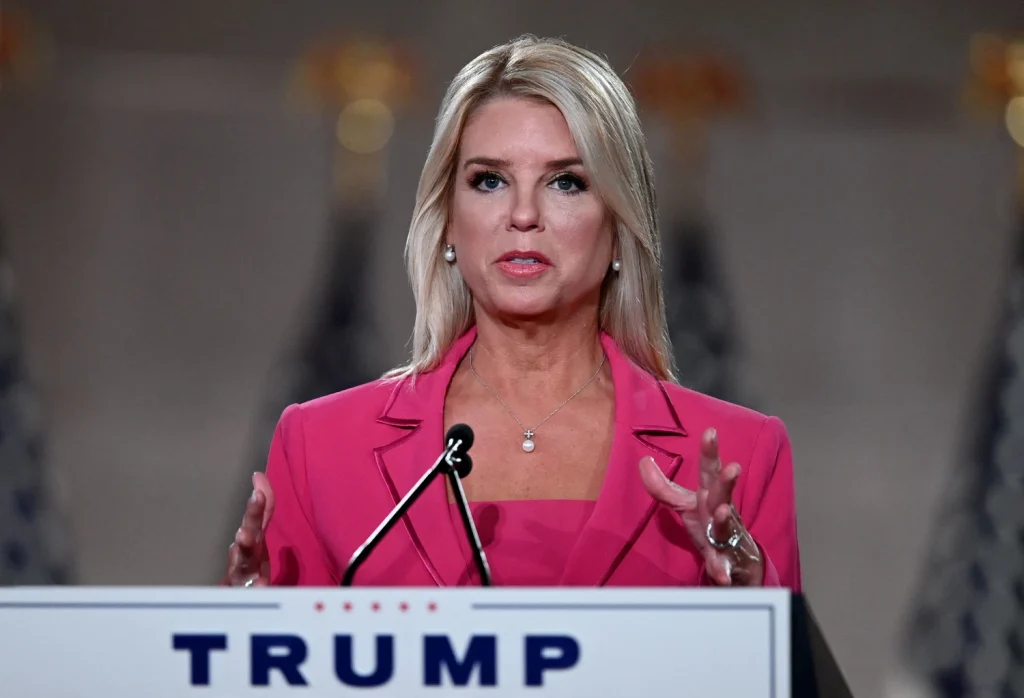
Pam Bondi—appointed as AG earlier this year—has since launched a “weaponization working group” to investigate what she calls politically biased prosecutions of the former president. Critics say it’s a smokescreen for gutting nonpartisan justice.
If these firings are found to be retaliatory or politically motivated, they may violate not only civil service rules but the Whistleblower Protection Act and the First Amendment.
“This case may set the tone for how far an administration can go in reshaping the DOJ—and whether loyalty now trumps law,” said a former Office of Legal Counsel attorney.
This lawsuit has national implications. At its core is the question: Can a president—or their AG—fire civil servants for doing their jobs independently?
The plaintiffs argue this case is about restoring the independence of the civil service—a system designed to withstand political winds. If the courts rule in their favor, it could reinforce long-standing job protections. If not, it may open the door for future administrations to replace career professionals with politically loyal staff at will.
Legal analysts believe the case could reach the Supreme Court, especially if lower courts issue conflicting rulings on the limits of Article II power.
Veterans who serve in federal roles are protected by a network of laws designed to honor their service and shield them from unjust workplace treatment. These protections are not symbolic—they are enforceable rights under statutes like the Veterans’ Preference Act and the Uniformed Services Employment and Reemployment Rights Act (USERRA).
In the lawsuit, Joseph Tirrell, a Navy veteran, argues that his firing violated these laws by bypassing the legal standards for dismissing a protected veteran. Federal rules require agencies to provide veterans with due process and prioritize them in both hiring and retention.
When these rights are ignored, it can amount to a Prohibited Personnel Practice. Veterans in similar situations can seek help from the U.S. Department of Labor’s VETS program, access resources through OPM’s Veterans Services Center, or explore appeal options with the Merit Systems Protection Board (MSPB). These organizations are critical in ensuring that those who served the country are not sidelined by political pressure or administrative overreach.
Can federal employees be fired without cause?
No. Most federal workers are protected under the Civil Service Reform Act, which requires notice, evidence, and the chance to respond before termination.
What is the Merit Systems Protection Board (MSPB)?
It’s the agency that hears appeals from fired federal employees. If it lacks a quorum, employees may seek relief through the courts.
Do veterans have special employment protections in federal jobs?
Yes. Veterans’ preference laws protect hiring and firing decisions, giving veterans extra safeguards against unjust termination.
What are Senior Executive Service (SES) protections?
SES members can’t be fired without written notice and justification. Their role is meant to be nonpartisan and professionally independent.
Could this lawsuit impact other civil servants?
Absolutely. If successful, the case could reaffirm employment protections and limit politically motivated dismissals in future administrations.