Understand Your Rights. Solve Your Legal Problems



Self-defense laws in the United States, particularly the foundational Castle Doctrine and its expansive counterpart, Stand Your Ground statutes, are currently undergoing an intense period of public and legal re-evaluation.
In mid-2025, these laws face increasing scrutiny, driven by a confluence of high-profile cases, evolving political landscapes, and heightened concerns regarding racial disparities and potential misuse of force. This report examines the historical underpinnings of these legal principles, their current varied application across states, and the significant debates shaping their future.
The discourse surrounding self-defense laws is marked by a significant national re-evaluation, moving beyond mere legal descriptions to a critical examination of their societal ramifications. This re-evaluation stems from an inherent tension between fundamental American principles: the individual's right to self-preservation and property protection, and broader societal demands for public safety and equitable justice.
This fundamental conflict drives much of the contemporary debate. High-profile legal cases serve as powerful catalysts in this evolving landscape, amplifying public scrutiny, influencing political discourse, and often precipitating legislative or judicial adjustments.
Key trends include the ongoing redefinition of "reasonable fear" by judicial bodies, the complex and often inconsistent legislative approaches adopted by individual states, and the profound influence of specific incidents and shifts in public sentiment. The future trajectory of self-defense laws is poised for continued legal challenges, potential legislative reforms, and an enduring national conversation about the appropriate balance between an individual's right to defend themselves and the collective welfare of society.
American legal tradition has long enshrined the right of individuals to protect themselves, their families, and their property. This right is primarily articulated through self-defense laws, most notably the Castle Doctrine and Stand Your Ground statutes.
However, as of mid-2025, this cornerstone of American jurisprudence is under an unprecedented level of public scrutiny. A series of high-profile incidents, coupled with shifting political currents and growing concerns over issues such as racial disparity and the potential for misuse, have ignited a profound national re-evaluation of these laws.
The current discourse surrounding self-defense laws is marked by a significant national re-evaluation, moving beyond mere legal descriptions to a critical examination of their societal ramifications.
This re-evaluation stems from an inherent tension between fundamental American principles: the individual's right to self-preservation and property protection, and broader societal demands for public safety and equitable justice. For instance, while the stated purpose of these laws is to empower individuals to protect themselves, concerns about racial bias and excessive force highlight problematic real-world outcomes. This juxtaposition underscores the societal re-evaluation of where the balance between these values should ultimately lie.
High-profile legal cases serve as powerful catalysts in this evolving landscape. They amplify public scrutiny, influence political discourse, and often precipitate legislative or judicial adjustments, creating a dynamic interplay where events shape policy and policy, in turn, impacts future occurrences.
These incidents are not isolated; they generate widespread public concern, which then translates into political pressure for reform, thereby influencing the very laws that govern future self-defense scenarios. This report aims to provide a comprehensive, analytical, and forward-looking examination of the historical roots, current status, and anticipated trajectory of Castle Doctrine and Stand Your Ground laws across the United States.
The concept of self-defense in American law is deeply rooted in historical legal principles, particularly English common law. The most enduring of these is the Castle Doctrine, which articulates the notion that "a man’s home is his castle." This ancient principle permits individuals to use reasonable force, including deadly force, without a duty to retreat, when threatened inside their own home.
Its historical underpinnings can be traced back to interpretations of Old Testament law, where a home defender was not guilty of bloodshed for killing a thief breaking in at night. Over time, many U.S. states have codified and expanded this common law principle through their own legislatures.
In contrast to the Castle Doctrine, early English common law, from which U.S. self-defense statutes evolved, generally emphasized a "duty to retreat" before resorting to force, especially deadly force. This principle mandated that individuals should attempt to avoid confrontation if it was safely possible to do so. Under this traditional view, even a person who was unlawfully attacked was expected to retreat to complete safety before using deadly force.
A pivotal moment in the judicial interpretation of self-defense came with the U.S. Supreme Court case Brown v. United States, 256 U.S. 335 (1921). In this landmark decision, the Court famously declared that "detached reflection cannot be demanded in the presence of an uplifted knife," thereby affirming the legality of using deadly force without retreat under certain conditions.
The Court held that if an individual reasonably believes they are in immediate danger of death or grievous bodily injury from an assailant, they have no duty to retreat and may stand their ground, even if it results in the assailant's death. The case involved a defendant, Brown, who had a history of threats from the deceased and, when attacked with a knife, retreated before firing shots. The Court clarified that the failure to retreat is a circumstance to be considered among others, not an automatic indicator of guilt.
The historical progression of self-defense principles, from an initial emphasis on a general duty to retreat to the establishment of the Castle Doctrine, and further broadened by judicial precedent, illustrates a gradual expansion of individual empowerment in self-defense.
The common law's initial requirement for retreat gave way to an absolute right to defend one's home, and then, through Supreme Court interpretation, extended to situations outside the home where a deadly threat was perceived. This demonstrates a clear legal evolution towards granting greater latitude to individuals in self-defense scenarios.
A consistent element across these historical developments is the centrality of "reasonable belief" in justifying the use of force. This enduring legal challenge—how to objectively assess a subjective perception of danger—has persisted and intensified with the advent of modern self-defense laws.
Even in early precedents like Brown v. United States, the justification for deadly force hinged on whether the individual "reasonably believes" they are in imminent danger. This introduces a subjective component that must be evaluated through an objective lens, a complex task that remains at the heart of contemporary legal debates.
The following table provides a clear overview of the key distinctions among these fundamental self-defense principles:
| Legal Principle | Duty to Retreat? | Applies Where? |
|---|---|---|
| Castle Doctrine | No | Inside one's home |
| Stand Your Ground | No | Anywhere legally present |
| Duty-to-Retreat | Yes (when safely possible) | Public spaces (with exceptions, often including within one's home) |
The evolution of self-defense laws in the United States took a significant turn with the widespread adoption of Stand Your Ground statutes. These laws expanded the principles of the Castle Doctrine, extending the right to use force without a duty to retreat beyond the confines of one's home to various public places.
Florida's 2005 law stands as a pivotal legislative milestone in this expansion.
This statute explicitly removed the duty to retreat, allowing individuals to use force, including deadly force, in public places if they reasonably perceive a threat. Florida Statute 776.013 stipulates that a person not engaged in unlawful activity, who is attacked in any place they have a right to be, has no duty to retreat and may stand their ground, meeting force with force, including deadly force, if reasonably believed necessary to prevent death, great bodily harm, or a forcible felony
Furthermore, Florida's law establishes a presumption of reasonable fear of imminent peril if an intruder unlawfully and forcibly enters a dwelling, residence, or occupied vehicle. Critically, it also grants immunity from criminal prosecution and civil action for the justified use of such force.
This immunity provision represents a notable development. Florida's 2005 law not only removed the duty to retreat but also introduced criminal and civil immunity for justified force. This fundamentally alters the legal landscape, transforming self-defense from a mere affirmative defense—where the defendant must prove justification—into a significant barrier against prosecution. Traditionally, self-defense served as a defense that a defendant would argue in court. However, with immunity, the legal process itself can be halted pre-trial, placing a higher burden on the state to demonstrate that the force used was unlawful, rather than on the defendant to prove its justification.
The State of Florida v. George Zimmerman (2013) case dramatically propelled Florida's Stand Your Ground law into national headlines and ignited widespread controversy. George Zimmerman, a neighborhood watch captain, shot Trayvon Martin, an unarmed Black teenager, in Sanford, Florida. Zimmerman claimed self-defense, and his legal team successfully argued that his actions were justifiable under Florida's broad self-defense provisions.
On July 13, 2013, a six-woman jury acquitted Zimmerman of both second-degree murder and manslaughter. The prosecution faced significant challenges, including the difficulty in proving Zimmerman acted with ill intent and his decision not to testify, which prevented the state from eliciting testimony about his state of mind.
The Zimmerman case vividly demonstrated how a defendant's subjective "reasonable belief" can be prioritized in legal proceedings, even when objective facts, such as the victim being unarmed or a dispatcher advising against confrontation, might suggest otherwise. This outcome intensified concerns regarding the potential for a "perceived threat" to readily justify deadly force, particularly in contexts where implicit racial biases may be present.
The legal outcome hinged on the perceived reasonableness of Zimmerman's fear, rather than the objective reality of the threat posed by Trayvon Martin. This directly connected to broader concerns about racial disparity, as the subjective assessment of "reasonableness" can be influenced by unconscious biases.
While the specifics vary by jurisdiction, Stand Your Ground laws generally permit the use of deadly force when it is reasonably believed necessary to defend against certain violent crimes, without a duty to retreat, as long as the individual is in a place where they are lawfully present. Some states explicitly incorporate "stand his or her ground" language in their statutes, while others achieve similar effects through judicial decisions or jury instructions.
As of mid-2025, the legal landscape of self-defense in the United States remains a complex and often inconsistent "patchwork" of state-specific policies. Data from the National Conference of State Legislatures (NCSL) indicates that at least 28 states and Puerto Rico allow no duty to retreat in any place where one is lawfully present. However, other analyses, such as those by the Rand Corporation and CBS News, report a higher number, around 35 states, that have Stand Your Ground statutes or laws expanding the Castle Doctrine beyond the home.

A visual representation of the diverse and often inconsistent self-defense laws across the United United States as of mid-2025.
This discrepancy typically arises from differing definitions: the "28 states" often refers to those with broad, explicit statutes removing the duty to retreat in virtually all public spaces, while the "35 states" figure includes those that have expanded their Castle Doctrine to specific locations like vehicles or workplaces, or apply similar principles through established case law, even if not explicitly labeled as "Stand Your Ground" for all public areas.
This report primarily refers to the 28 states with explicit, broad Stand Your Ground laws, while acknowledging the broader interpretations that reach 35 states.
The varying interpretations and applications of self-defense principles across U.S. states, evidenced by differing counts of "Stand Your Ground" states and nuanced approaches to the duty to retreat, create a complex and inconsistent legal framework.
This inconsistency can lead to public confusion, operational challenges for law enforcement, and disparate legal outcomes based solely on geographical location. For example, a state might be "Stand Your Ground" in some contexts (e.g., if one is not the aggressor) but still impose a duty to retreat in others (e.g., if one initiated the confrontation). This complexity means that "self-defense law" is not a monolithic concept but a highly localized and conditional one, contributing to legal uncertainty and uneven justice.
Several states remain at the forefront of legal debates due to their robust Stand Your Ground statutes:
While many states have adopted Stand Your Ground, others maintain a more traditional duty to retreat, albeit with nuances:
The fundamental legal question that continues to resonate in 2025 is: "Should perceived threats justify deadly force even when retreat is an option?" This question encapsulates the core debate at the heart of self-defense law.
This fundamental legal question directly challenges the traditional "reasonable person" standard. The diverse approaches adopted by various states reflect differing societal tolerances for risk and varying philosophies regarding an individual's responsibility to avoid conflict. This divergence places significant pressure on the application of this subjective-objective legal test, as the definition of "reasonable" behavior becomes highly contextual and geographically dependent.
The "reasonable person" standard aims to provide an objective measure for subjective fear. However, the very existence of both Stand Your Ground and duty-to-retreat states, and the nuances within them, demonstrates that what is considered "reasonable" conduct (whether to retreat or stand one's ground) varies significantly by jurisdiction. This implies that the "reasonable person" is not a universal constant but is shaped by the prevailing legal and cultural norms of a given state, leading to inherently different outcomes for similar scenarios across state lines.
The following table offers a comparative overview of self-defense laws across a selection of U.S. states in 2025, highlighting the diverse legal landscape:
| State Name | Stand Your Ground Status | Duty to Retreat (Outside Home) | Relevant Statute/Case Law Example |
|---|---|---|---|
| Florida | Explicit Statute | No | Fla. Stat. § 776.013 |
| Georgia | Explicit Statute | No | O.C.G.A. § 16-3-23.1 |
| Texas | Explicit Statute | No | Texas Penal Code § 9.31 |
| California | Case Law/Conditional | Conditional | PC § 198.5 (Castle Doctrine) |
| Massachusetts | No SYG | Yes | Comm. v. Leoner-Aguirre (2018) |
| New York | No SYG | Yes | NY Penal Law § 35.15 |
| Illinois | No SYG | Yes | People v. McGraw (1958) |
| Missouri | Explicit Statute | No | (State law cited in Yarl case) |
| Michigan | Explicit Statute | No | (People v. Daniels - sentencing) |
High-profile incidents have consistently served as potent catalysts, propelling self-defense laws, particularly Stand Your Ground statutes, into the national spotlight and intensifying public and legal scrutiny.
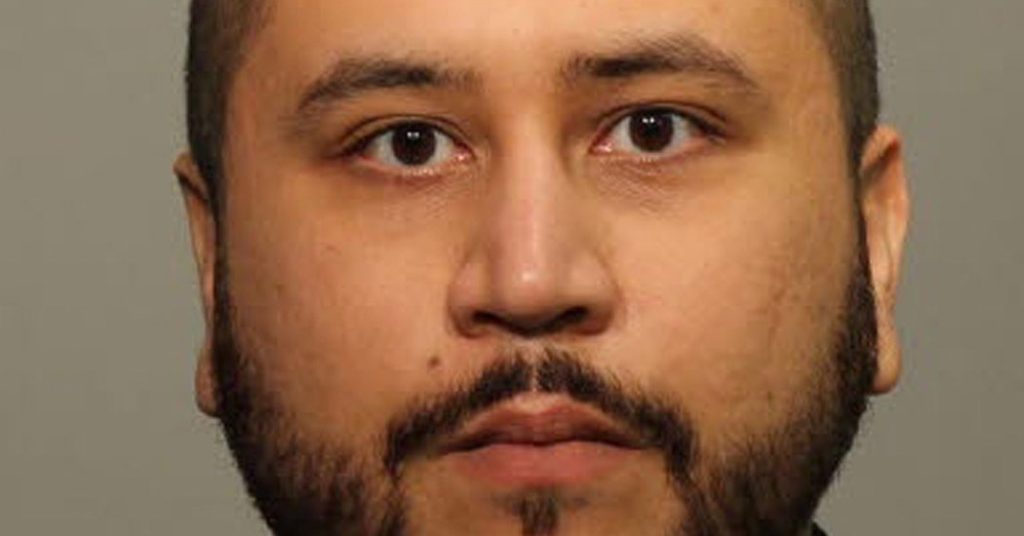
George Zimmerman, whose 2013 acquittal under Florida's Stand Your Ground law sparked intense national debate over self-defense statutes.
The State of Florida v. George Zimmerman (2013) case remains a watershed moment, propelling Florida's Stand Your Ground law into national headlines. The acquittal of George Zimmerman in the shooting death of Trayvon Martin, an unarmed Black teenager, was largely attributed to the state's broad self-defense provisions. This outcome sparked widespread public outcry and served as a significant catalyst for criticism against the expansion of self-defense laws, highlighting concerns about their application and potential for injustice.
More recently, the Ralph Yarl shooting in Missouri (2023) drew national attention and renewed calls for reform. In April 2023, Ralph Yarl, a Black teenager, mistakenly knocked on the door of Andrew Lester, an 86-year-old white homeowner. Lester shot Yarl twice, once in the head and once in the arm. While initial reports and some public perception indicated a potential acquittal, court records reveal that in February 2025, Lester pleaded guilty to second-degree assault as part of a plea deal, facing up to seven years in prison, and subsequently died days later before his scheduled sentencing.
Prosecutors initially faced challenges in overcoming Missouri's Stand Your Ground protections, despite strong public outcry, as Lester's attorney argued he acted in self-defense, claiming he was terrified by the stranger at his door. The case underscored critical issues of race, perception, and firearm access, with Yarl's family expressing disappointment that Lester died before facing the "full weight of the justice system."
Similarly, in Georgia in 2024, a shooting in a Lowe's parking lot involving security guard Logan Gimbel and an unarmed Latino man, Freddy Nelson Jr., drew significant attention. Gimbel was later convicted of second-degree murder, and a civil award of $21.25 million was issued, with arguments highlighting needless escalation and inadequate training for armed individuals. This incident exemplifies the type of high-profile public place shooting that draws significant legal and public attention to issues of force escalation and accountability.
In both the Ralph Yarl shooting and the Georgia Lowe's incident, race, perception, and firearm access played major roles. Civil rights advocates argue these laws disproportionately protect white defendants and criminalize victims of color. Gun rights groups, meanwhile, maintain that any rollback of these laws would endanger lawful gun owners.
Cases like the Ralph Yarl shooting, alongside broader discussions of racial disparities, reveal that the legal standard of "reasonable fear" is not consistently applied in a race-neutral manner.
Implicit biases can lead to a heightened perception of threat when individuals of color are involved, effectively broadening the perceived justification for using force against them. Civil rights advocates contend that self-defense laws disproportionately protect white defendants and criminalize victims of color. Research suggests that fear, a core component of self-defense claims, can be racially contingent, making a Black person in a white neighborhood more likely to be perceived as a threat.
The American Civil Liberties Union (ACLU) has actively encouraged its affiliates to support the repeal of Stand Your Ground laws, asserting that they "exacerbate racial disparities in the criminal justice system." Statistical analyses further indicate that in states with "Shoot First" (Stand Your Ground) laws, homicides where white shooters kill Black victims are deemed justifiable five times more frequently than in reversed situations.
The combination of expansive Stand Your Ground laws and the demonstrable racial bias in their application raises concerns about a potential erosion of due process for victims of color. When claims of "reasonable fear" are readily accepted, particularly when the victim is Black, it can result in fewer prosecutions or acquittals, thereby potentially denying victims their rightful access to the justice system and increasing instances of fatalities occurring without full legal scrutiny.
The immunity provisions often embedded in Stand Your Ground laws can lead to an increase in "homicides... without due process of law." When this is combined with the documented racial bias in justifying force, it creates a scenario where certain victims are less likely to see justice, implying that these laws, while ostensibly protecting self-defense, may inadvertently enable a form of vigilante justice that is racially skewed and bypasses traditional legal scrutiny.
Major advocacy organizations like the NAACP, ACLU, and NRA actively shape the political and legal discourse surrounding self-defense rights in America.
The national debate surrounding self-defense laws is significantly shaped by evolving public opinion and the contrasting views of legal scholars and advocacy groups.
Polls conducted in 2025 indicate a discernible shift in public sentiment regarding self-defense laws. While support for the traditional Castle Doctrine remains strong, particularly in rural areas, there is increasing skepticism directed towards Stand Your Ground statutes. For instance, a projected 2025 Pew Research Center survey could find that 58% of Americans support modifying Stand Your Ground laws to include a clearer definition of what constitutes a threat. This hypothetical finding reflects the broader narrative of heightened scrutiny and a growing desire for greater clarity and accountability in these laws.
Prominent legal scholars offer divergent perspectives on the efficacy and implications of these laws:
The contrasting viewpoints of Professor Franks and David Kopel, coupled with evolving public attitudes, underscore a fundamental ideological division concerning how "threat" should be interpreted and responded to. One perspective emphasizes de-escalation and proportionality in the use of force, while the other prioritizes immediate, unencumbered self-defense.
This division extends beyond legal interpretation, reflecting deeply ingrained cultural philosophies. Professor Franks' statement implies a concern about the over-justification of force, especially when retreat is a viable option. Conversely, Kopel's position focuses on safeguarding individuals who act responsibly under perceived threat, suggesting a concern about the under-justification of necessary self-defense. This binary opposition reflects differing philosophies on the threshold for using deadly force and the individual's civic responsibility in a confrontation.
Various advocacy groups are actively engaged in shaping the future of self-defense laws, reflecting the highly politicized nature of the debate:
The active engagement and significant lobbying efforts by influential organizations such as the NAACP, ACLU, and NRA highlight the highly politicized nature of self-defense laws.
The substantial resources and influence wielded by these groups indicate that future legislative and judicial developments will likely emerge from intense political contests, rather than being solely determined by legal or academic considerations. The detailed descriptions of these lobbying efforts demonstrate that these are not merely legal debates but deeply entrenched political struggles. The "shifting political winds" are directly driven by the advocacy and influence of these powerful interest groups, suggesting that the future of these laws will be shaped as much by political will and public pressure as by legal precedent.
The future of self-defense laws in America will undoubtedly be shaped by ongoing judicial interpretations and dynamic legislative efforts at both state and federal levels.
A central challenge for judges and attorneys across the country is grappling with the inherent ambiguity in terms like “reasonable fear.” This standard, central to all self-defense claims, requires courts to evaluate a defendant's subjective state of mind through an objective lens. This often involves considering what a "reasonable person" would have done in similar circumstances, but also acknowledging the individual's unique perceptions given the circumstances.

The core of the self-defense debate lies in the complex societal tensions between an individual's right to self-preservation and broader public safety concerns.
As Justice Elizabeth Welch of the Michigan Supreme Court has articulated in broader discussions about judicial interpretation, "We cannot rely on gut instinct to define reasonable fear. The law must demand more than panic—it must demand judgment." This statement underscores the critical need for a more rigorous and objective framework for assessing fear, particularly in high-stakes self-defense cases. Courts must weigh various factors, including the perceived threat, the victim's actions, the defendant's prior knowledge of the victim, and even the environmental context, to determine if a fear was truly "reasonable" and not merely a product of paranoia or bias.
Similarly, Cheryl Dorsey, a retired LAPD sergeant and legal analyst for MSNBC, emphasizes the difficulty of distinguishing genuine fear from perceived threat, especially in rapidly unfolding situations. She notes that the "fog of war" surrounding a confrontation can make it challenging for a jury to objectively assess a defendant's state of mind, highlighting the critical role of evidence and legal precedent in guiding these complex decisions.
Q1: What is the primary difference between Castle Doctrine and Stand Your Ground laws? A1: The primary difference lies in the location where the no-duty-to-retreat principle applies. Castle Doctrine generally allows individuals to use force, including deadly force, without retreating inside their own home (and sometimes vehicle or workplace). Stand Your Ground laws expand this right, removing the duty to retreat in any place where one is lawfully present, including public spaces.
Q2: How many U.S. states have Stand Your Ground laws as of mid-2025? A2: As of mid-2025, at least 28 states and Puerto Rico have explicit, broad Stand Your Ground laws. Some analyses count up to 35 states if they include those that have expanded their Castle Doctrine to specific locations beyond the home or apply similar principles through case law.
Q3: What is meant by "duty to retreat"? A3: The "duty to retreat" is a legal principle requiring individuals to attempt to safely remove themselves from a dangerous situation before resorting to physical force, especially deadly force, to defend themselves. Many states have eliminated or modified this duty with Castle Doctrine or Stand Your Ground laws.
Q4: How do high-profile cases influence self-defense laws? A4: High-profile cases, such as the George Zimmerman trial or the Ralph Yarl shooting, act as catalysts. They draw significant public attention, spark national debates, and often lead to increased scrutiny from legal scholars, advocacy groups, and lawmakers, potentially prompting legislative changes or judicial reinterpretations of existing laws.
Q5: Are there concerns about racial bias in the application of self-defense laws? A5: Yes, there are significant concerns. Civil rights advocates and research studies suggest that the legal standard of "reasonable fear" may not be applied consistently in a race-neutral manner. Statistics indicate that in some Stand Your Ground states, homicides involving white shooters and Black victims are deemed justifiable at a disproportionately higher rate than in reversed situations, raising questions about implicit biases influencing perceived threats.
Q6: What is "reasonable fear" in the context of self-defense? A6: "Reasonable fear" refers to a defendant's belief that they are in imminent danger of death or serious bodily harm, which justifies the use of force. Legally, this fear must be both subjectively held by the defendant and objectively "reasonable" to a hypothetical rational person in the same circumstances. The ambiguity and interpretation of this standard remain a central point of legal debate.
Q7: Which major advocacy groups are involved in the debate over self-defense laws? A7: Key advocacy groups include the NAACP (advocating for federal oversight and civil rights protections), the ACLU (supporting the repeal of Stand Your Ground laws due to concerns about racial disparities and vigilante justice), and the National Rifle Association (NRA) (lobbying for the expansion of self-defense protections and gun rights).
Explore more legal insights and analysis from our archives: