Coup Claims and War Crimes Trigger Legal Crisis Between Colombia and the U.S.
A coup accusation. Tariff threats. A mule bomb. The diplomatic rift between Colombia and the United States has spiraled into a multifaceted legal crisis.
From potential treaty violations to international humanitarian law breaches, what began as fiery rhetoric now poses serious questions for courts, trade bodies, and human rights institutions.
A Coup Accusation
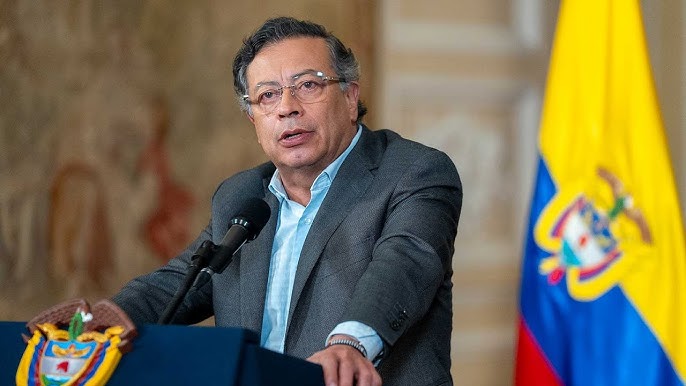
In June 2025, Colombian President Gustavo Petro publicly suggested that U.S. officials, including Senator Marco Rubio, were involved in plotting a “soft coup” against his government. (Source: Washington Post)
The White House swiftly denied the allegations, and tensions escalated. Within days, both nations recalled their ambassadors, an extraordinary move for two long-standing allies.
By early July, the crisis had cooled slightly. The diplomats returned to their posts, but the legal and political consequences were already set in motion.
Diplomatic Law: Did Petro Violate the Vienna Convention?
At the heart of the dispute lies the Vienna Convention on Diplomatic Relations (1961). Article 41 of the treaty prohibits public interference in the internal affairs of other states. Petro’s public claims made without presenting evidence, may be seen as a violation of these principles.
U.S. chargé d’affaires John McNamara, upon returning to Bogotá, stated he was doing so with “persistent concerns” about Colombia’s behavior, clearly signaling continued unease.
“I return with persistent concerns,” McNamara told upon his reinstatement. (Source: El País)
A Retraction, but Not Quite an Apology
President Petro attempted to de-escalate the situation with a handwritten letter to Donald Trump dated June 23. In it, he softened his earlier remarks:
“I would like to clarify that any expression of mine … had no intention of signaling anyone personally or questioning the role of the United States, without any proof.”
(Source: Washington Post)
Colombia’s ambassador to the U.S., Daniel García-Peña, reinforced the message:
“Neither the Secretary of State Marco Rubio, nor the government of the United States, play any role in a coup attempt.”
(Source: Reuters)
Deportation Dispute and Human Rights Law
Petro’s accusations followed another flashpoint: a standoff over deportation flights. In early 2025, Colombia refused to allow U.S. military planes carrying deported Colombians to land, citing non-refoulement, the international law principle that forbids returning individuals to countries where they might face harm.
The U.S. responded with threats of visa restrictions and economic retaliation. Some legal scholars argue that such coercion could infringe upon Article 2(4) of the UN Charter, which prohibits the use of force or threats against the sovereignty of another nation.
Are the Tariffs Legal?
The U.S. is now considering significant tariffs on Colombian exports, including coal, coffee, and agricultural products. However, both nations are bound by the 2012 U.S.–Colombia Free Trade Agreement (FTA), which prohibits arbitrary or politically motivated trade barriers.
Legal observers point to several key issues:
-
If Colombia can demonstrate the tariffs are retaliatory, it may initiate investor-state arbitration.
-
Alternatively, Colombia could pursue a World Trade Organization (WTO) dispute resolution case under most-favored-nation principles.
Guerrilla Attacks and War Crimes Allegations
Meanwhile, on the ground in Colombia, violence continues. In the department of Antioquia, a soldier was killed by a mule laden with explosives, allegedly planted by ELN guerrilla fighters. The unconventional method of attack shocked international observers and may have legal consequences.
Under the Rome Statute of the International Criminal Court (ICC), this could qualify as a war crime, particularly if the act targeted civilians or used indiscriminate methods of violence.
65,000 Displaced Colombians and Legal Fallout
As conflict over coca production escalates, Colombia is facing one of its worst years for internal displacement in over a decade. More than 65,000 people have been forced from their homes in 2025 so far.
Under Colombia’s Victims and Land Restitution Law (2011), the government is required to protect and compensate displaced individuals. Human rights groups claim that enforcement has faltered potentially opening Colombia to legal action before the Inter-American Court of Human Rights (IACHR).
🇺🇸 Could the U.S. Be Held Legally Accountable?
Yes. If the U.S. expands military or intelligence operations in Colombia, it must comply with:
-
The Leahy Law, which prohibits aid to foreign military units involved in human rights violations.
-
The Foreign Assistance Act, which restricts funding to governments seen as undermining democratic governance.
If further cooperation is proposed, especially under a future administration, Congressional oversight and legal reviews are inevitable.
People Also Ask
What triggered the Colombia–U.S. crisis in 2025?
President Petro accused U.S. officials of plotting a coup, prompting both countries to recall their ambassadors before returning them weeks later.
Is it a violation of international law to accuse another country of a coup?
Potentially. Under the Vienna Convention, public accusations without evidence may violate norms of diplomatic non-interference.
Can Colombia challenge U.S. tariffs legally?
Yes. Colombia may pursue action under the 2012 FTA or through the WTO if the tariffs appear retaliatory or discriminatory.
Are the ELN guerrilla attacks considered war crimes?
Possibly. The use of explosive-laden animals or attacks on civilians could be prosecuted under the Rome Statute.
What to Watch Next
-
Will Colombia file a formal challenge to U.S. tariffs through WTO or treaty arbitration?
-
Could the ICC or IACHR launch investigations into guerrilla violence and forced displacement?
-
Will the diplomatic truce hold or reignite as elections approach in both nations?
As diplomatic theatrics give way to legal positioning, this crisis may ultimately be settled not by politicians, but by judges, tribunals, and international law.
More Articles from Lawyer Monthly