Understand Your Rights. Solve Your Legal Problems


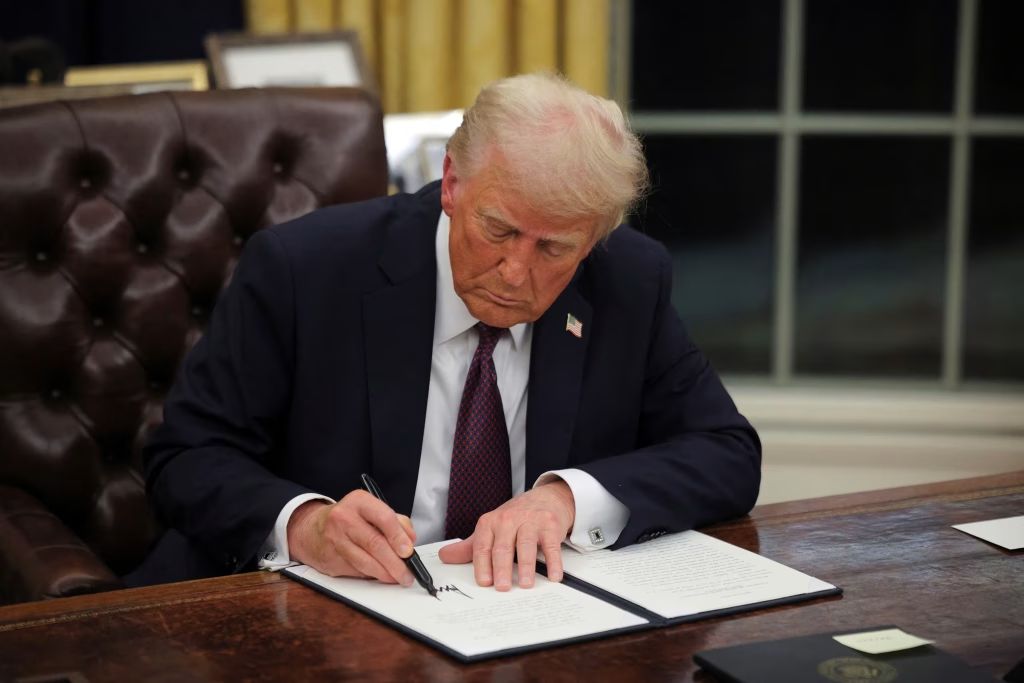
A new travel ban signed by President Donald Trump has taken effect, barring entry from 12 countries due to national security concerns.
The policy has drawn immediate criticism, particularly in Florida, where immigrant communities in cities like Miami and Orlando face significant personal and family disruptions.
The executive action, signed last Tuesday, stops almost all visa approvals for people coming from countries that U.S. officials say aren’t doing enough to verify identities or share critical security information.
The countries now facing a full entry ban include:
Afghanistan
Burma (Myanmar)
Chad
Republic of the Congo
Equatorial Guinea
Eritrea
Haiti
Iran
Libya
Somalia
Sudan
Yemen
Seven other countries, Cuba, Venezuela, Laos, Togo, Burundi, Turkmenistan, and Sierra Leone face more limited restrictions, such as bans on certain types of visas.
South Florida, which hosts some of the largest Haitian, Cuban, and Venezuelan populations in the United States, is among the regions most directly affected by the new travel ban.
For many families, the implications are immediate and deeply personal, ranging from delayed family reunifications to missed life events, including weddings and funerals.
Local leaders have voiced strong opposition. Miami-Dade Commissioner Marleine Bastien criticized the policy as “cruel and short-sighted,” warning it could destabilize immigrant communities and strain social services.
U.S. Representative Maxwell Frost, who represents parts of Orlando, called the executive order “inhumane,” noting that it disproportionately affects individuals fleeing conflict, political repression, and economic hardship.
Florida is home to over 500,000 immigrants from the affected nations, including nearly 300,000 Haitians and tens of thousands of Venezuelans and Cubans, according to U.S. Census data and the Migration Policy Institute.
Advocacy groups warn the ban may interrupt ongoing visa petitions, delay humanitarian cases, and heighten anxiety among mixed-status families.
While the new ban is sweeping, there are some exceptions:
Green card holders
Dual citizens traveling with a passport from an unaffected country
Special visa recipients from Afghanistan
Relatives of U.S. citizens
Certain diplomats, athletes, and humanitarian travelers
People who already have valid U.S. visas issued before the June 9 cutoff aren’t affected at least for now. But new visa applications from those countries will likely be denied unless the traveler qualifies under a narrow exemption.
Donald Trump’s team says the new policy is about tightening national security. Officials claim some foreign governments haven’t been cooperative with U.S. screening requirements or have high rates of visa overstays.
A recent attack in Colorado carried out by a man from Egypt, was cited as an example, even though Egypt wasn’t included in the ban. The attack happened on June 1 in Boulder, Colorado, during a peaceful solidarity walk near Pearl Street Mall.
Witnesses say Mohamed Sabry Soliman, a 45-year-old Egyptian man, threw Molotov cocktails into the crowd and used what appeared to be a homemade flamethrower. Sixteen people were hurt, many of them older adults and investigators have called it a hate-driven act with ideological motives.
The Trump administration has signaled interest in tightening asylum rules, reducing green card pathways, and stepping up deportations.