Understand Your Rights. Solve Your Legal Problems


The question that has shadowed Liverpool since 26 May 2025 — why Paul Doyle drove his Ford Galaxy into a dense crowd during the city’s Premier League victory parade — finally shifted into focus on 26 November 2025. In a dramatic and unexpected turn at Liverpool Crown Court, Doyle, 54, pleaded guilty to all 31 charges, abandoning months of denials and confirming the Crown Prosecution Service’s view that the incident was not an accident, panic, or momentary loss of control.
The guilty pleas stunned the courtroom, where jurors had only just been sworn in for what was expected to be a four-to-six-week trial. As the charges were read aloud again, Doyle broke down, sobbing and struggling to speak. Eight victims were in court, one member of the public visibly weeping as he quietly answered “guilty” to each count.
What happened next — and what prosecutors revealed — now forms the clearest picture yet of Doyle’s mindset during the crash that injured 134 people, including babies as young as six months
The Crown Prosecution Service outlined its position unequivocally today. Sarah Hammond, Chief Crown Prosecutor for Mersey–Cheshire, said:
“Driving a vehicle into a crowd is an act of calculated violence. This was not a momentary lapse by Paul Doyle — it was a choice he made that day and it turned celebration into mayhem.”
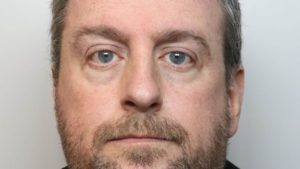
The CPS also released a blurred custody image of Doyle shortly after his pleas changed — a visual confirmation of a man who has now accepted full legal responsibility for the attack.
According to prosecutors, Doyle became “increasingly agitated by the crowds” as he drove through Liverpool city centre. Dashcam footage from inside his vehicle showed mounting frustration, culminating in the moment he accelerated into a gathering of parade-goers along Water Street.
Hammond added:
“This attack did not just harm individuals — it struck at the heart of a city united in joy, leaving fear in its wake.”
Prosecutors described the dashcam footage as crucial. It captured Doyle’s escalating irritation as he encountered slow-moving, dense crowds in the aftermath of Liverpool’s title-winning parade.
Rather than waiting, slowing, or diverting:
Doyle accelerated toward pedestrians
forced his way into tightly packed groups
continued pressing forward as people tried to escape
This behavior, the CPS argued, demonstrated intent, not confusion or loss of control.
The dashcam evidence appears to have played a central role in today’s dramatic plea reversal.
Until yesterday, Doyle had pleaded not guilty to all charges, including:
9 counts of causing grievous bodily harm with intent
17 counts of attempted GBH with intent
3 counts of wounding with intent
dangerous driving
affray
His legal team had been preparing to contest intent, suggesting that new medical evidence might shape their defense.
But shortly before opening statements were due to begin this morning, barristers for both sides were called out of the courtroom. After a 30-minute discussion, Doyle was brought back in and suddenly rearraigned.
He then pleaded guilty to every count.
Judge Menary addressed him directly, stating:
“It is inevitable there will be a custodial sentence of some length, and you should prepare yourself for that inevitability.”
Doyle will be sentenced on 15 and 16 December and remains remanded in custody.
The maximum sentence under the most serious charges — Section 18 offences under the Offences Against the Person Act 1861 — is life imprisonment.
For six months, Liverpool — and the UK — tried to make sense of the crash. Doyle, a married father of three and former Royal Marine from West Derby, had no publicly known history of violence, extremist ideology, or criminal behavior. Early police updates also confirmed that terrorism was ruled out.
This vacuum left residents and commentators searching for explanations. But today’s CPS evidence sharply narrows the field.
✔ Agitation escalating into intentional violence
✔ Deliberate decision-making captured on camera
✔ Frustration leading to purposeful acceleration into crowds
These findings override earlier theories and frame the crash as a violent act rooted in Doyle’s state of mind that day, not in external pressures or mental health crises.
In the months immediately after the crash, some members of the public speculated about whether Doyle’s military background — service with 43 Commando between 1990 and 1994 — might have contributed to his behavior. Veterans’ mental health is a serious and often misunderstood topic, and it is common for high-profile cases involving former service members to prompt public questions about PTSD, trauma, or stress-related conditions.
However, as of today:
That said, broader awareness of trauma remains important. Renowned trauma expert Dr. Bessel van der Kolk writes in The Body Keeps the Score:
“Traumatized people chronically feel unsafe inside their bodies… Their bodies are constantly bombarded by visceral warning signs.”
This insight explains why PTSD can shape behavior — but not why Paul Doyle acted as he did. Today’s courtroom evidence shows prosecutors attribute his actions to deliberate choices, not trauma.
Doyle was originally arrested on suspicion of drug-impaired driving, but no toxicology findings were presented today, and the CPS’s case no longer hinges on impaired judgment.
The pivotal evidence is the dashcam footage and Doyle’s own guilty pleas.
Among the 134 victims were:
two baby boys
six other children
adults ranging from their teens to late 70s, including 77-year-old Susan Passey
Families have described the chaos that unfolded as Doyle’s vehicle pushed through terrified crowds. Many victims remain physically or emotionally affected six months later.
Today’s guilty pleas brought visible emotional reactions inside the courtroom — from victims, members of the public, and even Doyle himself.
1990–1994 – Doyle serves in the Royal Marines, 43 Commando
26 May 2025 – Vehicle strikes parade crowd; 134 injured
29 May 2025 – Doyle charged
May–Nov 2025 – Pleads not guilty across multiple hearings
26 Nov 2025 – Doyle pleads guilty to all 31 charges
15–16 Dec 2025 – Sentencing scheduled
According to the CPS, Doyle became increasingly agitated by the crowds and intentionally drove into them. Dashcam footage was central to establishing deliberate action rather than accident or panic.
He was initially arrested on suspicion of drug-impaired driving, but no toxicology evidence has yet been presented as part of the confirmed motive. The CPS now focuses on intent, supported by dashcam footage.
He admitted 31 offences, including causing grievous bodily harm with intent, attempted GBH, wounding with intent, dangerous driving, and affray.
Yes. Several charges fall under Section 18 of the Offences Against the Person Act 1861, which carries a maximum sentence of life. Sentencing will take place on 15–16 December 2025.
There is no evidence linking Doyle’s actions to PTSD or any mental health diagnosis. The CPS characterizes the crash as a deliberate act.
Doyle has now pleaded guilty to all charges, ending the need for a trial. He will be sentenced in mid-December.