Understand Your Rights. Solve Your Legal Problems


Updated 7, November 2025
It’s a familiar nightmare: you’ve booked your dream holiday, paid for a wedding venue, or snagged tickets to a once-in-a-lifetime concert — and then, suddenly, it’s all canceled. The company apologizes, blames something “beyond their control,” and points to a phrase buried deep in the small print: force majeure.
If you’ve ever been told “sorry, not our fault” when plans fall apart, you’ve already met this mysterious clause. It sounds like dry legal jargon, but in reality, it can decide whether you get your money back or walk away empty-handed.
So what exactly is force majeure, why does it matter so much, and — most importantly — how can you push back when a company tries to use it as an excuse?
In simple terms, force majeure (French for “superior force”) means something big and uncontrollable happened — a natural disaster, pandemic, war, or government shutdown — that prevents one party from fulfilling their contract. It’s a legal safety net that lets companies say: “We couldn’t deliver because the world went sideways.”
Under UK law, force majeure isn’t automatically implied; it only applies if the contract specifically includes and defines it. In other words, if the clause isn’t there, the company can’t rely on it.
That distinction matters — because businesses often use force majeure as a blanket excuse when things go wrong. But not every crisis qualifies.
Force majeure clauses hide in more everyday places than most realize:
Airline and hotel booking terms
Event and concert tickets
Wedding or venue contracts
Subscription and service agreements
You’ll rarely notice it — until the day something gets canceled, and a polite customer-service email quotes the clause back at you word-for-word.
Sometimes. But not always.
For a company to legitimately rely on a force majeure clause, three conditions usually must be met:
It’s listed in the contract. The event has to match what’s written in the terms (for example, “acts of God,” “government orders,” or “pandemics”).
It was beyond their control. They couldn’t predict or prevent it — like an earthquake, not poor planning.
They tried to mitigate the impact. If a reasonable alternative existed (like rebooking customers or switching suppliers), they’re expected to take it.
If those boxes aren’t ticked, their claim might not hold up — and you might still be entitled to compensation or a refund.
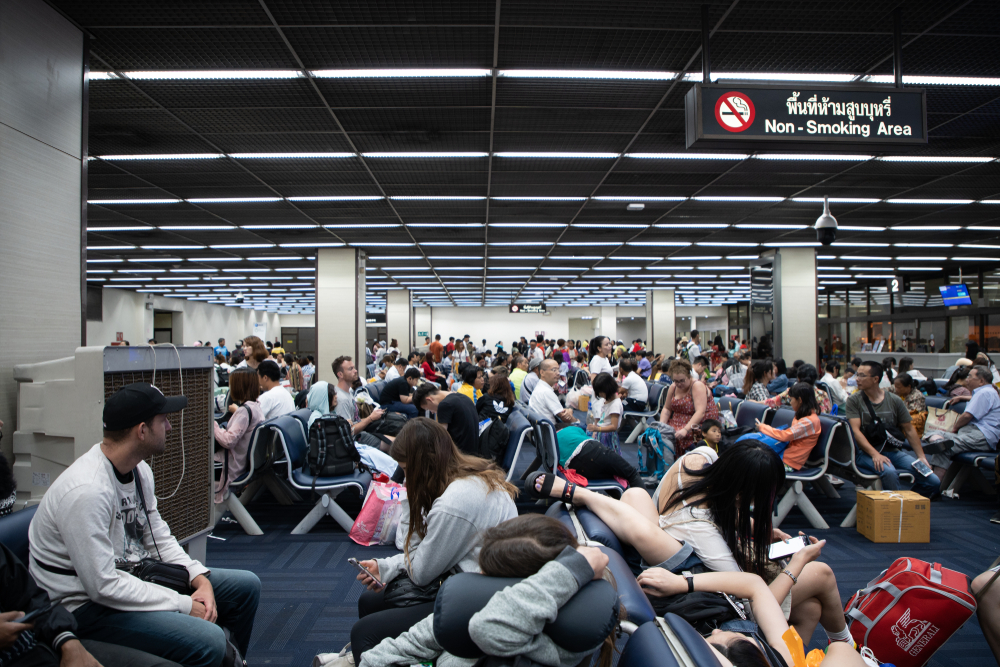
In March 2025, chaos erupted at Heathrow Airport when a fire knocked out power, grounding flights and stranding thousands. Airlines quickly invoked force majeure, saying the outage was outside their control.
But days later, reports emerged that airport executives had been warned about substation risks in advance. That changes everything: if an event is foreseeable and preventable, it might not qualify as force majeure at all.
This grey area — between “unforeseeable” and “avoidable” — is where most disputes happen. And where consumers often have more leverage than they think.
“A party is not excused from nonperformance under a force majeure clause simply because performance has become burdensome or expensive.”
— Akerman LLP
“Every force majeure clause is different. Some are broad, others list specific events. The language itself determines who wins in court.”
— Venable LLP
“If performance becomes impossible for reasons outside both parties’ control, obligations may be suspended or released.”
— Marquette University Law School Blog
Unlike in France or other civil-law countries, force majeure isn’t a built-in defense under English law — it only works if it’s written into the contract.
Under the Consumer Rights Act 2015, any term in a consumer contract (including a force majeure clause) must be fair and transparent. If it isn’t, it’s not legally binding.
If the company knew or should have known a risk existed — like a recurring outage or predictable strike — the clause might not apply.
Commercial lawyers note that courts “won’t lightly accept” a force majeure claim unless the wording clearly covers the situation and the party did all they could to reduce harm. (Source: Walker Morris LLP, 2024)
In RTI Ltd v MUR Shipping BV (2024 UKSC 18), the Supreme Court ruled that a company wasn’t required to accept a workaround to perform its duties under a force majeure clause. The takeaway? Courts interpret these clauses strictly — what’s written is what counts.
Plain-English takeaway:
If a company blames force majeure, check:
Is it clearly defined in the contract?
Was the event really unavoidable?
Did the company do everything possible to minimize damage?
If not — you may have grounds to challenge their refusal.
Read the terms. Search for “force majeure” or “acts of God.” See what events are covered and what rights you still have.
Ask for proof. What exact event are they claiming? When did it happen? Could they have offered alternatives?
Stay calm but firm. Customer-service reps are trained to quote policy. Ask to escalate if the answer doesn’t add up.
Use consumer law to your advantage. If the term feels unfair or hidden, it may be unenforceable under the Consumer Rights Act.
Get advice. If you’ve lost a significant amount, contact a solicitor or consumer-rights group — or reach out to Lawyer Monthly, where we can flag questionable cases to legal experts.
1. What is "Force Majeure" in plain English, and does it mean I get no refund?
In simple terms, force majeure (French for "superior force") is a contractual safety net. It refers to a major, uncontrollable event—like a natural disaster, pandemic, or war—that prevents a company from fulfilling its side of a contract.
The Refund: The clause does not automatically mean "no refund." You might still be entitled to a reschedule, a voucher, or a refund, especially if the event cited doesn't strictly match the contract's definition, or if consumer protection laws apply.
2. Can a company use a force majeure clause for an IT failure, power cut, or supply chain issue?
Sometimes, but not always. For an event to qualify, it must generally meet three criteria:
It is explicitly listed or covered in the contract.
It was genuinely beyond the company's control.
It was unforeseeable and unavoidable.
If an outage, failure, or supply chain breakdown was foreseeable (e.g., a recurring issue they knew about) or preventable (e.g., poor planning), the company may still be held liable, and the claim may be challenged.
3. If a company blames force majeure, what are the first three things I should check in the contract?
When a company cites force majeure, you should immediately check these three things in the fine print:
Is the event defined? Does the event they are claiming (e.g., a fire, a strike, or a technical failure) specifically match the events listed in the clause?
Does it require mitigation? Was the company required to take reasonable steps to minimize the damage (e.g., rebooking you on an alternative flight or using a different supplier)?
What are the consequences? Does the contract state that force majeure leads to a suspension of services, or a termination with a specific refund provision?
Force majeure clauses aren’t magic wands. They’re legal tools meant for genuine emergencies — not shields against accountability.
If you’re told “no refund, it’s force majeure,” take a breath. Read the clause. Ask questions. Document everything. You might be surprised how often these clauses crumble under scrutiny.
Because when life gets disrupted by forces beyond your control, the least you deserve is fairness — not fine print.