Understand Your Rights. Solve Your Legal Problems



Updated with November 2025 developments
On May 31, 2014, the quiet suburb of Waukesha, Wisconsin became the scene of one of the most disturbing crimes in modern American history.
A 12-year-old girl, Payton Leutner, was lured into the woods by two friends, stabbed 19 times, and left to die. The attackers—her classmates Morgan Geyser and Anissa Weier—believed the killing would prove their loyalty to Slender Man, a fictional internet horror character.
Miraculously, Payton survived. But while her physical wounds healed after emergency surgery, her emotional recovery would take years.
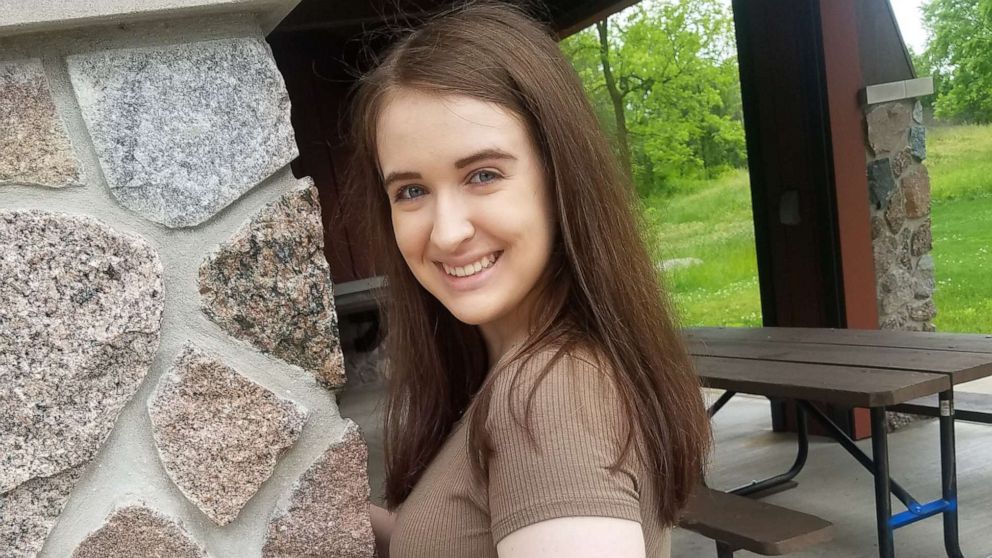
Slender Man' stabbing victim Payton Leutner
Slender Man emerged in 2009 during an online horror contest, when creator Eric Knudsen posted eerie black-and-white images of a faceless, elongated figure lurking behind children. The character quickly spread across forums and creepypasta sites, evolving into a sinister, supernatural entity in fan fiction and online games.
For most people, Slender Man was nothing more than digital folklore.
For two 12-year-old girls struggling with fear, delusion, and social isolation, he became terrifyingly real.
Weier and Geyser convinced themselves that Slender Man would kill them—or their families—unless they made a human “sacrifice.” They chose Payton, one of Geyser’s closest friends.
What began as an ordinary sleepover—pizza, games, late-night chatter—was a prelude to an attack already planned.
The next morning, under the guise of playing hide-and-seek, the girls led Payton into the woods. There, Geyser pulled a kitchen knife from her waistband and stabbed Payton repeatedly while Weier urged her on.
One stab wound missed Payton’s heart by the width of a human hair.
Believing she would die, Geyser and Weier told her to “stay there” while they pretended to go for help.
Instead, they walked away into the woods, hoping to find Slender Man’s “mansion.”
Through extraordinary will, Payton crawled from the forest to a bike path, where a passing cyclist spotted her and called 911. Police and paramedics were stunned that she was still conscious.
Surgeons later said her survival bordered on the miraculous.
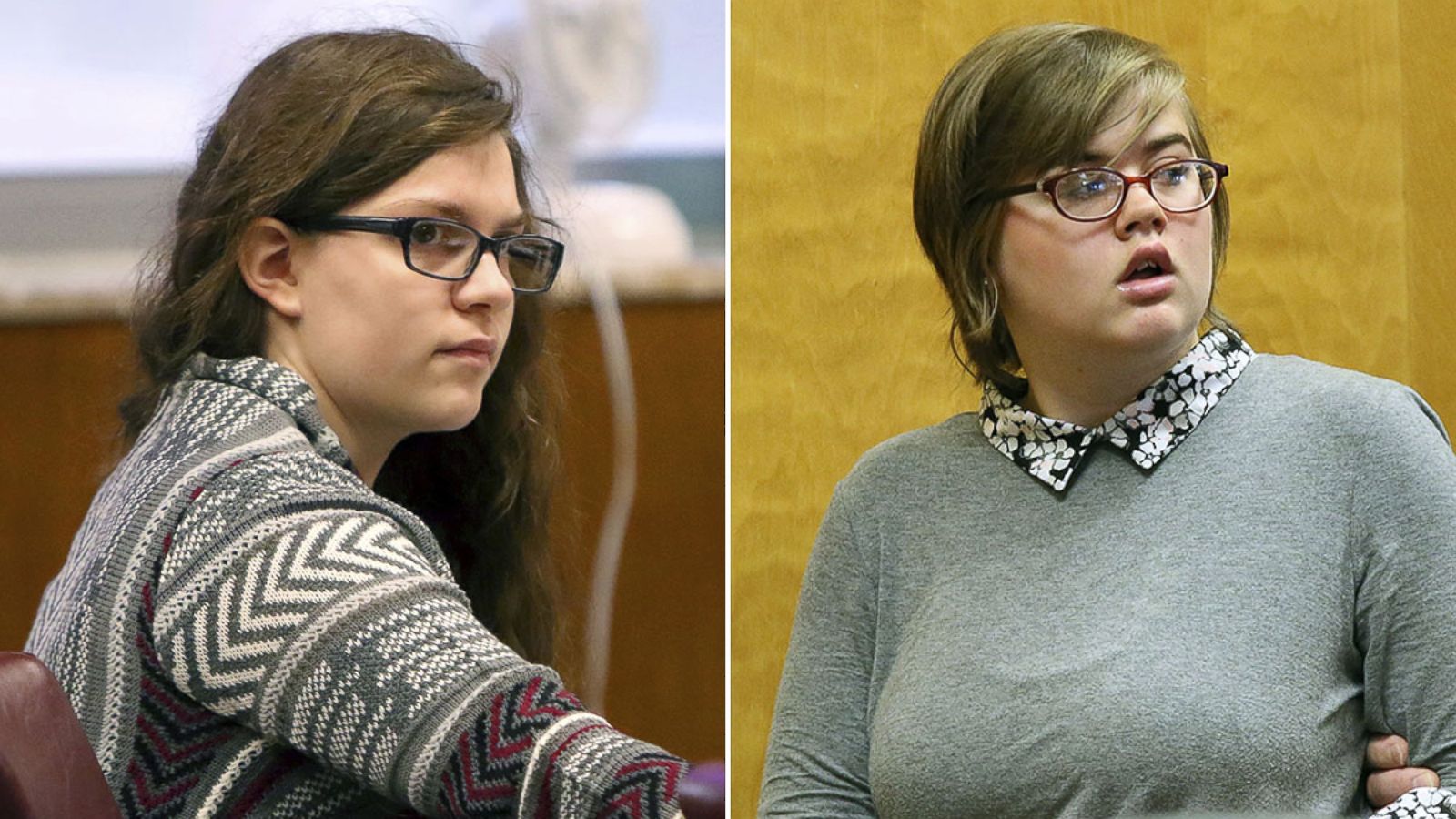
Morgan Geyser (left) and Anissa Weier (right) during separate court hearings related to the 2014 Slender Man stabbing, a shocking case that linked internet folklore to real-world violence.
During police interviews, investigators noted stark differences between the girls:
Morgan Geyser showed little immediate remorse, described hallucinations, and referenced conversations with imaginary figures—including a smoky, ink-like man she called “It.”
Anissa Weier expressed guilt and fear but insisted the attack was necessary to appease Slender Man.
Psychiatric evaluations revealed that Geyser exhibited symptoms consistent with early-onset childhood schizophrenia, including visual and auditory hallucinations long before the stabbing.
Her behavior after arrest—talking to herself, meowing like a cat, believing she communicated with fictional characters—reinforced the diagnosis.
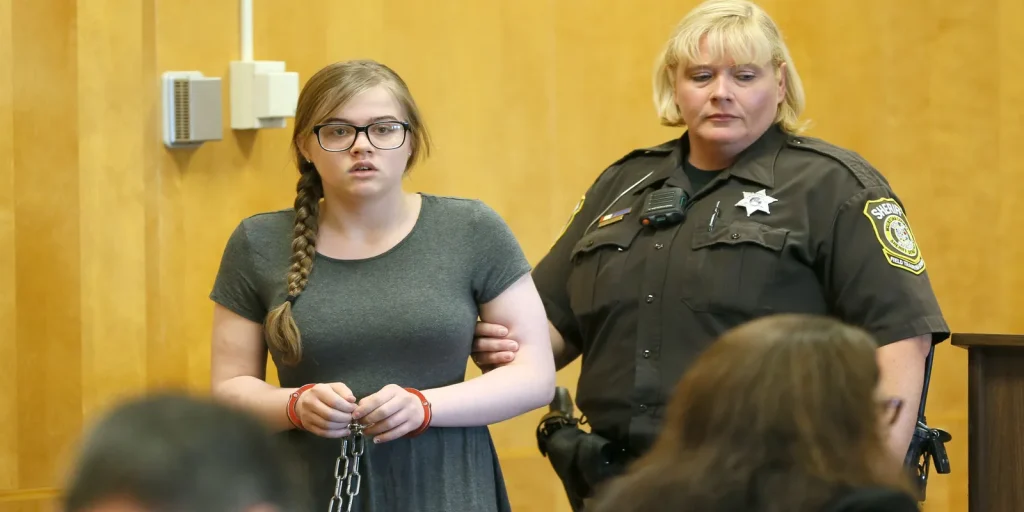
Morgan Geyser in 2014 asks for conditional release
Wisconsin prosecutors charged both girls as adults under Wis. Stat. § 938.18, which allows juvenile cases to be waived into adult court for the most serious crimes, including attempted homicide.
Pleaded guilty to being a party to attempted second-degree homicide
Found Not Guilty by Reason of Mental Disease or Defect (NGI)
Sentenced to 25 years to life, including at least three years in confinement and decades of community supervision
A forensic psychologist testified that Weier experienced a “shared delusion” fed by her friendship with Geyser.
For a clear breakdown of how mental illness is evaluated in criminal cases, see our guide: Mental Health Defense in Criminal Law: 7 Things to Know.
Pleaded guilty to attempted first-degree intentional homicide
Also found NGI due to schizophrenia
Received a 40-year to life commitment to a secure psychiatric facility
Her subsequent appeal, arguing she should have been tried as a juvenile, was rejected by the Wisconsin Supreme Court in 2020.
For readers wanting a clearer breakdown of how intent, mental illness, and criminal responsibility are evaluated in the U.S., see our guide: How Criminal Law Really Works: Inside the Principles That Shape Justice in America.
Payton’s physical healing was only the beginning.
In interviews, she described years of fear and hyper-vigilance. For a long time, she slept with a pair of broken scissors under her pillow—a small gesture that made her feel safer.
At school, she faced whispers, stares, and an overwhelming spotlight. Despite that, she worked hard to rebuild normalcy, keeping a small circle of close friends and pouring herself into academics.
In her first and only full interview, a 2019 ABC 20/20 special, she spoke with composure well beyond her age. She insisted that while the attack would always be part of her history, it would not define her.
She later graduated high school with honors and expressed interest in a medical career—hoping to help others the way her doctors helped her.
Granted conditional release in 2021 after nearly seven years in state care
Remains under GPS monitoring, psychiatric treatment, and strict supervision
Continued treatment at Winnebago Mental Health Institute
Petitioned multiple times for supervised release; earlier attempts were denied
The next major development came in late 2025.

Winnebago Mental Health Institute
In a startling turn nearly 11 years after the attack, 22-year-old Morgan Geyser briefly escaped custody on Saturday night, Nov. 22, 2025.
According to the Madison Police Department, Geyser:
Cut off her Department of Corrections GPS monitoring bracelet
Left her state-supervised group home with an adult acquaintance around 8 p.m.
Was reported missing when the device registered as “malfunctioning”
Triggered a statewide alert and public safety warning
On Sunday, Nov. 23, at 10:34 p.m., Illinois authorities confirmed that Geyser had been located and taken into custody.
No details have yet been released about the adult she was last seen with.
Under Wisconsin law, escape or non-compliance typically leads to:
Immediate return to a secure psychiatric facility
Suspension or revocation of supervised release
A new risk assessment hearing
Officials have not released whether Geyser will remain in Illinois temporarily or be transported directly back to state custody.
For Payton and her family, even a brief disappearance is an unwanted reminder that the case continues to reverberate more than a decade later.
The Slender Man stabbing remains a chilling example of:
The vulnerability of young minds
The power of online mythology
The consequences of untreated childhood mental illness
The complexities of adjudicating severe crimes involving mentally ill juveniles
Above all, Payton’s story is one of extraordinary resilience. She was left for dead. She survived. She rebuilt.
Her life now stands as proof that trauma can shape someone—but it does not have to define them.
2009 – Slender Man character created
2013 – Geyser and Weier develop fixation
May 31, 2014 – Payton stabbed 19 times
2017 – Both attackers found NGI; committed
Sept 2021 – Weier granted supervised release
Nov 22–23, 2025 – Geyser escapes group home and is recaptured in Illinois
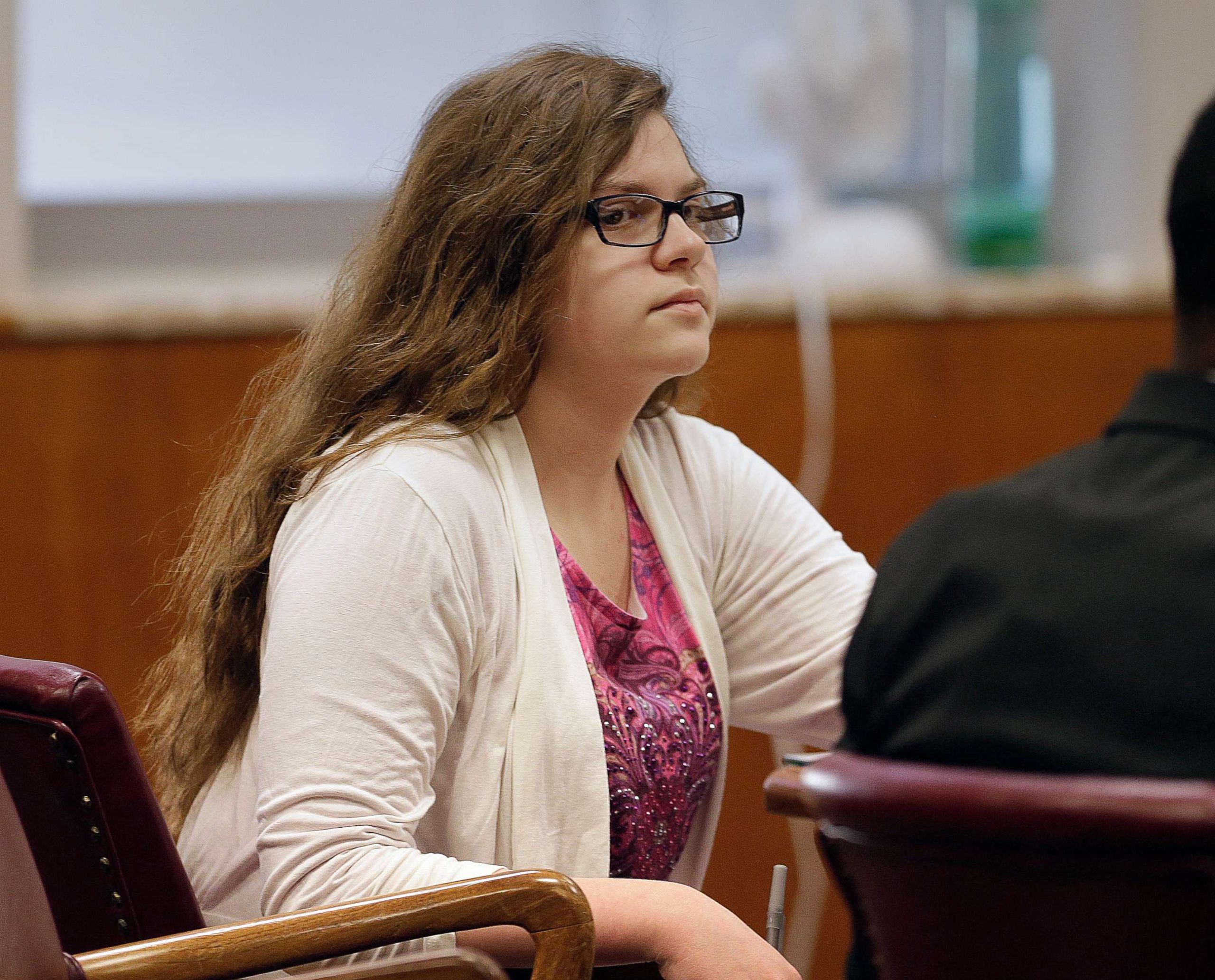
Slender Man Stabbing: Anissa Weier
Slender Man has been banned or restricted in some schools and online platforms due to concerns that the character inspired real-life violence, most notably the 2014 stabbing of a 12-year-old girl in Wisconsin by two classmates who claimed they were trying to appease the fictional entity.
Slender Man is a tall, faceless humanoid figure typically depicted in a black suit with unnaturally long limbs. Created as an internet urban legend, he lurks in forests and is said to stalk, abduct, or psychologically manipulate his victims—usually children.
Slender Man is generally portrayed as a malevolent or sinister figure. While interpretations vary, most stories and games cast him as an eerie, supernatural predator that evokes fear and dread.
Most experts and parents agree Slender Man is not appropriate for children. The character’s dark mythology, violent associations, and psychological horror themes can be disturbing for young audiences and are linked to real-life violent incidents involving minors.
As of 2025, Morgan Geyser remains in custody at a Wisconsin mental health facility. Although she has petitioned for conditional release, her request was denied in 2023, and her legal team may appeal in the future depending on her mental health evaluations.
Morgan Geyser was charged with attempted first-degree intentional homicide for her role in the 2014 Slender Man stabbing. Prosecutors argued that the attack was premeditated and extremely violent, despite her young age.
Yes. Morgan Geyser was tried as an adult due to the severity of the crime. At the time of the attack, Wisconsin law allowed minors to be charged as adults for certain serious offenses, including attempted homicide.
Authorities have not released a motive for Morgan Geyser’s escape. According to police statements, she left the Wisconsin group home with an adult acquaintance and removed her DOC-issued GPS monitoring bracelet before disappearing.
The Wisconsin Department of Corrections reported that Geyser cut off her GPS monitoring bracelet on Saturday, Nov. 22, 2025. The device initially registered as “malfunctioning,” and staff later confirmed it had been deliberately removed.
The Madison Police Department confirmed that Geyser was located and taken into custody in the state of Illinois at approximately 10:34 p.m. on Sunday, Nov. 23, 2025—roughly 24 hours after she went missing.
Yes. Police reports state she was last seen around 8 p.m. on Nov. 22 with an adult acquaintance near Kroncke Drive before she fled. Further details about that individual have not been publicly released.
It is likely. Under Wisconsin law, violating the conditions of supervised release—particularly by removing GPS monitoring and fleeing—typically results in immediate review and possible revocation. Courts often order individuals back into secure psychiatric custody in similar cases.
Before her escape, Geyser lived in a court-approved group home under the supervision of the Wisconsin Department of Health Services. Conditions included GPS monitoring, treatment compliance, restricted travel, and regular reporting. Violating any of these terms can trigger legal consequences.
Based on official statements, Geyser was missing for roughly 24–26 hours between Saturday night, Nov. 22, and her confirmed capture on Sunday night, Nov. 23.
Wisconsin officials have not yet announced new criminal charges. Typically, supervised release violations in NGI cases lead to revocation hearings, not necessarily new charges. Final decisions will depend on prosecutorial review and court findings.
Authorities did not indicate any specific threat to the public, but they issued a missing persons alert and requested assistance due to her non-compliance with court-ordered supervision.
A court will now review her supervised release status, evaluate the circumstances of the escape, and determine whether she should return to a secure psychiatric institution. Additional hearings are expected in the coming weeks.