Understand Your Rights. Solve Your Legal Problems


The Zodiac Killer was an unidentified American serial killer who terrorized Northern California, claiming at least five confirmed victims between December 1968 and October 1969. According to new data from the investigation's documents, the killer famously taunted police and the media by sending cryptic letters and ciphers to the San Francisco Chronicle and other outlets. The FBI confirms the case remains open and unsolved, with prime suspect Arthur Leigh Allen never formally charged before his 1992 death.
The decades-old hunt for the Zodiac Killer, the shadowy serial murderer who terrorized Northern California in the late 1960s, has roared back into public view following recent claims and documentaries.
This infamous criminal distinguished himself not only by committing five confirmed, horrific murders but also by sending numerous cryptic letters and ciphers to the media. These taunting messages created a disturbing game of psychological warfare with law enforcement that continues to baffle detectives and enthusiasts today.
The confirmed victims remain central to this tragedy, including teenagers Betty Lou Jensen and David Arthur Faraday, college student Cecila Shepard, taxi driver Paul Stine, and wife and mother Darlene Ferrin. Darlene’s sister, Pam Huckaby, shared her profound memory with the Vallejo Times-Herald, reflecting that her sibling “was very family-oriented and loved her family dearly.”
Even six decades after the attacks, the mystery surrounding the killer’s true identity and the remaining unsolved ciphers inspires numerous true crime films and television shows, including the gripping 2007 film Zodiac, ensuring the legend of this unidentified criminal persists in popular memory.
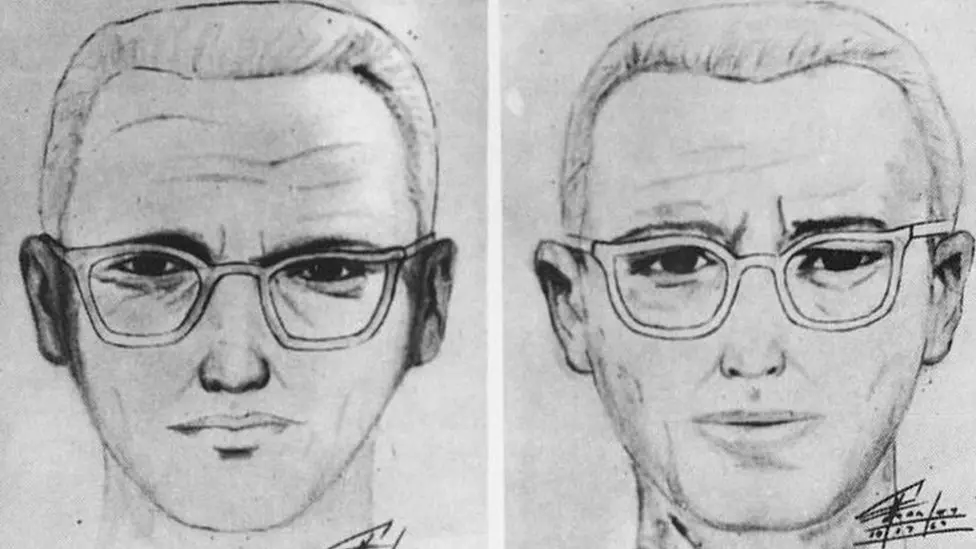
Police composite sketches of the unidentified Zodiac Killer, drawn from eyewitness accounts during the height of the investigation in the late 1960s.
For decades, the name Zodiac Killer has been synonymous with the most perplexing and terrifying unsolved cold case in American history, an infamous San Francisco serial killer who instilled a chilling fear between 1968 and 1970. The taunting letters and complex ciphers sent to Bay Area newspapers captured—and continue to capture—the public imagination. As of late 2024, the identity of the person behind these horrific crimes remains officially unconfirmed by law enforcement.
While the Zodiac Killer mystery has been fueled by countless theories, only one individual has ever been officially identified by investigators as a strong suspect: Arthur Leigh Allen, a former schoolteacher and convicted child molester from the Vallejo area. According to the San Francisco Chronicle, the evidence linking Allen was compelling, if ultimately insufficient for a charge.
Police noted that Allen owned boots matching the footprints left at one of the murder scenes. Furthermore, he discussed a short story with police that the Zodiac had cryptically referenced in his letters. Crucially, Michael Mageau, one of the survivors of the Zodiac's attacks, positively identified Allen in a photo lineup as the man who shot him. Despite this accumulation of circumstantial evidence, Allen passed away from a heart attack in 1992, never having been formally charged in connection with the murders.
In the modern era of true crime documentaries and advanced forensics, the floodgates of new Zodiac Killer suspects have opened wide, keeping the case in the news and adding fresh intensity to the hunt. In May 2014, business owner Gary Stewart asserted in his book, The Most Dangerous Animal Of All, that his own biological father, Earl Van Best Jr., was the true culprit. Even more recently, in October 2021, a group of over 40 former law enforcement officials known as The Case Breakers claimed they had identified the killer as Air Force veteran Gary Francis Poste, who died in 2018.
However, these sensational claims must be viewed through the lens of official legal status. Regarding the latest identity assertion, the nation’s top investigative authority issued a clear rebuttal.
The key takeaway for those following the Zodiac Killer case is its official status: open and unsolved. In May 2023, the FBI confirmed to Newsweek that the killer's identity remains officially unknown. This position directly addresses and discredits the recent amateur investigations that often generate media hype.
An official statement from the FBI in 2021 encapsulated the enduring reality of the investigation: “The Zodiac Killer case remains open. We have no new information to share at the moment.” This quote from an authority provides a necessary grounding in fact, confirming that no one has been charged with the Zodiac’s crimes as of October 2024. According to analysis reviewed by Lawyer Monthly, this unsolved status is likely to persist until a definitive DNA or conclusive forensic link that stands up in a court of law can be established.
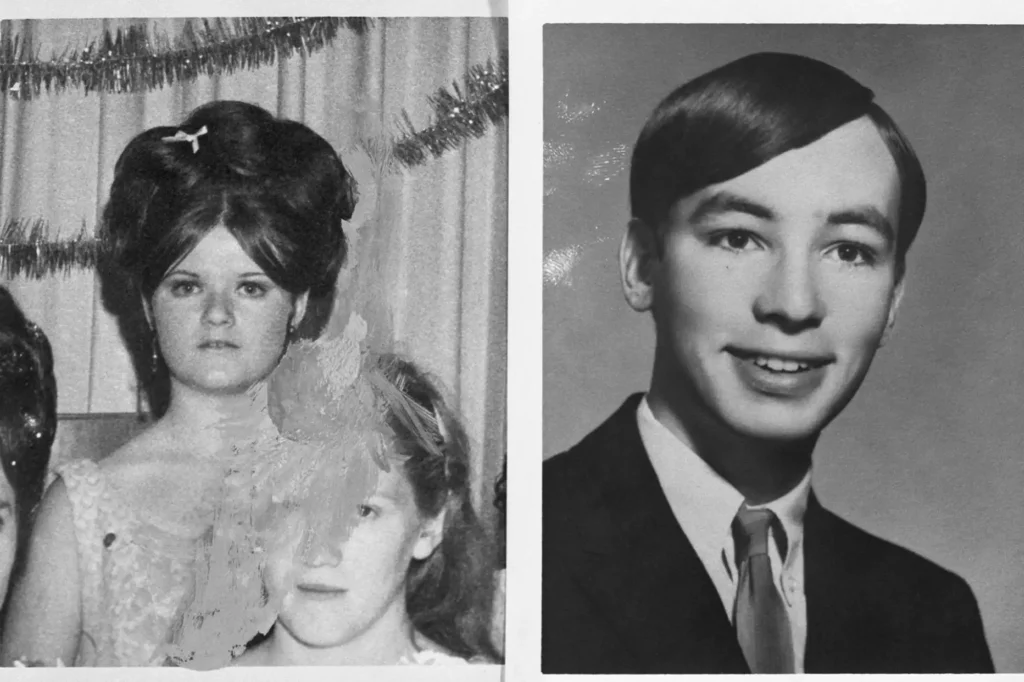 The Zodiac Killer's first known victims were 16-year-old honor student Betty Lou Jensen and 17-year-old wrestler David Arthur Faraday. As detailed in "This Is the Zodiac Speaking," the two high schoolers were enjoying their first date when David took them to a quiet spot on Lake Herman Road in Benicia, California, seeking some privacy. On December 20, 1968, the couple was tragically shot and killed by the Zodiac, with their bodies later found outside their car by a passerby.
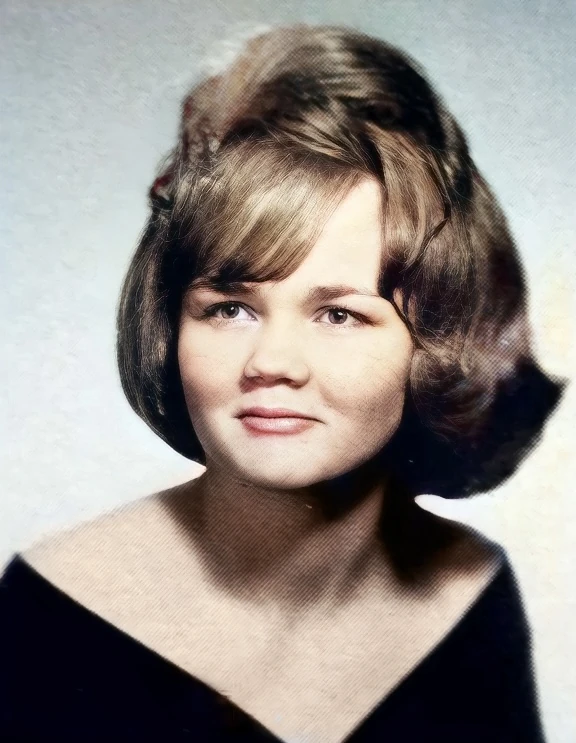
The next victim was 22-year-old Darlene Ferrin, a waitress who was also a wife and a new mother. On July 4, 1969, she and 19-year-old Michael Mageau were shot while sitting in Darlene's car in a secluded parking lot at Blue Rock Springs Park in Vallejo, California, just about 15 minutes from where the previous victims were discovered.
After making a sudden entrance and exit from the parking lot, the Zodiac drove up behind Darlene's car, approached the passenger side with a flashlight, and opened fire. While Mageau survived the attack, Ferrin did not. Darlene's sister shared her memories of her older sibling with the Vallejo Times-Herald, saying, “She was a wonderful sister. We were a big family—ten of us, eight girls and two boys. She was the oldest and my role model.”
According to the Times-Herald, following the attack on July 4, the Zodiac Killer called 911 to claim responsibility for the double murder. “I want to report a double murder,” he stated. “If you go one mile east on Columbus Parkway to the public park, you will find the kids in a brown car. They were shot with a 9 MM Luger.” During the call, the Zodiac also admitted to the murders of the two high school students from the previous year, saying, “I also killed those kids last year. Goodbye.”
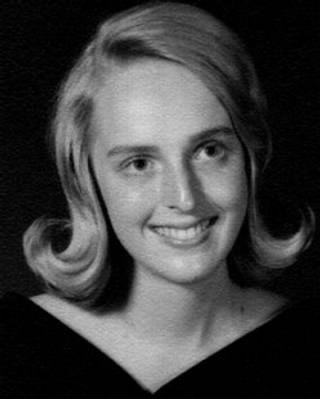
On September 27, 1969, 22-year-old Cecila Shepard tragically became the fourth confirmed victim of the Zodiac Killer while enjoying a picnic at Lake Berryessa in Benicia, California, with her boyfriend, Hartnell. Reports indicate that the Zodiac confronted the couple at gunpoint, binding them before brutally stabbing Cecila between 10 to 20 times and injuring Hartnell, who managed to survive the ordeal.
Hartnell recounted to the authorities that he initially perceived the hooded man, armed with a pistol, as a robber. However, when offered money, the assailant declined, stating, “I don’t want the money, all I want to do is kill [you].” After the attack, the Zodiac defaced the passenger side door of their vehicle, inscribing it with the dates of two of his earlier murders, as noted in This Is the Zodiac Speaking.
Cecila’s obituary in the Napa Valley Register highlighted her as a music student at Pacific Union College. Her funeral was attended by over 1,000 friends and family members, who fondly remembered her passion for music.
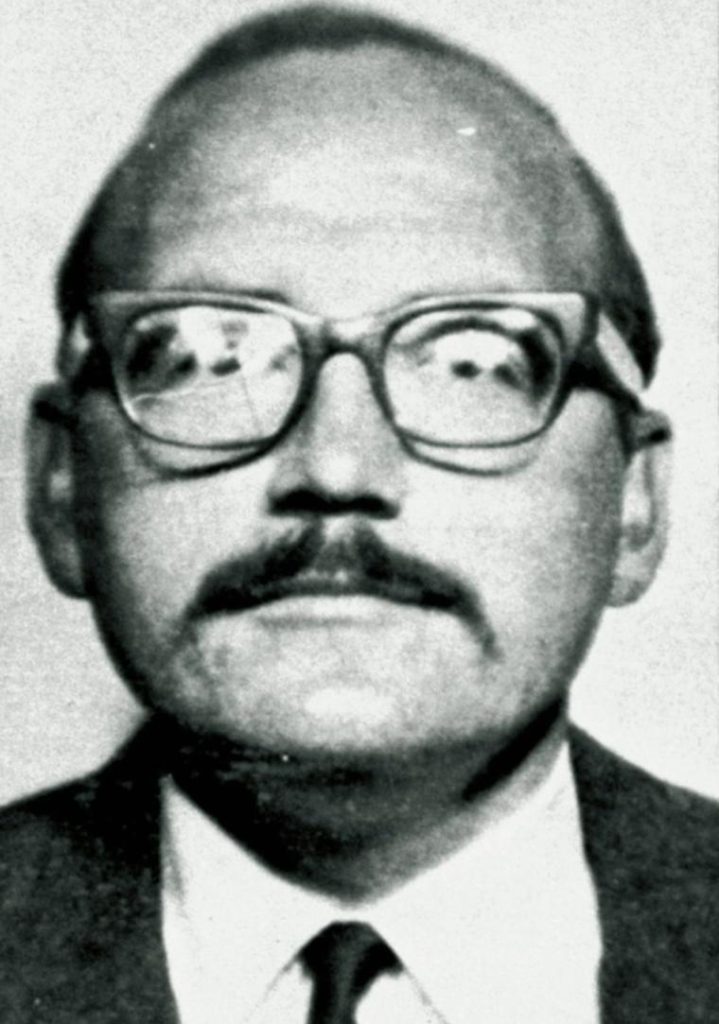
The last confirmed victim of the Zodiac Killer was 29-year-old Paul Stine. He was murdered on October 11, 1969, after giving the Zodiac a ride in his taxi. According to KFGO radio station, Stine was a doctoral candidate at San Francisco State University, working as a cab driver while he completed his studies. The Zodiac claimed responsibility for Stine's murder in a letter sent to the San Francisco Chronicle, which included a bloodstained piece of the victim's clothing. This letter was published in the October 15, 1969 edition of the newspaper. "This is the Zodiac speaking. I am the murderer of the taxi driver near Washington St. and Maple St. last night. To prove it, here is a blood-stained piece of his shirt," the killer wrote, further stating, "I am the same man who killed those people in the North Bay Area."
For more than five decades, the chilling question has persisted: Have the crimes of the Zodiac Killer been resolved? The definitive answer, according to the highest echelons of law enforcement, remains a resounding No. This elusive serial killer, who terrorized the San Francisco Bay Area in the late 1960s, is one of the most infamous unsolved cases in American history, yet recent developments continue to reignite the desperate hope for closure. The official status of the case is a crucial and sobering fact for investigators and the public alike.
Despite the intense scrutiny by amateur sleuths and professional investigators, the case remains officially open and unsolved. In 2021, an independent team known as The Case Breakers claimed to have finally identified the killer as an Air Force veteran who passed away in 2018. However, this purported breakthrough was swiftly countered by law enforcement. The FBI's San Francisco office reaffirmed the investigation's ongoing status in a statement, which remains the authoritative position today.
“The FBI’s investigation into the Zodiac Killer remains open and unsolved,” the agency stated, emphasizing the lack of prosecutable evidence.
The major legal and forensic hurdle today revolves around DNA evidence. The successful apprehension of the Golden State Killer in 2018 proved the game-changing power of forensic genealogy, where a suspect’s DNA profile is matched to relatives on public genealogy websites. This method is the single greatest hope for cracking the Zodiac case, but a complete, confirmed DNA profile from the crime scenes—or even a reliable sample from the killer’s taunting letters—has never been fully secured. Law enforcement continues to test and re-test minuscule remnants of saliva on stamps and envelopes, a painstaking process fraught with the risk of contamination and degradation over time.
While the killer’s identity remains a mystery, his infamous coded messages offer a terrifying window into his mind. Deciphering these complex communications has been one of the few successes in this long-running investigation.
Back in 1969, a local couple, Donald and Bettye Harden, successfully cracked the killer's first major communiqué, known as the 408 cipher. This first decoded message delivered a chilling motive that captured the nation’s attention, including the boastful confession: "I like killing because it is so much fun." This revelation confirmed a killer driven by pleasure and a perverse desire to engage the press.
More than fifty years later, in December 2020, a major victory occurred when an international team of code-breakers—web designer David Oranchak, Australian mathematician Sam Blake, and Belgian warehouse operator Jarl Van Eykcke—solved the more complex 340-character cipher (Z340) sent to the San Francisco Chronicle. In this disturbing new revelation, the killer expressed his delight in the police’s futility.
The decoded message, in part, expressed the killer’s hope that law enforcement was having “lots of fun” trying to apprehend him and contained a disturbing theological twist, completely disavowing an anonymous caller who claimed to be the Zodiac on a 1969 TV show: “THAT WASNT ME ON THE TV SHOW,” the Zodiac wrote. “I AM NOT AFRAID OF THE GAS CHAMBER BECAUSE IT WILL SEND ME TO PARADICE [sic] ALL THE SOONER BECAUSE I NOW HAVE ENOUGH SLAVES TO WORK FOR ME.” This taunt highlights the killer’s arrogance and deliberate strategy of psychological warfare against both police and the public.
From a legal perspective, the cold case status of the Zodiac Killer highlights the immense challenges facing aging investigations. The most crucial factor is that in California, murder has no statute of limitations, meaning the killer can be prosecuted and convicted at any point—even decades later—if sufficient evidence surfaces.
The major hurdle, as observed by legal analysts, is the decades-long chain of custody for the surviving physical evidence, which could be challenged by a defense attorney in court. According to analysis reviewed by Lawyer Monthly, the ability to prove the integrity and lack of contamination of a 50-year-old stamp or envelope is one of the most complex tasks in modern criminal law. Investigators are in a constant race against time and decay, hoping for a clean DNA profile that can finally turn this infamous cold case into a resolved file.
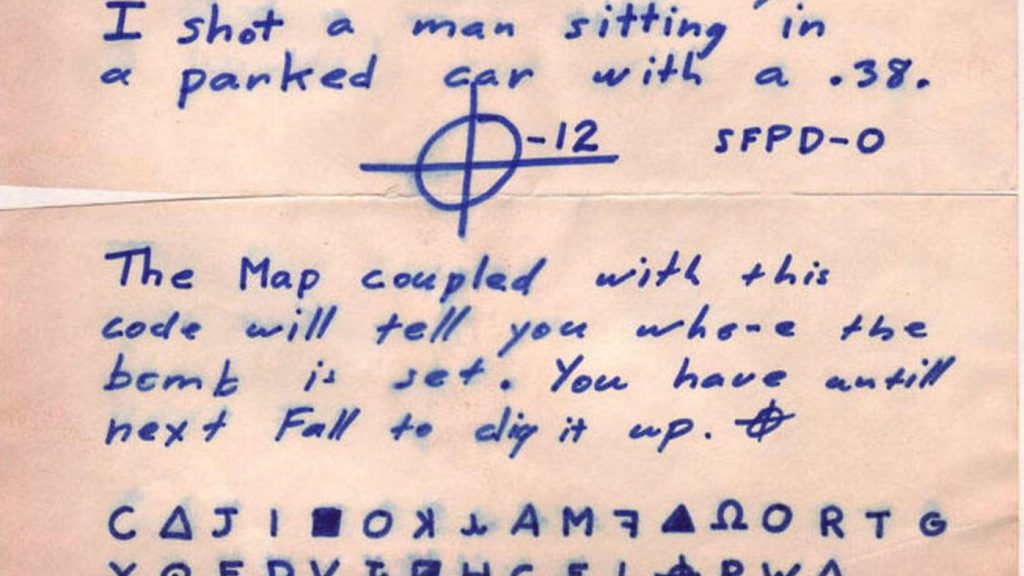
One of the Zodiac Killer’s cryptic letters, taunting investigators with a coded bomb threat that remains part of the unsolved mystery.
The decades-long hunt for the Zodiac Killer, one of America’s most elusive and terrifying serial murderers, has been explosively re-opened by a new three-part Netflix docuseries, “This Is the Zodiac Speaking.” This groundbreaking series focuses on Arthur Leigh Allen, the only suspect ever publicly named by police, but it is the haunting new testimony from the Seawater family that is truly gripping the nation, revealing a dark childhood betrayal and an alleged confession from the man they once knew as a kind, burly father figure.
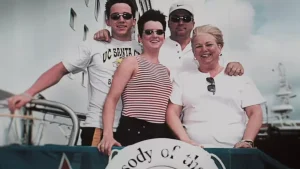
The documentary centers on the chilling recollections of siblings Connie, David, and Don Seawater, whose mother, Phyllis, developed a close bond with Allen, an elementary school teacher, in the early 1960s. Their former teacher quickly became an indispensable presence, showering the children with gifts and taking them on unforgettable family outings. As Connie Seawater recalls of her beloved former teacher, he was “great, big, burly, smiley, friendly,” a description that starkly contrasts with the cold-blooded killer who taunted California with coded letters.
The core of the Seawater siblings' story revolves around a deeply disturbing event that has gained new prominence in the investigation: a 1963 summer outing to a secluded beach at Tajiguas Point in Santa Barbara. The timeline of this unsettling trip aligns eerily with the June 4, 1963, murders of Robert Domingos and Linda Edwards, a young couple tragically shot while enjoying a lover's lane spot near the water—a potential precursor to the Zodiac’s later attacks.
During this trip, the siblings recount how Allen abruptly asked them to remain in the car while he disappeared to the beach for nearly an hour. The most chilling detail, however, comes from Connie Seawater, who was approximately nine or ten years old at the time. She remembers that upon his panicked return, Allen had something visibly red on his hands, and she watched him hastily place an unknown object into the trunk before speeding away. Authorities have since acknowledged that the secluded location and the targeting of a young couple mirror the infamous modus operandi later employed by the Zodiac Killer.
For years, the Seawater siblings struggled to reconcile the image of their cherished "Mr. Allen" with a potential serial killer. The dam of denial finally broke in 1992 following a phone call that has become a pivotal moment in the entire case. David Seawater recounts a powerful conversation where Allen, now seemingly desperate for a reckoning, confessed to a horrific pattern of abuse during the siblings’ childhood, including drugging them and molesting Connie.
It was in the wake of this devastating revelation that David posed the single most important question: “‘Were you the Zodiac?’”
David shares in the documentary: “There was a heavy silence. I didn’t hear anything for a moment, then I heard this gasping sound, and he was just crying. He managed to compose himself enough to respond in a very weak voice, saying, ‘Yes, it was me.’” This direct, heart-stopping admission of guilt, delivered shortly before Allen’s death, is perhaps the most crucial new piece of testimonial evidence revealed in the series.
Despite the mounting testimonial evidence, Arthur Leigh Allen died in 1992, never having been formally charged with any of the Zodiac murders. Allen was already a convicted sex offender, a history that adds a dark layer of context to the Seawater family's claims. When David Seawater contacted the police about the confession, he was informed that, despite the gravity of the claim, the lack of immediate physical evidence made pursuit difficult.
The case remains technically open in various jurisdictions, with the San Francisco Police Department having previously stated that the prime suspect was Arthur Leigh Allen. However, the legal and forensic aspect of the case is fraught with contradictions. According to analysis reviewed by Lawyer Monthly, while Allen possessed key items that matched the killer's profile—including a possible wetsuit hood, which Connie Seawater recalls helping him make—later forensic efforts complicated the matter. Crucially, in the early 2000s, DNA and fingerprints recovered from the Zodiac's letters were compared to Allen’s, ultimately excluding him as the source. This forensic exclusion remains the single greatest argument against Allen's culpability, forcing investigators to weigh compelling testimony against difficult scientific evidence.
The Seawater family's deep conviction, solidified after they realized during a viewing of the 2007 film Zodiac that Allen had taken them to all the confirmed murder sites before the killings occurred, is now the key focus of this renewed national discussion.
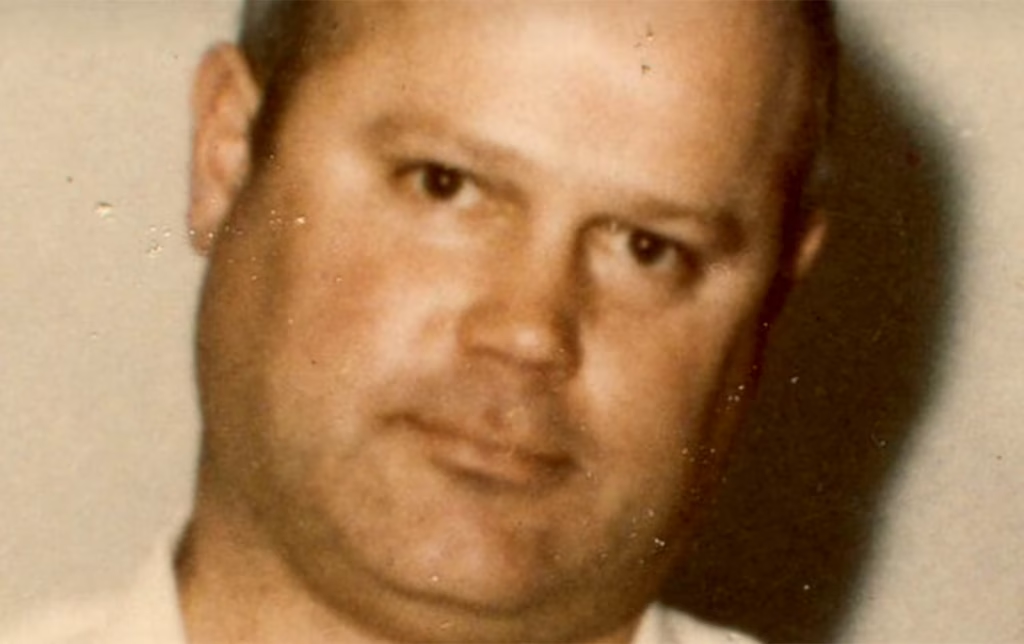
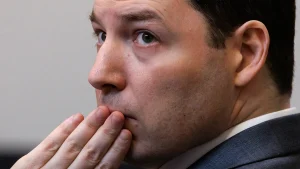
Arthur Leigh Allen, a former person of interest in the Zodiac Killer investigation, whose alleged links to the case were widely scrutinized but never proven.
Decades have passed since the Zodiac Killer terrorized Northern California, claiming at least five lives and baffling police with cryptic ciphers and taunting letters. The case remains one of America's most chilling unsolved mysteries, but the search for the killer is far from over. Today, new forensic techniques and dedicated cold case teams are reigniting the hunt, bringing fresh scrutiny to the most compelling, and controversial, suspects.
For decades, one name has dominated the Zodiac discussion: Arthur Leigh Allen. The convicted child molester and former elementary school teacher, who died in 1992, remains the only person ever publicly named as a suspect by authorities. The evidence connecting him to the brutal 1960s attacks is a disturbing web of circumstantial details.
Despite the compelling circumstantial trail, DNA evidence has repeatedly complicated the narrative. In 2002, a partial DNA profile was developed from saliva on stamps and envelopes of the Zodiac's letters. Subsequent comparisons to Allen's genetic material led to his exclusion as the contributor of that DNA. Retired police handwriting expert Lloyd Cunningham—who worked on the case for years—stated, "They gave me banana boxes full of Allen's writing, and none of his writing even came close to the Zodiac. Nor did DNA extracted from the envelopes [on the Zodiac letters] come close to Arthur Leigh Allen." The scientific facts stand in stark contrast to the historical focus on him.
In a dramatic recent turn, an independent group of investigators known as "The Case Breakers," comprising former law enforcement and intelligence officers, made headlines in 2021 by naming a deceased Air Force veteran, Gary Francis Poste, as their prime suspect.
However, the claims linking Poste to the Zodiac have met substantial resistance from law enforcement. Riverside Police, for instance, dismissed the group's attempt to tie Poste to a 1966 murder they do not officially link to the Zodiac. The FBI's official stance remains clear: "The Zodiac killer case remains open. We have no new information to share at the moment," they stated in response to the Case Breakers' announcements. Without undeniable forensic proof—like a definitive DNA match—Poste's inclusion remains a fascinating but unproven theory.
The Zodiac Killer case is a stark example of a legal nightmare where circumstantial evidence piles up against a few men, but the concrete, prosecutable evidence remains elusive. Even with modern DNA analysis, the quality and quantity of usable genetic material collected decades ago present a colossal challenge. A partial DNA profile can exclude a suspect, as it did with Allen, but it may not be robust enough to definitively identify the killer or withstand the scrutiny of a modern courtroom.
According to analysis reviewed by Lawyer Monthly, investigators today rely on cutting-edge forensic genealogy to re-examine existing DNA evidence, a method that cracked the Golden State Killer case. The ongoing hope is that these advancements will eventually overcome the limitations of the historical crime scene data and finally provide an unassailable legal link to one of the suspects.
While Allen and Poste capture the most attention, the Zodiac Killer's enduring shadow has fallen upon many other individuals over the years:
The terrifying saga of the Zodiac Killer persists. Until that one critical piece of forensic evidence surfaces—a pristine DNA sample or the final deciphered code—the identity of the killer will continue to fuel speculation and drive a dedicated, relentless pursuit for justice.
See more about the claims made by the cold case team in this Cold case team says it has identified Zodiac Killer video. This video presents the claims made by The Case Breakers, which is a major, recent development in the ongoing Zodiac Killer story.