Understand Your Rights. Solve Your Legal Problems


International investment disputes rarely unfold in headlines, but their consequences can be profound. At stake are infrastructure projects, energy investments, natural resources, financial services operations and regulatory decisions that can affect entire economies.
When disputes arise between foreign investors and sovereign States, the forum most frequently designated to resolve them is the International Centre for Settlement of Investment Disputes (ICSID).
Established in 1966 under the ICSID Convention, ICSID was created to provide an independent, depoliticised mechanism for resolving investment disputes between States and nationals of other States.
Today, it remains the world’s leading institution devoted to international investment dispute settlement, having administered more than 1,000 cases across a wide range of sectors and treaty frameworks. Its rules and procedures are embedded in the majority of bilateral investment treaties and numerous investment laws and contracts worldwide.
Yet investor-State dispute settlement (ISDS) is not static. Over the past decade, questions surrounding transparency, efficiency, arbitrator independence, cost, and systemic legitimacy have driven reform efforts at both institutional and multilateral levels.
ICSID has played a central role in responding to these pressures — modernising its procedural rules, developing its first dedicated mediation framework for investment disputes, and contributing to the drafting of the Code of Conduct for Arbitrators adopted by the United Nations Commission on International Trade Law (UNCITRAL) in 2023.
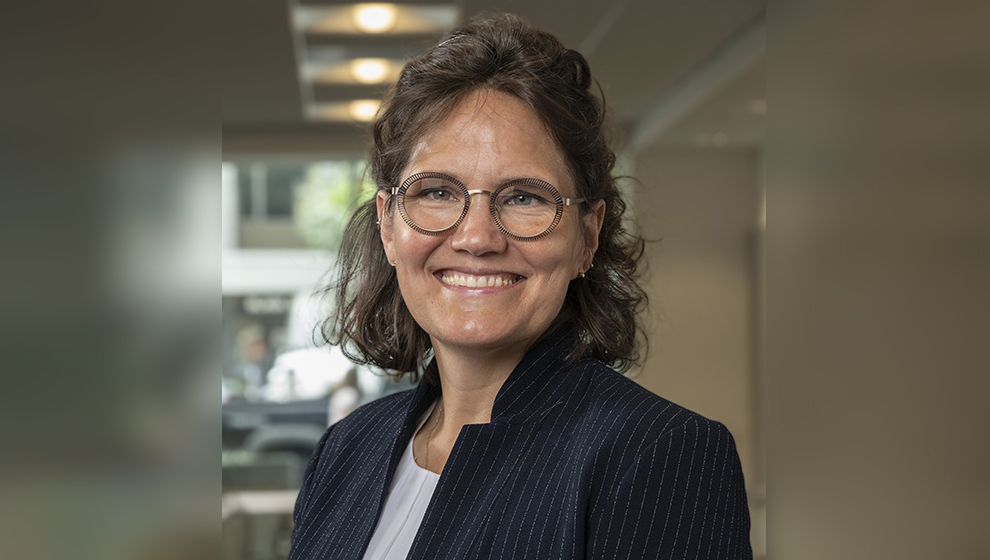
Against this backdrop, Frauke Nitschke, Senior Counsel and Team Leader at ICSID, reflects on two decades within the institution and discusses how ISDS is evolving to meet contemporary demands.
September 2023 marked my twentieth anniversary at ICSID. I currently serve as Senior Counsel and Team Leader on one of ICSID’s Case Management Teams, leading the staff handling proceedings in English.
In this role, I act as Secretary to arbitral tribunals, conciliation commissions and ad hoc committees in investor-State proceedings conducted under the ICSID Convention and the ICSID Additional Facility Rules. These disputes span a broad range of economic sectors and legal instruments.
In addition to case administration, I lead ICSID’s investor-State mediation activities. This includes overseeing the drafting of the ICSID Mediation Rules and amendments to ICSID’s conciliation frameworks. I have conducted mediation skills trainings for mediators and government officials and regularly speak at international conferences on investment mediation. I also recently chaired ICSID’s Investment Mediation Insights seminars.
Prior to joining ICSID in 2003, I worked in the World Bank’s Legal Vice Presidency and the Inspection Panel. I hold law degrees from Freie Universität Berlin and Georgetown University Law Center, as well as a master’s degree in organisational psychology focused on alternative dispute resolution. I am admitted to the New York and D.C. Bars and am an accredited mediator.
Investment dispute settlement has always been dynamic, but reform discussions have intensified in recent years.
One important development is the Code of Conduct for Arbitrators in International Investment Disputes, adopted by UNCITRAL in July 2023. Developed jointly by UNCITRAL and ICSID, the Code reinforces arbitrators’ duties of independence and impartiality. It addresses issues such as double-hatting, disclosure obligations and the requirement to charge reasonable fees and expenses. The objective is to strengthen confidence in the integrity of the system.
Another major reform priority concerns efficiency and cost. ICSID completed a comprehensive modernisation of its arbitration and conciliation rules in 2022. The revised rules introduce clearer procedural timelines, enhanced transparency provisions and measures designed to streamline proceedings. By establishing more precise deadlines for procedural steps and decisions, the updated framework promotes greater predictability for parties.
A third area of reform is the growing emphasis on amicable dispute resolution. ICSID’s Mediation Rules, which entered into force in 2022, are the first institutional mediation rules specifically tailored to international investment disputes. They reflect increasing interest from States and investors in resolving disputes at earlier stages or alongside arbitration.
There is sustained international attention on mediation as a complementary mechanism to arbitration.
The Singapore Convention on Mediation has strengthened the enforceability of mediated settlement agreements internationally, contributing to greater confidence in cross-border mediation outcomes. ICSID’s Mediation Rules were developed while the international community was finalising the Convention, and alignment was an important consideration to ensure coherence where parties wish to rely on its enforcement framework.
More broadly, mediation offers flexibility and can preserve relationships between investors and States. In complex, long-term investment projects — particularly in sectors such as energy, infrastructure or natural resources — maintaining dialogue can be as important as resolving a specific legal claim.
We are also seeing domestic-level reforms, including the creation of dedicated government units to manage investment grievances before disputes escalate. These developments signal a broader shift toward early dispute management and structured dialogue.
First and foremost, our priority remains delivering high-quality, neutral and efficient services to parties, tribunals, commissions and mediators.
The 2022 rule amendments were a significant milestone, but rule reform is not a one-off exercise. We have already published a report analysing the first year of practice under the revised rules, and ongoing assessment is essential. Continuous refinement of procedures, investment in technology and data analysis, and engagement with users all form part of that process.
At the multilateral level, discussions continue at UNCITRAL and in treaty practice more broadly. ICSID contributes institutional experience to those conversations, drawing on the cases we administer and the practical lessons learned.
ISDS remains a central feature of the international investment framework. At the same time, it continues to evolve.
The adoption of the Code of Conduct, the revision of ICSID’s procedural rules, and the introduction of dedicated mediation frameworks demonstrate that reform is active and ongoing. These changes reflect an effort to respond to stakeholder concerns while preserving the system’s core objective: providing an independent and effective forum for resolving disputes between investors and States.
Given the policy developments at institutional and treaty levels, and the growing use of mediation and conciliation mechanisms, I am optimistic that the system will continue to adapt constructively. The emphasis on procedural integrity, efficiency and amicable resolution mechanisms suggests a more diversified and responsive dispute settlement landscape going forward.
Frauke Nitschke is Senior Counsel and Team Leader at the International Centre for Settlement of Investment Disputes. She joined ICSID in September 2003 and serves as Secretary to arbitral tribunals, conciliation commissions and ad hoc committees in investor-State proceedings. She leads ICSID’s investor-State mediation activities and regularly speaks at international conferences on international investment dispute resolution.