Understand Your Rights. Solve Your Legal Problems


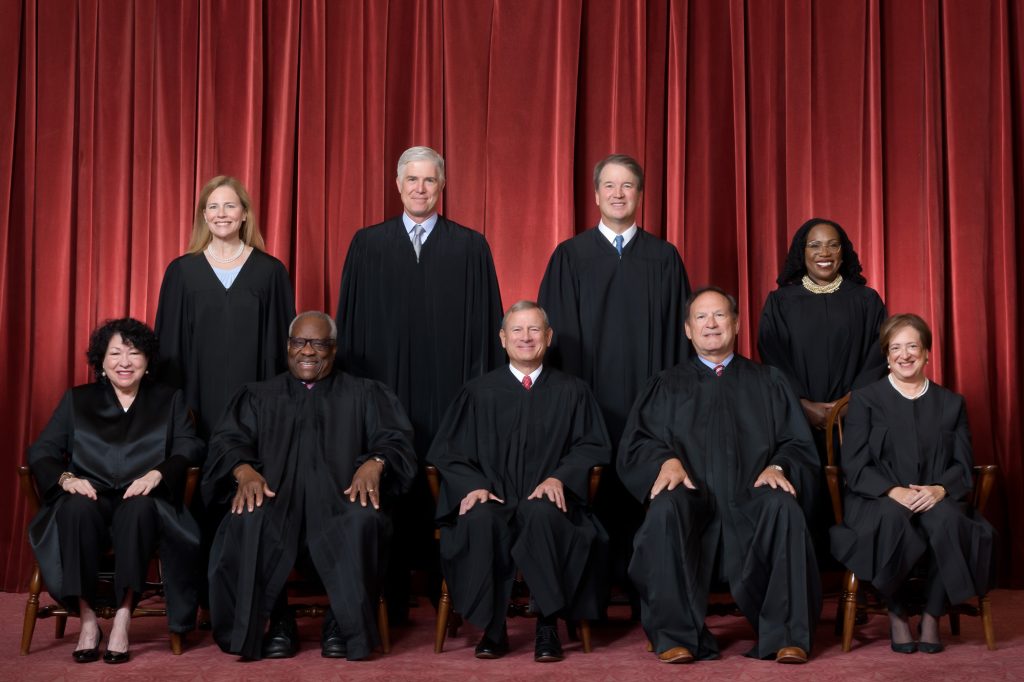
A January 26, 2026 per curiam decision from the Supreme Court of the United States reverses the Fourth Circuit for granting habeas relief to a Maryland prisoner based on a Brady nondisclosure claim. The reversal does not rest on a re-examination of the evidence. It rests on a stricter enforcement of AEDPA’s command that federal courts defer to state-court merits decisions.
For senior decision-makers, the exposure is structural. This ruling narrows the circumstances in which federal courts may disturb state convictions, even where nondisclosure is alleged and impeachment value is conceded. The operative constraint is not Brady doctrine itself, but who is authorised to decide materiality once a state court has ruled.
The institutional trigger is familiar: a forensic report not disclosed at trial, later argued to undermine a prosecution witness. The Supreme Court accepts, for argument’s sake, that the evidence could have weakened that testimony. What it rejects is the Fourth Circuit’s decision to reassemble the trial record and substitute its own view of materiality for the state court’s.
Within the first review layer, the consequence is immediate. Federal habeas review is reaffirmed as a narrow corrective mechanism, not a discretionary second appeal. Authority is re-centred in state courts once AEDPA applies, and federal intervention is confined to decisions that fall beyond fair-minded disagreement.
This matters now because the Court treats this not as a fact-bound disagreement, but as an enforcement action against lower federal courts that dilute AEDPA’s role separation. That enforcement posture reshapes where institutional accountability sits in postconviction litigation.
The Court’s analysis is anchored in AEDPA’s governing rule: federal habeas relief is unavailable unless a state court’s adjudication is contrary to, or an unreasonable application of, clearly established Supreme Court precedent, or rests on an unreasonable determination of fact.
The opinion reinforces a boundary principle. Federal courts are not authorised to revisit materiality as an open evidentiary question once a state court has applied the correct Brady framework and reached a defensible conclusion. Disagreement is insufficient. Deference is mandatory.
The Court explicitly rejects the Fourth Circuit’s approach of treating the quality of the state court’s written analysis as a proxy for constitutional error. State courts are not required to catalogue every piece of evidence or articulate their reasoning to federal standards of completeness to retain AEDPA protection.
This reasserts institutional hierarchy. State courts remain the primary adjudicators of trial-level constitutional claims. Federal courts operate under constraint, permitted to intervene only when the state decision crosses an objective reasonableness threshold.
The practical effect is to foreclose a common appellate manoeuvre: reframing dissatisfaction with a state court’s explanation as proof that the wrong legal test was applied.
The underlying claim arises from the State’s failure to disclose a forensic computer analysis. The defence argued that the report would have impeached a prosecution witness who testified that the defendant researched silencers on a laptop and later disposed of it.
Maryland’s appellate court assumed, without deciding, that the jury would have entirely discredited that witness had the report been disclosed. It nevertheless concluded there was no reasonable probability of a different outcome, given the remaining evidence.
The Supreme Court treats that assumption-based analysis as legally sufficient. Materiality, it emphasises, turns on whether disclosure would have altered the evidentiary picture as a whole, not whether it would have weakened a particular witness.
The Fourth Circuit’s error, as framed by the Court, was jurisdictional in nature. By reweighing the trial record and emphasising evidentiary omissions in the state opinion, the federal court displaced the authority AEDPA assigns to state adjudicators.
Responsibility therefore shifts away from federal courts as arbiters of close Brady disputes and back toward state courts as the decisive forum. Once the state court has ruled, federal liability exposure narrows sharply.
This does not reduce Brady obligations. It reallocates where enforcement pressure is most likely to crystallise.
The Court’s recitation of the remaining evidence is not incidental. It explains why nondisclosure, even if conceded, may still fail the materiality test under a deferential standard.
The opinion points to DNA evidence connected to a modified Gatorade bottle alleged to resemble a homemade silencer, testimony placing the defendant near tools used to alter it, and evidence of motive and post-offence behaviour. Together, the Court treats this record as independently sufficient to sustain confidence in the verdict.
The institutional signal is clear. Brady claims framed around impeachment value face heightened resistance in federal habeas when corroborating physical or circumstantial evidence exists. Credibility reassessment is not a federal function unless the state court’s treatment is objectively indefensible.
Two immediate pressure points emerge:
Appellate discipline pressure: Federal circuit courts are on notice that treating AEDPA as flexible guidance, rather than a binding constraint, invites summary reversal.
Record-integrity pressure: Institutions defending convictions are structurally advantaged where the trial record contains independent evidentiary anchors. Where records are thin, nondisclosure disputes carry greater downstream exposure.
The Court’s use of a per curiam disposition reinforces that this is not a marginal clarification. It is a corrective signal aimed at enforcing compliance with AEDPA’s institutional design.
This decision is not an expansion or contraction of Brady doctrine. It is an enforcement action aimed at preserving the boundary between state adjudication and federal review.
The Court reiterates that AEDPA deference applies even where state opinions are brief, incomplete, or uneven. Federal courts lack authority to impose opinion-writing standards or to infer legal error from omission.
The deeper institutional concern is stability. Allowing federal courts to re-litigate materiality based on stylistic or analytical dissatisfaction would undermine the finality AEDPA was enacted to protect.
By reversing summarily, the Court signals impatience with lower courts that dilute this structure under the guise of rigorous review. That impatience carries enforcement weight.
For institutions subject to recurring postconviction scrutiny, the constraint is unmistakable: federal habeas is not the forum for close calls once a state court has ruled within constitutional bounds.
For executives, boards, and general counsel operating in or around criminal justice systems, this ruling tightens risk allocation rather than introducing doctrinal novelty.
First, postconviction exposure is increasingly determined by the strength and completeness of the original trial record. Federal courts are structurally constrained from correcting close-margin nondisclosure disputes once AEDPA applies.
Second, reputational risk management must account for volatility in interim federal wins. A favourable circuit ruling that rests on reweighing evidence may be inherently unstable and vulnerable to reversal.
Third, accountability pressure shifts upstream. Where disclosure failures occur, the most consequential scrutiny will now concentrate in state appellate and postconviction forums, oversight bodies, and public accountability channels — not federal retrials.
The net effect is containment. The Supreme Court has reinforced the shield around state convictions, narrowed the federal aperture, and reasserted institutional hierarchy. Decision-makers should read this as a clarification of constraint, not an invitation to complacency.