Understand Your Rights. Solve Your Legal Problems


Airline travel depends on software most passengers never see. Booking, check-in, seat assignments, boarding passes, baggage tracking, and crew coordination all run through interconnected systems that must work in sequence.
When an airline announces a system outage — even a planned one — travelers often assume flights themselves are grounded. What actually happens is more specific, more fragmented, and often more confusing than people expect.
Airlines periodically take core booking and check-in systems offline for planned upgrades, temporarily limiting access to websites, mobile apps, and airport kiosks. In some cases, early-morning departures are removed from schedules to reduce operational risk during the outage window.
These disruptions raise a practical question many travelers face during outages, strikes, or system failures: if the systems go down, what still works — and what doesn’t?
Airline systems are not one single switch. When a planned outage begins, different functions stop at different points.
The first systems affected are usually customer-facing tools. Online booking, seat changes, upgrades, and app-based check-in typically become unavailable immediately. Boarding pass retrieval and mobile notifications may also stop updating.
Behind the scenes, reservation databases are often placed in a “read-only” or frozen state. That means existing bookings still exist, but agents cannot easily modify them until the system comes back online.
At the airport, operations continue — but in a narrowed form.
Flights scheduled outside the outage window usually proceed as planned. Flights scheduled inside the window are often removed from sale or delayed in advance, which is what United did by clearing departures during the upgrade period.
Passengers who already checked in before the outage can usually still board. Travelers who did not check in early may face manual processing, longer queues, or delayed boarding if local systems cannot sync in real time.
Consider a traveler flying early morning with a checked bag.
They booked days ago but planned to check in on the app overnight. The outage begins before they open the app. Online check-in is unavailable, and the boarding pass won’t generate.
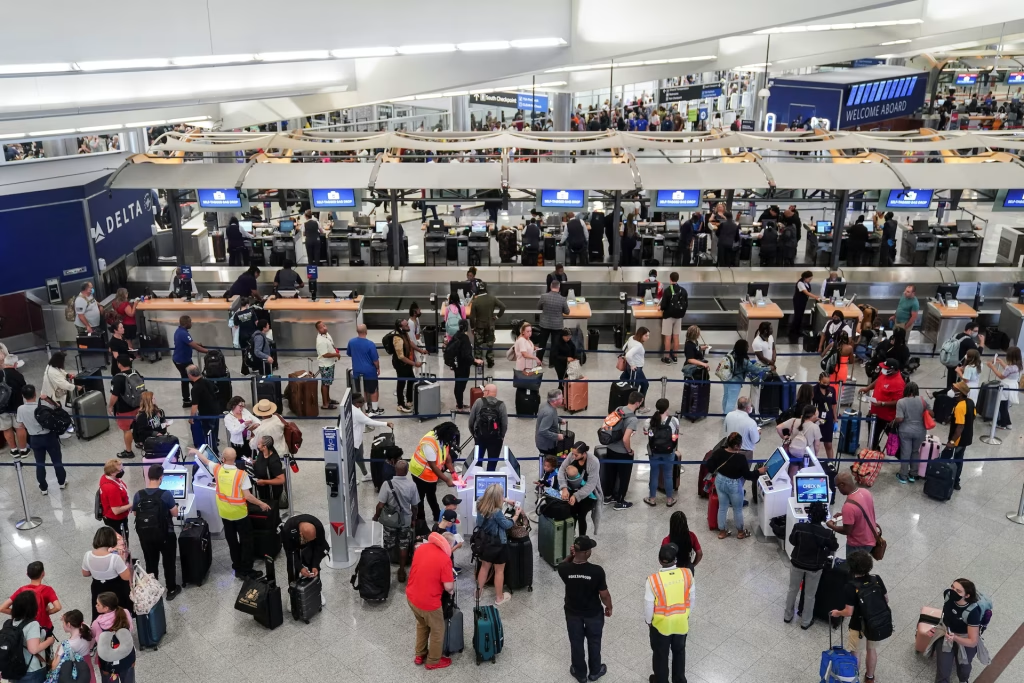
At the airport, kiosks are closed or limited. A staffed counter can access the booking, but baggage tagging takes longer because systems are running in fallback mode. The flight itself still operates — but the passenger clears security later than expected and boards closer to departure.
Nothing is “cancelled,” but the experience feels broken.
Most confusion happens at handoff points.
Passengers assume a flight delay means a technical failure mid-air. In reality, delays often come from check-in bottlenecks, baggage system lag, or crew coordination tools restarting unevenly after the outage ends.
Another common misunderstanding is believing customer service can override the outage. During system freezes, even airline staff are restricted in what they can change until databases resync.
Many travelers assume: If the system is down, flights stop.
What actually happens is narrower. Flights can operate while booking, changes, and check-in tools are limited. The plane flies — but the passenger journey slows down.
People also assume planned outages are invisible. In practice, they are managed disruptions that trade short-term inconvenience for long-term system reliability.
When systems come back online, they do not instantly return to full speed.
Reservation data must be validated, queues must clear, and delayed actions — seat changes, baggage scans, crew updates — must process in order. This restart phase is where knock-on delays appear, even after the outage officially ends.
That lag affects some passengers more than others, depending on timing, airport staffing, and whether manual workarounds were used.
Airlines are generally allowed to schedule planned system maintenance and adjust flight schedules in advance.
Passenger rights, refunds, or compensation usually depend on actual disruption, not the existence of an outage itself. If a flight operates, standard rules apply. If a delay or cancellation occurs, remedies depend on cause, duration, and jurisdiction.
Importantly, a system outage does not automatically create liability. Responsibility is assessed based on what actually happened to the passenger, not the technical event alone.
Even with advance notice, outcomes vary.
The same outage can feel minor at one airport and chaotic at another. Staffing levels, fallback systems, and local volume all affect the experience. What does not change is that digital airline operations rely on tight sequencing — and when one link pauses, human work fills the gap.
Understanding that process helps set expectations, but it does not guarantee a smooth journey.