Ryan Wedding Case: What Happens When Alleged Crimes Span the U.S., Canada and Mexico
The January 22, 2026, arrest of former Olympic snowboarder Ryan Wedding has obvious headline appeal. An athlete once competing on the world stage is now in U.S. custody, accused of running a multinational drug operation and directing violent crimes across borders.
But legally, his past is beside the point. The real story is how modern criminal law works when alleged crimes span countries, jurisdictions, and legal systems.
The Reach of Federal Jurisdiction
At its core, this case is about jurisdiction—who has the legal authority to prosecute conduct that allegedly occurred across the U.S., Canada, Mexico, and beyond. In transnational cases, no single country automatically “owns” the prosecution.
Instead, authorities look at where criminal activity took place, where harm was felt, and whether domestic laws were targeted from abroad.
U.S. federal law allows prosecutors to pursue cases involving conduct outside the country if it is intended to affect U.S. interests.
In Wedding’s case, the U.S. Department of Justice alleges his organization moved 60 metric tons of cocaine annually, using Los Angeles as a primary hub for a billion-dollar empire spanning South and North America.
The Stakes of a "Criminal Enterprise"
What significantly raises the legal stakes here is the use of criminal enterprise allegations. Prosecutors are not just proving isolated acts; they are showing an ongoing, coordinated operation.
Under Continuing Criminal Enterprise (CCE) and RICO statutes, responsibility extends to crimes carried out by others to further the organization’s goals.
The case took a darker turn with a November 2025 superseding indictment, which included charges for the murder of a federal witness in Medellín, Colombia. This illustrates the "modern" reach of the law: prosecutors allege the enterprise used a Canadian website, "The Dirty News," to post the witness's photo, enabling assassins to identify and kill him in January 2025.
Surrender vs. Extradition
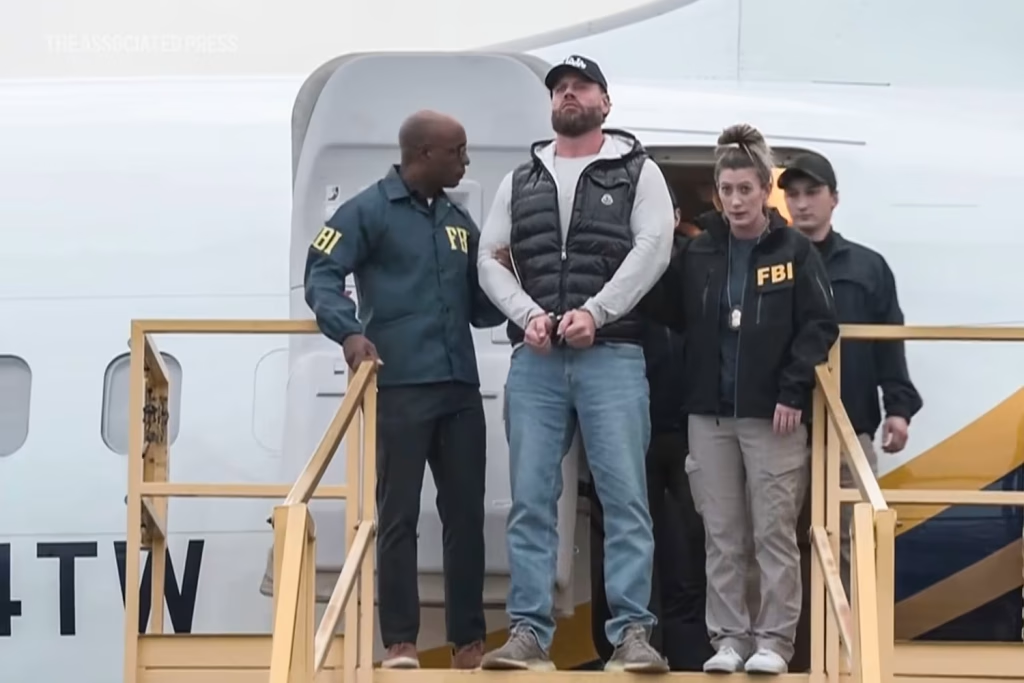
The way Wedding entered U.S. custody on January 23, 2026, also matters. While he reportedly surrendered at the U.S. Embassy in Mexico City, this followed a year-long manhunt and the arrest of his alleged "second-in-command," Andrew Clark.
A voluntary surrender often bypasses years of diplomatic and judicial challenges involved in contested extradition. However, it does not reduce the severity of the charges.
As he prepares for his initial appearance in a Los Angeles federal court on Monday, January 26, 2026, the process becomes purely procedural: detention hearings and challenges to evidence gathered across multiple continents.
What Happens Once the Law Catches Up
When alleged crimes cross borders, neither nationality nor physical distance provides legal shelter. If prosecutors can show an organized, ongoing operation that affects multiple countries, they can bring enterprise-level charges with sweeping jurisdiction.
Past status, public recognition, or even a strategic surrender do not change that reality. Once a court establishes lawful authority, the outcome turns on evidence and procedure alone—not where someone once stood in the public eye.