Who Is Brian David Mitchell? The Man Behind the Elizabeth Smart Kidnapping
Who Is Brian David Mitchell: The Making of a Predator
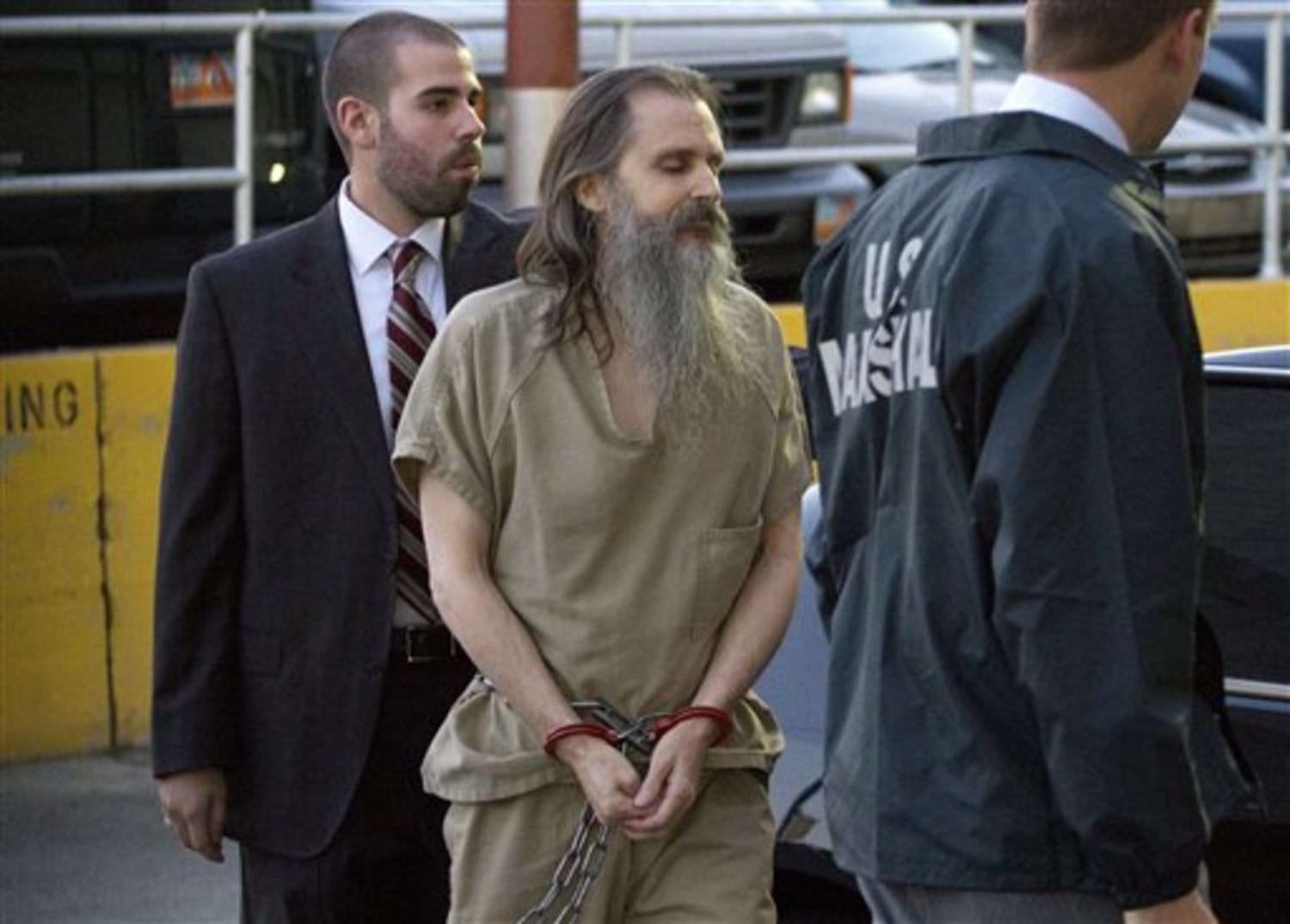
Brian David Mitchell is led by U.S. Marshals while in federal custody. Mitchell is serving a life sentence without parole for the kidnapping of Elizabeth Smart.
Brian David Mitchell was raised in a middle-class Mormon household in Salt Lake City, the third of six children. His father worked as a social worker and emphasized strict religious discipline in the home. Family members later said Mitchell was bright and capable, excelling academically and showing aptitude in music and skilled trades, including carpentry.
But even early on, those close to him noticed something was off. Teachers and relatives described him as increasingly withdrawn, prone to emotional swings, and detached from peers. As he entered adolescence, that detachment hardened into isolation, accompanied by anger and volatility, particularly in conflicts with his father over religion and authority.
At 16, Mitchell was arrested after exposing himself to a young girl. Though he avoided long-term incarceration, the incident became an early marker in a pattern of sexually inappropriate behavior that would follow him into adulthood.
Mitchell’s working life was unstable. Over the years, he cycled through jobs as a salesman, hospital orderly, and sandblaster, among others. None lasted. According to later testimony, he became increasingly consumed by fringe religious ideas, spending long periods immersed in his own interpretations of scripture and prophecy.
He married young. In 1972, Mitchell wed Karen Layne, and the couple had children before the marriage eventually collapsed. During divorce proceedings, allegations of child sexual abuse surfaced — claims that were documented but never resulted in criminal convictions. Mitchell moved on, avoiding lasting legal consequences.
In the mid-1980s, he married Wanda Barzee, a divorced mother of six. Their relationship marked a turning point. Mitchell’s religious beliefs intensified, and Barzee, by her own later account, came to see him as divinely chosen. The couple withdrew further from mainstream society, eventually selling their possessions and living transiently.
As they drifted between campsites and city streets, Mitchell’s belief system hardened. What had once appeared eccentric became rigid and absolute — a worldview in which obedience was mandatory and women and children were assigned roles within his self-declared spiritual mission.
Years later, prosecutors would argue that this isolation — paired with Mitchell’s need for control — created the conditions that made the kidnapping of Elizabeth Smart possible, echoing patterns of warning signs and missed intervention later debated in other high-profile cases, including JonBenét Ramsey and the Menendez brothers.
How He Crossed Paths With the Smart Family
:max_bytes(150000):strip_icc():focal(971x217:973x219)/elizabeth-smart-kidnappers-brian-david-mitchell-wanda-barzee-main-060625-e8f39d9596bc4170a0fc5154fc4d4117.jpg)
Archival images related to the Elizabeth Smart kidnapping case, showing the convicted kidnapper, Elizabeth Smart as a teenager, and his wife and accomplice during court proceedings.
In November 2001, Brian David Mitchell crossed paths with the Smart family in an unremarkable way. He was panhandling on the streets of Salt Lake City when Elizabeth Smart’s mother, Lois, stopped and spoke with him. She offered him $5 and later gave him a small roofing job at the family’s home — an act of generosity that, at the time, raised no alarms.
Months later, Mitchell returned.
In the early morning hours of June 5, 2002, he broke into the Smart home while the family slept. Armed with a knife, he entered the bedroom Elizabeth shared with her younger sister and forced the 14-year-old to leave quietly, threatening to kill her and her family if she resisted.
Elizabeth was made to walk miles into the foothills outside Salt Lake City, where Mitchell’s wife, Wanda Barzee, was waiting.
There, Elizabeth was dressed in religious clothing and subjected to a ceremony Mitchell described as a marriage. What followed was months of captivity. Elizabeth was repeatedly raped, often restrained with a cable to prevent escape, and kept under constant threat. She was deprived of food, drugged, and warned that any attempt to run would end in her death.
Barzee was present throughout the captivity. Elizabeth later said she witnessed the abuse and did nothing to intervene, believing she was obligated to obey Mitchell’s religious authority.
Despite being taken into public spaces during those nine months — including city streets and stores — Elizabeth remained hidden. Disguised, controlled, and coerced into silence, she was repeatedly seen but not recognized.
She would not be rescued until March 2003.
The Search for Elizabeth Smart
In the hours after Elizabeth Smart was taken from her Salt Lake City home, law enforcement launched an intensive search of the surrounding neighborhoods and foothills. Sniffer dogs were brought in and initially picked up Elizabeth’s scent, tracking it toward the edge of a wooded area near the family’s home.
The trail, however, went cold at the forest line. Investigators later said the loss of scent complicated early efforts, as Mitchell had forced Elizabeth to walk through terrain that made tracking difficult. Despite the setback, volunteers and officers continued canvassing the area, calling out Elizabeth’s name as part of organized search parties.
Elizabeth would later reveal that she could hear those searchers. While being held nearby, she listened as people called her name, aware that help was close but unable to respond without risking severe punishment. At the time, she was being held in makeshift camps, including a teepee-like shelter concealed in the foothills, where her captors moved frequently to avoid detection.
For months, the search continued without answers. The case drew national attention, but Elizabeth remained hidden — close enough to hear rescuers, yet just out of reach.
How Brian David Mitchell Was Caught
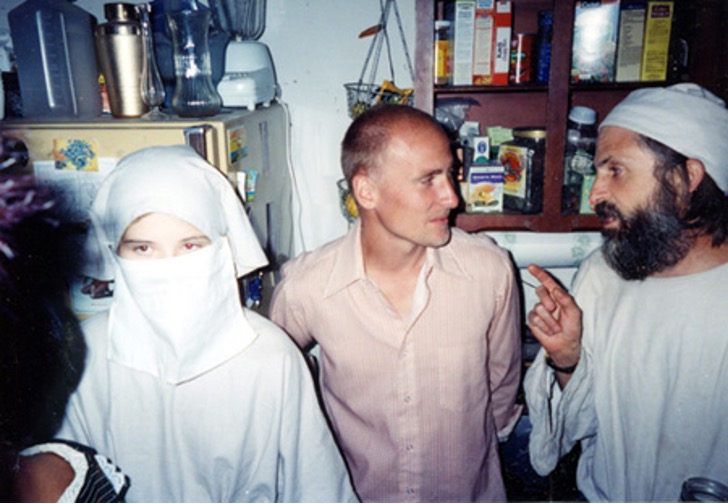
An archival image connected to the Elizabeth Smart kidnapping investigation, showing the survivor during captivity alongside her captors inside a private residence.
The investigation took a crucial turn months after Elizabeth Smart disappeared, when her younger sister, Mary Katherine Smart, told her parents she believed she recognized the kidnapper’s voice. It reminded her of a man the family had once known as “Immanuel,” who had briefly worked on their roof.
That realization led investigators to focus on Brian David Mitchell. In February 2003, police released a composite sketch, followed by photographs provided by Mitchell’s family. The images were broadcast nationally, including on America’s Most Wanted, significantly widening the search.
On March 12, 2003, two separate couples who had seen the broadcasts spotted Mitchell walking in Sandy, Utah, accompanied by two women. They contacted police, who stopped the group shortly afterward.
Elizabeth, wearing a disguise and giving officers a false name, was taken into custody along with Mitchell and his wife, Wanda Barzee. At the police station, Elizabeth eventually confirmed her identity and was reunited with her family later that day.
The legal process that followed stretched on for years, delayed by repeated mental competency evaluations. Mitchell’s attorneys argued he was not criminally responsible due to mental illness, but a federal jury ultimately rejected that defense.
In December 2010, Mitchell was convicted of interstate kidnapping with intent to commit sexual assault and sentenced to life in federal prison without the possibility of parole. Barzee pleaded guilty in a separate case and received a 15-year sentence. She was released in 2018 — a decision Elizabeth Smart later said left her “surprised and disappointed.”
Where Is Brian David Mitchell Now?

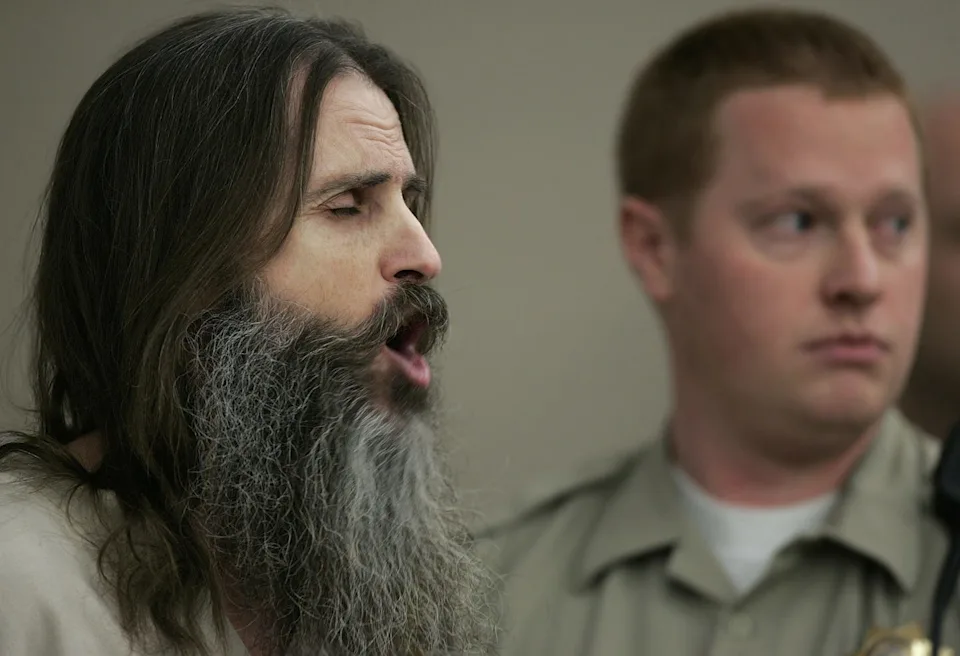
The convicted kidnapper Brian David Mitchell in the Elizabeth Smart case appears in court under guard. He is currently serving a life sentence without the possibility of parole in federal prison.
Mitchell is now 72 years old and serving a life sentence without the possibility of parole. He remains in federal custody, where he is expected to spend the rest of his life.
In late 2025, Mitchell’s incarceration status changed following a reported assault while he was housed at the high-security federal prison in Terre Haute, Indiana. According to public reporting, he was attacked by another inmate, prompting prison officials to move him out of the facility.
Mitchell was subsequently transferred to Federal Correctional Institution Lewisburg in Pennsylvania, where officials confirmed he is being housed under heightened security measures. The facility is known for its use of protective custody for inmates considered at high risk within the general prison population.
Despite years of evaluations and court proceedings, Mitchell has continued to assert that his religious beliefs are divinely inspired — claims that were rejected by jurors during his trial.
The case has returned to public focus following the release of Netflix’s 2026 documentary Kidnapped: Elizabeth Smart, which revisits the investigation, the prosecution, and the long road to accountability. Elizabeth Smart, now an author and victims’ rights advocate, has continued to speak publicly about the importance of survivor protections and sentencing that reflects the lasting impact of violent crime.
More than two decades after her rescue, Smart has said she does not dwell on her captor — choosing instead to focus on advocacy, family, and helping others who have experienced trauma.
Elizabeth Smart Today
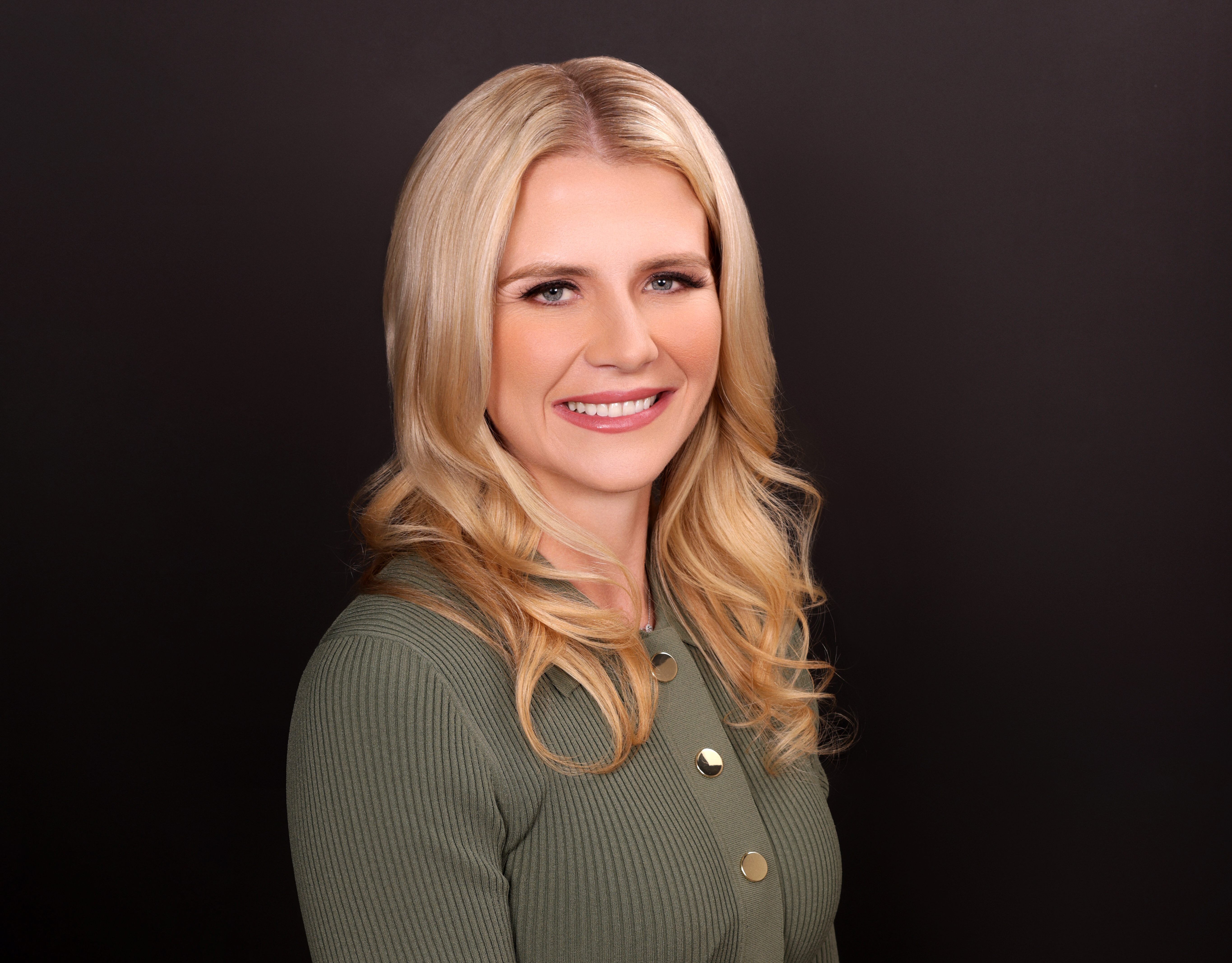
Kidnapping survivor, Elizabeth Smart who later became a bestselling author and national advocate. She now focuses on public speaking, survivor support, prevention work, and education through her foundation and published books.
Today, Elizabeth Smart is a bestselling author, a mother of three, and one of the most prominent victims’ rights advocates in the country. In the years since her rescue, she has built a life that extends far beyond the crime that once defined public attention.
Smart has been clear that she does not want her story to be framed around the man who kidnapped her. Instead, she has focused on speaking about survival, recovery, and what it means to reclaim a future after trauma.
In interviews, she has often returned to the same message — that even in the aftermath of unimaginable harm, healing is possible.
“Even after terrible things happen,” she has said, “you can still have a wonderful life.”
Timeline: The Elizabeth Smart Kidnapping Case (2001–2026)

November 2001
Brian David Mitchell encounters the Smart family while panhandling in Salt Lake City.
Elizabeth Smart’s mother, Lois Smart, offers him a small roofing job at the family’s home — a detail that later becomes central to the investigation.
June 5, 2002 (Early Morning Hours)
Elizabeth Smart, 14, is abducted from her bedroom at knifepoint.
Her younger sister, Mary Katherine Smart, partially witnesses the kidnapping and hears the abductor’s voice.
June 5, 2002 (Morning)
Police are notified after Mary Katherine alerts her parents.
A large-scale search begins across Utah, quickly drawing national media attention.
June–July 2002
Elizabeth is held captive in makeshift camps in the Utah foothills by Mitchell and his wife, Wanda Barzee.
Mitchell performs a mock “marriage” ceremony and begins repeatedly sexually assaulting Elizabeth.
July 2002
Mitchell attempts to abduct Elizabeth Smart’s cousin by cutting through a bedroom window screen.
The attempt fails after a family dog begins barking.
August–September 2002
Mitchell, Barzee, and Elizabeth travel between Utah and California.
Elizabeth is taken into public spaces while disguised in religious clothing but remains unidentified.
October 2002
Mary Katherine Smart realizes the abductor’s voice matches a man the family knew as “Immanuel,” who had previously worked on their roof.
This recognition marks the first major investigative breakthrough.
February 2003
Police release a composite sketch of the suspect based on witness recollections.
Mitchell’s family later provides photographs, which are distributed publicly.
February–March 2003
Mitchell is featured on America’s Most Wanted, significantly increasing public awareness of his appearance and aliases.
March 12, 2003
Two separate couples recognize Mitchell walking in Sandy, Utah, with two women and contact police.
Elizabeth, disguised and using a false name, is taken into custody and later confirms her identity.
Mitchell and Barzee are arrested.
March 18, 2003
Mitchell and Barzee are formally charged with aggravated kidnapping, burglary, and sexual assault.
2003–2009
Court proceedings are repeatedly delayed due to mental competency evaluations, hospitalizations, and jurisdictional issues at both the state and federal levels.
November 2009
Barzee pleads guilty to federal kidnapping charges and agrees to cooperate with prosecutors.
She is sentenced to 15 years in federal prison, with credit for time served.
November–December 2010
Mitchell stands trial in federal court.
His defense argues insanity; prosecutors counter with evidence of planning and manipulation.
December 10, 2010
Mitchell is found guilty of interstate kidnapping and unlawful transportation of a minor with intent to commit sexual assault.
May 2011
Mitchell is sentenced to life in federal prison without the possibility of parole.
2012
Elizabeth Smart marries Matthew Gilmour and begins expanding her public work as a victims’ rights advocate.
2016
Barzee completes her federal sentence and is transferred to Utah state custody to serve time related to the attempted kidnapping of Elizabeth’s cousin.
September 19, 2018
Barzee is released from prison after parole officials credit her federal and state confinement toward her sentence.
Elizabeth Smart publicly criticizes the decision.
2018–2023
Barzee lives under supervised release in Utah and is required to register as a sex offender.
September 2024
Elizabeth Smart says in interviews that she does not think about her captors regularly and believes Mitchell should never be released.
October 2025
Mitchell is transferred from USP Terre Haute in Indiana following reported inmate assaults.
He is moved to Federal Correctional Institution Lewisburg in Pennsylvania.
January 21, 2026
Netflix releases Kidnapped: Elizabeth Smart, featuring new interviews and reflections on the case more than two decades after her rescue.
January 2026 (Present Status)
Brian David Mitchell remains incarcerated in the federal prison system, where he is serving a life sentence without the possibility of parole.
Wanda Barzee has been released from custody but remains subject to sex offender registration requirements and court-imposed restrictions.
Elizabeth Smart continues her work as an author, advocate, and public speaker, focusing on survivor support, prevention efforts, and victims’ rights.