Understand Your Rights. Solve Your Legal Problems


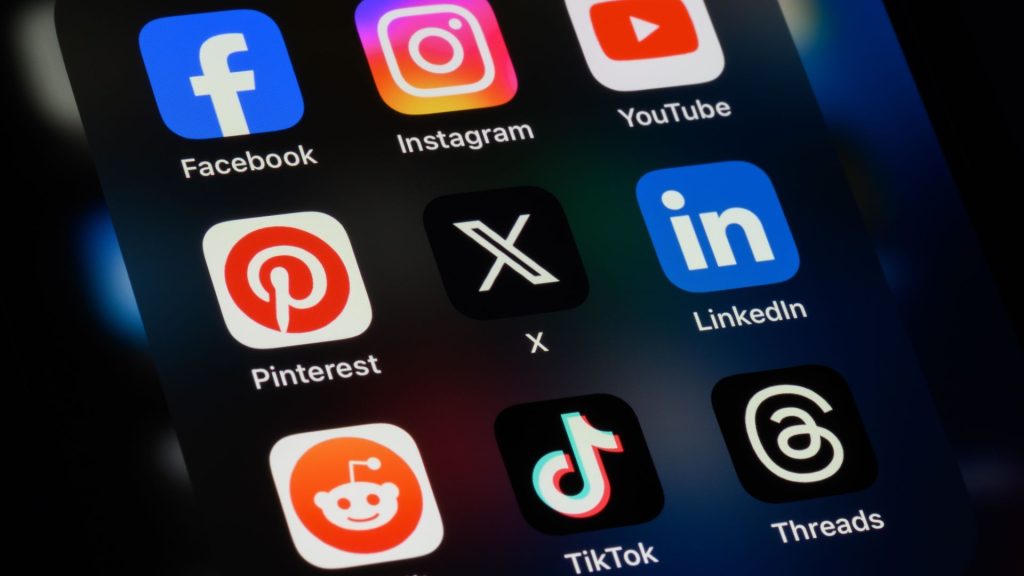
Ministers are launching a consultation on banning under-16s from social media, marking a significant shift in government policy after weeks of intense pressure from MPs, campaigners, and bereaved families.
After initially resisting a blanket ban, the government has softened its position and will now examine whether to introduce an Australia-style restriction preventing children from accessing major social media platforms. The move reflects growing concern that existing safeguards are failing to protect young people during critical stages of development.
The consultation will explore improving age-assurance technology, reassessing whether the UK’s digital age of consent is set too low, and limiting platform features linked to addictive behaviour—such as infinite scrolling, algorithmic feeds, and “streaks”.
Alongside this, the Department for Education is issuing strengthened guidance on mobile phone use in schools in England, making it clearer that schools should operate as phone-free environments from the summer term, though stopping short of legislating for a total ban.
The announcement comes amid growing political pressure within Westminster.
Although Prime Minister Keir Starmer was initially opposed to banning under-16s from social media, his position became increasingly difficult to sustain following a proposed amendment to the Children’s Wellbeing and Schools Bill in the House of Lords.
The amendment, tabled by former Conservative schools minister Lord Nash, would require social media companies to deploy “highly effective” age-verification measures to prevent under-16s accessing their platforms.
One Labour MP told political reporter Faye Brown there was “no way” the Parliamentary Labour Party could be whipped against the amendment without risking a serious rebellion—prompting ministers to move first with a consultation.
Lord Nash criticised the government’s approach as insufficient, arguing that delay risks further harm to children already struggling online.
Bereaved parents, including Esther Ghey, have also urged ministers to act decisively, saying a clear age limit would send an “unambiguous message” that social media is not suitable for children under 16.
Behind the political debate sits a growing body of evidence suggesting that the risks of social media are not evenly distributed across childhood.
A landmark 2022 study led by researchers at the Oxford Internet Institute and the University of Cambridge, published in Nature Communications, identified distinct “windows of sensitivity” during adolescence when social media use is linked to lower life satisfaction.
Using longitudinal UK data tracking more than 17,000 young people aged 10 to 21, researchers found that:
Girls showed a negative link between social media use and life satisfaction between ages 11 and 13
Boys showed the same negative link later, between ages 14 and 15
For both sexes, higher social media use at age 19 was again associated with lower life satisfaction
The researchers suggested these patterns may be linked to puberty and brain development—which tends to occur earlier in girls than boys—as well as social transitions in late adolescence, such as leaving home or starting work.
The study also found that teenagers with lower life satisfaction tend to increase their social media use over time, raising concerns about a feedback loop in which vulnerability and screen time reinforce each other.
Dr Amy Orben, who led the research, stressed that the relationship between social media and wellbeing is complex and varies widely between individuals.
Professor Andrew Przybylski, director of research at the Oxford Internet Institute, described young people’s online lives as a “black box” to scientists and parents alike—calling for better data sharing from technology companies.
The findings complicate the policy debate: if harm peaks at different ages for boys and girls, is a single age-based ban too blunt—or long overdue?
Fueling momentum behind tougher regulation is a broader cultural shift—one driven as much by public intellectuals as politicians.
At its centre is Jonathan Haidt, whose 2024 bestseller The Anxious Generation has become a focal point in the global argument over children, phones, and mental health.
Haidt argues that the rapid transition from a “play-based childhood” to a “phone-based childhood” has coincided with a sharp rise in anxiety, depression, and self-harm among young people—and that incremental safety measures have failed to reverse the trend.
His work has been cited by lawmakers in multiple countries and has helped galvanise support for phone bans in schools and stricter age limits on social media platforms.
Critics, particularly within academia and the technology sector, argue that correlation does not prove causation and warn against oversimplifying a complex mental-health landscape shaped by economic pressure, academic stress, and post-pandemic disruption.
Haidt acknowledges the limits of the data but argues that policymakers cannot wait for perfect evidence when children are exposed to potential harm during key developmental years. That framing—precaution over proof—is increasingly echoed in government rhetoric.
Beyond legislation lies a deeper, unresolved question: what replaces social media in children’s lives once access is removed?
For many teenagers, platforms are not just entertainment but infrastructure—where friendships are maintained, identities explored, and humour shared. Critics of bans warn that removing social media without alternatives may simply push young people into private messaging apps, gaming platforms, or less regulated corners of the internet.
Supporters argue the opposite: that bans could force a long-overdue cultural reset, nudging children back toward in-person friendships, extracurricular activities, and offline creativity.
Australia’s early experience suggests young people adapt quickly—but not always in ways lawmakers expect. Social behaviour doesn’t disappear; it reroutes.
That raises a further policy challenge: whether governments are prepared to reinvest in youth clubs, sports, arts, and safe communal spaces—or whether bans risk creating a vacuum rather than a solution.
More immediately, ministers are strengthening guidance on mobile phone use in schools.
Education Secretary Bridget Phillipson said schools would be fully supported in enforcing phone bans, with Attendance and Behaviour Hubs offering help where implementation proves difficult.
Ofsted chief Martyn Oliver said inspectors would now consider how effectively phone policies are enforced when judging pupil behaviour.
Department for Education data shows that while almost all schools have phone policies, 65% of pupils aged 14 to 16 report phones being used without permission during lessons.
Technology Secretary Liz Kendall said the consultation reflects recognition that the Online Safety Act was never intended to be the final word on children’s digital safety.
Children’s charity NSPCC welcomed the move, warning that platform design must be addressed directly rather than leaving responsibility with families alone.
What is increasingly clear is that this is no longer just a debate about screens or apps—but about how society protects children during the most psychologically sensitive stages of growing up.
The consultation may decide whether under-16s are banned from social media. The harder question—how childhood adapts without it—is only just beginning.