Vivian Motzfeldt’s Emotional Interview Exposes the Legal Limits of Trump’s Greenland Threats
Greenland’s foreign minister broke down during a live interview after a White House meeting failed to alter President Donald Trump’s stated desire to acquire the territory. The episode underscores the legal, diplomatic, and geopolitical boundaries that prevent any unilateral U.S. action.
The emotional reaction of Greenland’s foreign minister following high-level talks in Washington has drawn global attention—not because of what was said in the room, but because of what legally cannot happen outside it.
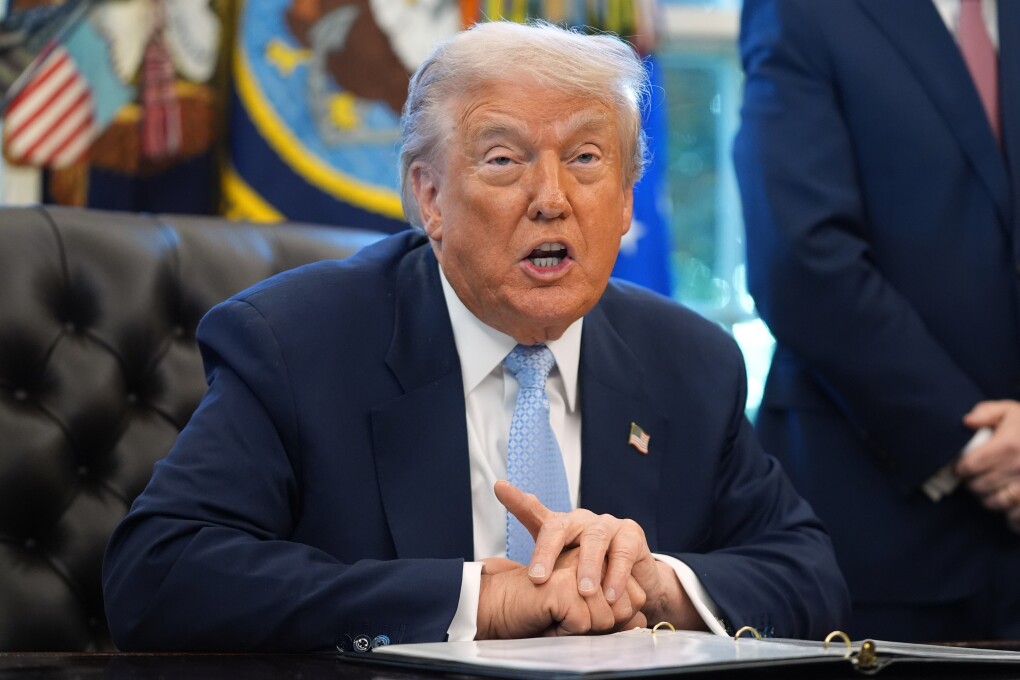
After a White House meeting involving U.S. and Danish officials failed to shift President Donald Trump’s position on acquiring Greenland, Foreign Minister Vivian Motzfeldt appeared visibly overwhelmed during a live television interview. Her response came amid renewed rhetoric from the U.S. president about Greenland’s strategic value and sovereignty.
The exchange has reignited debate over international law, territorial integrity, NATO obligations, and the limits of presidential power—issues that extend far beyond diplomatic theater or emotional headlines.

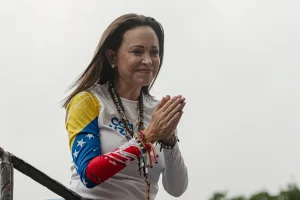
Greenland Foreign Minister Vivian Motzfeldt speaks during an Arctic Circle Dialogue event, amid heightened international attention on Greenland’s political status.
What we know so far
Greenlandic and Danish officials traveled to Washington for talks aimed at easing tensions after President Trump reiterated his interest in acquiring Greenland, a self-governing territory within the Kingdom of Denmark. The meeting included senior U.S. officials and was intended to clarify diplomatic positions.
Following the discussions, Danish officials publicly acknowledged that the American stance had not changed. Shortly afterward, Motzfeldt spoke with Greenlandic public broadcaster KNR, where she became emotional while describing the pressure facing Greenland’s government.
Polling data released around the same time showed overwhelming opposition among Americans to any effort to annex Greenland, including broad concern that such moves would damage NATO alliances and U.S. relations with Europe.
The legal issue at the centre
At its core, the situation is governed by international law and treaty obligations, not political preference.
Greenland is not an unclaimed territory. It is a self-governing region within the Kingdom of Denmark, which is a sovereign state and a founding member of NATO. Any transfer of sovereignty would require consent from Denmark, Greenland’s government, and potentially its population through lawful democratic mechanisms.
Under international law, unilateral acquisition of territory—particularly by force or coercion—is prohibited. NATO’s collective defense framework further complicates any theoretical military action, as Denmark is protected under Article 5 of the alliance treaty.
Presidential rhetoric alone has no legal effect. Without treaties, parliamentary approval, and international consent, no U.S. administration has lawful authority to acquire Greenland.
Key questions people are asking
Can the United States legally take Greenland?
No. International law bars unilateral annexation, and Greenland’s status is protected by Danish sovereignty and NATO treaties.
Does the president have authority to negotiate acquisition?
Any negotiation would require Denmark’s consent and lawful international agreements ratified through established constitutional processes.
Does public opposition in the U.S. matter legally?
While not determinative, widespread domestic opposition limits political feasibility and underscores diplomatic risk.
Why is this causing such alarm in Greenland?
The rhetoric challenges territorial security, political autonomy, and regional stability—even without legal force behind it.
What this means for ordinary people
This episode highlights a key principle of international law: territorial sovereignty is not negotiable by rhetoric alone.
Even powerful nations are bound by treaties, alliances, and legal norms. Diplomatic pressure, statements of intent, or strategic desire do not override international legal frameworks. For smaller nations and autonomous regions, these protections are foundational to global stability.
The reaction from Greenland’s leadership reflects not legal vulnerability, but diplomatic strain—illustrating how political statements can carry emotional and geopolitical consequences even when legal barriers remain firm.
Possible procedural pathways
Diplomatic de-escalation:
Future talks may focus on reaffirming existing security cooperation without revisiting sovereignty questions.
Status quo maintenance:
Absent formal legal action, Greenland’s territorial status remains unchanged under international law.
Multilateral reaffirmation:
NATO or allied states could publicly reinforce treaty obligations to deter destabilizing rhetoric.
Each pathway depends on diplomatic engagement, not unilateral action.
Frequently asked questions
Is Greenland independent?
Greenland is self-governing but remains part of the Kingdom of Denmark.
Has the U.S. ever acquired territory this way before?
Historic territorial acquisitions occurred under vastly different legal standards and are not precedents under modern international law.
Could this escalate into a legal dispute?
There is currently no legal case, filing, or tribunal action associated with the rhetoric.
Final legal takeaway
The emotional response from Greenland’s foreign minister underscores the human impact of geopolitical pressure, but the legal reality remains unchanged. Greenland’s sovereignty is protected by international law, treaty obligations, and alliance structures that no single leader can override.
What happens next will be shaped by diplomacy, not decrees—and by law, not rhetoric.