Trump’s 25% Iran Tariff and the Legal Battle Over Presidential Power
-
Economic Ultimatums: A new executive order imposes a 25% "secondary tariff" on any nation trading with Iran, forcing global powers to choose between Tehran’s markets and U.S. consumer access.
-
The SCOTUS Shadow: The 2026 legal battleground centers on whether 50 U.S.C. § 1701 allows the President to tax foreign nations without explicit Congressional approval.
-
Forensic Accountability: As security forces escalate a deadly crackdown behind an internet blackout, the U.S. is pivoting from traditional sanctions to aggressive trade barriers as a blunt-force human rights tool.
The geopolitical chessboard has been upended by a single social media post that carries the weight of a global trade war.
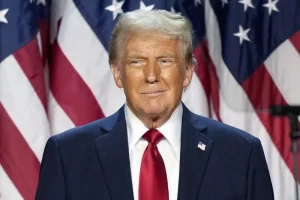
President Donald Trump’s announcement of a "final and conclusive" 25% tariff on any country doing business with the Islamic Republic of Iran is not merely a policy shift; it is a high-stakes legal gambit.
With human rights groups reporting upwards of 600 deaths and a near-total internet blackout masking what observers call a "massacre," the administration is leveraging the U.S. market as a weapon of moral and economic attrition.
But while the headlines focus on the threat of airstrikes, the real war is being fought in the fine print of trade law and executive overreach.
The defense is boxed in. Their only move is to attack the legal "hash" of the administration’s authority.
Can a Tariff Legally Act as a Sanction?
In 2026, the primary "legal chokepoint" is the stretching of the International Emergency Economic Powers Act (50 U.S.C. §§ 1701–1707).
Historically, IEEPA allowed presidents to freeze assets or block specific transactions. Now, the administration is using it to bypass the House of Representatives’ constitutional "power of the purse" to impose what is essentially a tax on foreign nations.
The legal logic is precarious. Article I of the Constitution mandates that all bills for raising revenue must originate in the House.
By reclassifying a "tariff" as a "regulatory measure" under a national emergency, the White House is testing a theory that hit a wall in late 2025. The U.S. Court of International Trade (CIT) previously signaled that the executive branch cannot unilaterally levy duties under the guise of "regulating" property.
National defense firms representing global importers have already begun filing challenges under 28 U.S.C. § 1581(i).
Their strategy is simple: if the power to "regulate" does not include the power to "tax," then every dollar collected under this order is an unconstitutional seizure.
The Major Questions Doctrine—the principle that agencies need clear Congressional authorization for high-impact decisions—is the primary weapon here.
Forensic Evidence Behind Iran’s Internet Blackout
While the U.S. Treasury prepares its tariff schedules, a different forensic battle is unfolding regarding the Iranian internet shutdown.
In modern international law, a blanket internet blackout is increasingly viewed not just as a domestic policy, but as a "smoking gun" for state-sponsored crimes.
Human rights investigators are using data verified under Federal Rule of Evidence 902(14)—a process of verifying the integrity of fragmented digital records to prove that the shutdown was timed precisely with the deployment of lethal force.
This digital exhaust provides the "mens rea" or criminal intent required for international tribunals.
"When a regime cuts the lights, they aren't just stopping tweets; they are destroying the chain of custody for digital evidence," notes a forensic analyst tracking the Jan 12 data drops. "The legal pivot here is treating the blackout itself as an admission of guilt."
The 2026 Strategic Reality of Secondary Tariffs
The shift from 20th-century diplomacy to 2026 economic warfare is best understood through the lens of secondary consequences. Unlike traditional sanctions, these tariffs target the partners.
China, a top buyer of Iranian crude, now faces a choice: continue the trade relationship with Tehran or face a 25% tax on its exports to the United States.
This is the "hero" of the procedural battle—a legal lever that forces third-party nations to self-police or face domestic economic ruin.
Strategic Pivot Table: The Old Way vs. The 2026 Reality
| Strategy Factor | The Old Sanctions Model | The 2026 Tariff Leverage |
| Primary Tool | OFAC Specially Designated Nationals | Blanket Secondary Tariffs via IEEPA |
| Enforcement | Bank-level asset freezes | Port-of-entry customs levies |
| Legal Hurdle | Due process for blocked entities | Constitutional "Major Questions Doctrine" |
| Economic Aim | Throttling Iranian leadership | Forcing China/Turkey to decouple or pay |
The Defense Strategy: Why Importers Must Pay Tariffs “Under Protest”
For AmLaw litigation teams representing multinational corporations, the current environment is a minefield. The administration's "effective immediately" decree leaves no room for the typical 30-day comment period required by the Administrative Procedure Act (APA).
Firms known for constitutional advocacy in media-heavy trials are currently advising clients to pay the tariffs "under protest" while citing CIT Administrative Order 25-02.
This is a critical procedural move. If the Supreme Court rules in Trump v. V.O.S. Selections, Inc. that IEEPA does not authorize tariffs, only those who filed formal protests at the time of entry may be eligible for immediate reliquidation.
The Strategic Irony is stark: Compliance (paying the tariff) without a concurrent legal filing under 28 U.S.C. § 1581 may result in a permanent loss of refund rights.
Importers who follow "common sense" and wait for a court ruling before acting risk finding their entries "liquidated" and legally finalized beyond the point of recovery.
Why This Matters to the Smart Civilian
To the public, this looks like a trade war. To a lawyer, it is a Separation of Powers crisis. If the President can levy a 25% tax on global trade by simply declaring an "extraordinary threat," the Congressional power to regulate foreign commerce (Article I, Section 8) becomes a dead letter.
The stakes go beyond the price of gasoline or iPhones. If this legal lever holds, the President gains the power to pick winners and losers in the global economy without a single vote from Congress. The precedent set here will determine how "emergency powers" are defined for the next fifty years.
Verifying the Alleged Crackdown Behind Iran’s Internet Blackout
In the absence of live video from Tehran, investigators are relying on metadata scraping and satellite imagery synchronization.
By overlaying the exact timestamps of the internet "drop-offs" with high-resolution imagery of military movements in cities like Tabriz and Tehran, legal teams are building a "procedural timeline" of the crackdown.
This isn't just for the news; it’s for the U.S. Court of International Trade. The administration must prove that an "unusual and extraordinary threat" exists to trigger IEEPA.
The forensic evidence of a state-led massacre provides the "factual predicate" needed to survive a judicial stay.
FAQ
Can the President legally impose tariffs via IEEPA?
The 2026 legal consensus is split. While the White House cites "broad emergency powers" under 50 U.S.C. § 1702, the Federal Circuit recently held in Learning Resources, Inc. v. Trump that IEEPA’s power to "regulate" does not include the power to "tax." A Supreme Court decision is expected on Jan 14.13
Which countries are most at risk?
Iran’s top trading partners—China, India, Turkey, and the UAE—are the primary targets.14 Any goods originating from these nations that also touch Iranian markets could trigger the 25% surcharge at U.S. ports.15
What is the "Major Questions Doctrine" impact?
This doctrine requires Congress to speak clearly if it intends to delegate power over "major" economic issues.16 Lawsuits argue that a 25% global tariff is too significant to be buried in a 1977 emergency statute.
Is there a way for businesses to avoid the 25% hit?
Current strategy involves "origin shifting" and "substantial transformation" arguments, though the 2026 Executive Order includes anti-circumvention language designed to catch companies rerouting Iranian trade through third-party hubs.
As the administration keeps "all options on the table," including airstrikes, the real battle remains in the ledger books and the courtrooms. The outcome will decide if the 2026 Tariff is a tool for human rights or a permanent expansion of the Imperial Presidency.