Understand Your Rights. Solve Your Legal Problems


TL;DR: Strategic Recap
The Protected Speech Pivot: Ohio’s new Prof. Cond. R. 8.6 (Effective Jan 1, 2026) creates a novel immunity shield for attorney commentary, redefining how firms manage high-profile narratives.
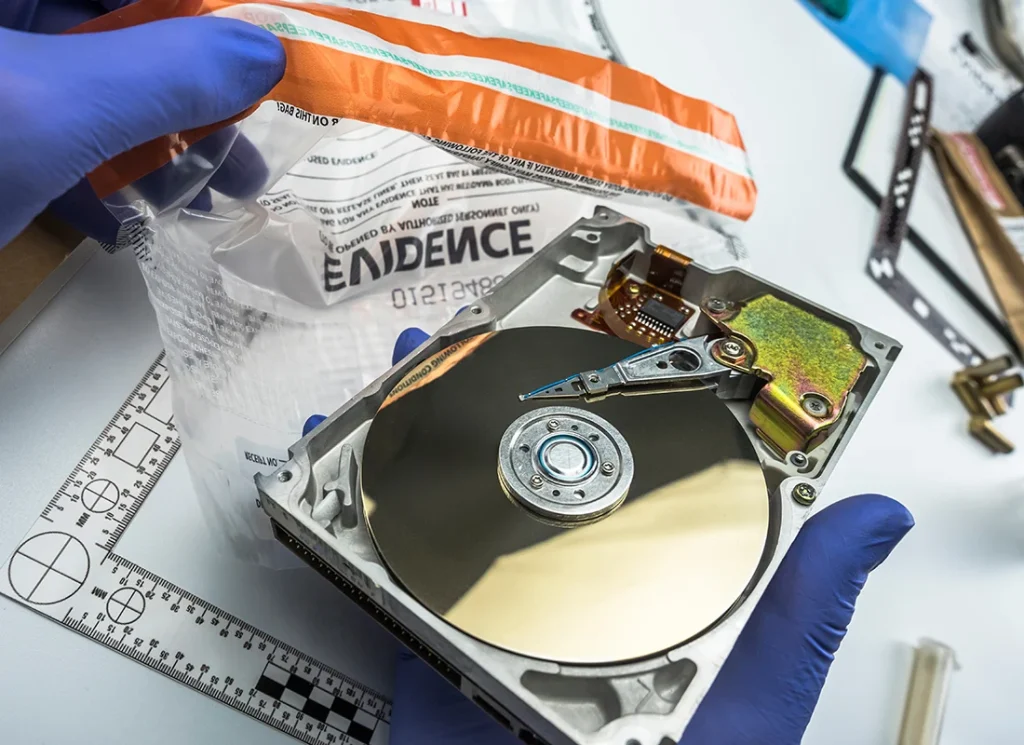
Acoustic Forensic Hashing: Prosecution is leveraging Rule 902(14) to authenticate 911 audio via unalterable SHA-256 cryptographic signatures, neutralizing traditional "tampering" defenses.
Medical Compact Recall: The Interstate Medical Licensure Compact now triggers automatic, multi-state license suspension upon a felony indictment, creating an immediate professional "civil death."
The brutal double homicide of Dr. Spencer Tepe and his wife, Monique, has sent shockwaves through the Weinland Park community and the Midwest medical establishment.
On December 30, 2025, the couple was discovered gunned down in their upstairs bedroom while their two toddlers remained unharmed downstairs. The scene was a haunting tableau of domestic peace shattered by precision violence: no forced entry, multiple gunshot wounds, and an eerie silence punctuated only by the cries of two young children.
Michael David McKee, a 39-year-old vascular surgeon and Monique's ex-husband, now faces two counts of murder after being apprehended by the Winnebago County Sheriff’s Office in Rockford, Illinois.
This case is not merely a domestic tragedy; it is the first major test of Ohio’s 2026 legal landscape regarding professional standing and digital evidence. For legal giants like Latham & Watkins, representing high-net-worth medical professionals in 2026 requires a radical departure from legacy defense playbooks.
The arrest was fueled by Vehicle Signature Analysis, a 2026 standard that uses neighborhood surveillance to identify a car’s unique mechanical hum and digital exhaust. For defense investigators, this metadata serves as a self-authenticating record of the suspect’s 400-mile flight from Columbus to Illinois
Investigators tracked a vehicle that arrived in the Weinland Park neighborhood before the killing and later departed for Rockford, identifying McKee as the owner through integrated telematics.
The speed of the extradition process reflects the 2026 Cross-Border Forensic Sync, where Illinois and Ohio courts share encrypted evidence logs in real-time. Defense counsel must now anticipate that evidence gathered in a foreign jurisdiction is governed by the originating state's stricter AB 853 metadata transparency mandates. The era of the "slow-burn" extradition is over; digital warrants now move at the speed of the fiber-optic networks connecting state bureaus.
The January 1, 2026, adoption of Ohio Rule of Professional Conduct 8.6 has fundamentally altered the tactical perimeter for defense firms like BakerHostetler. By explicitly protecting attorney speech that aligns with the Ohio Constitution, the rule invites a more aggressive public "narrative defense" than previously permitted. This rule was designed to prevent the disciplinary system from being used as a weapon against attorneys who engage in constitutional advocacy during high-profile litigation.
For the defense team at Squire Patton Boggs, this shift requires a precise balance between constitutional "Protected Speech" and the prejudicial impact on the jury pool.
While 8.6 offers a shield against disciplinary blowback, it does not prevent the prosecution from using such statements to justify gag orders or restrictive protective measures. In a case involving a well-known dentist and a vascular surgeon, the media narrative is a second courtroom that must be managed with surgical precision.
In the Tepe homicide, the frantic 911 call constitutes the primary "Narrative Artifact" used by law enforcement to establish the exact timeline of the shots. Leading practitioners at Vorys note that the 2026 standard for audio admissibility now requires an Acoustic Forensic Hash (specifically using the SHA-256 algorithm) to verify the recording's integrity. As AI-driven audio manipulation becomes common, the court now demands a cryptographic "fingerprint" before a recording can be played for a jury.
The 2026 Stake: Failure to perform a cryptographic audit of emergency dispatch logs now constitutes a per se violation of the lawyer's duty of technological competence.
Once the hash is verified under the Seven Tenets of Audio Authenticity, the background noise becomes a "Virtual Witness" capable of pinpointing the caliber of the weapon used. Defense teams are increasingly utilizing 3D Virtopsy Modeling to overlay these acoustic timestamps with the physical trajectory of the wounds. This allows the jury to visualize the exact moment of the breach, potentially identifying the sequence of shots with millisecond accuracy.
The 2026 integration of the Interstate Medical Licensure Compact (IMLC) means McKee’s surgery practice in Illinois is legally inseparable from his criminal standing in Ohio. Litigation specialists observe that under Section 10 of the Compact, a felony indictment in a "State of Principal License" now echoes across all 35+ member jurisdictions within 24 hours. A suspension in Ohio is effectively a suspension everywhere, ending a career before the first pre-trial hearing.
Firms must now implement an Integrated License Defense strategy from day one to manage the summary suspension process across all member jurisdictions.
In 2026, the lawyer's role has expanded beyond the courtroom; you are now the guardian of a client’s entire professional and digital existence. For a surgeon like McKee, the battle for his freedom is inextricably linked to the battle for his medical credentials, requiring a defense team that can fight on two fronts simultaneously.
| Legacy Strategy (Pre-2025) | 2026 Legal Reality |
| Manual Audio Transcription | Acoustic Forensic Hashing (Cryptographic verification of 911 timestamps). |
| Voluntary Gag Orders | Rule 8.6 Immunity (Attorneys have broader protection for constitutional advocacy). |
| State-by-State Licensing | Interstate Compact Recall (Felony charges trigger automatic multi-state suspension). |
| Physical Car Inspection | Vehicle Signature Analysis (Tracking via mechanical hum and digital exhaust). |
Ohio Rule of Professional Conduct 8.6 is an ethical rule that took effect on January 1, 2026, protecting attorneys from professional misconduct charges for speech or conduct that is already protected by the U.S. Constitution or the Ohio Constitution. The rule limits the ability of disciplinary authorities to penalize lawyers for public advocacy in high-profile cases, even when that speech shapes media narratives.
SHA-256 is used in modern audio forensics because it generates an unalterable cryptographic fingerprint that proves a digital recording—such as a 911 call—has not been altered, manipulated, or synthesized by AI. Courts now rely on SHA-256 hashing to authenticate audio evidence before it can be played to a jury.
Yes. Under Section 10 of the Interstate Medical Licensure Compact (IMLC), a felony charge or license suspension in a physician’s principal licensing state typically triggers automatic, time-limited suspensions in all other compact member states. This can effectively halt a physician’s ability to practice nationwide before a criminal case reaches trial.
Related Analysis: 👉👉 The Liability of Influence: Tisdale, Tort, and the Social Media Proxy