Understand Your Rights. Solve Your Legal Problems


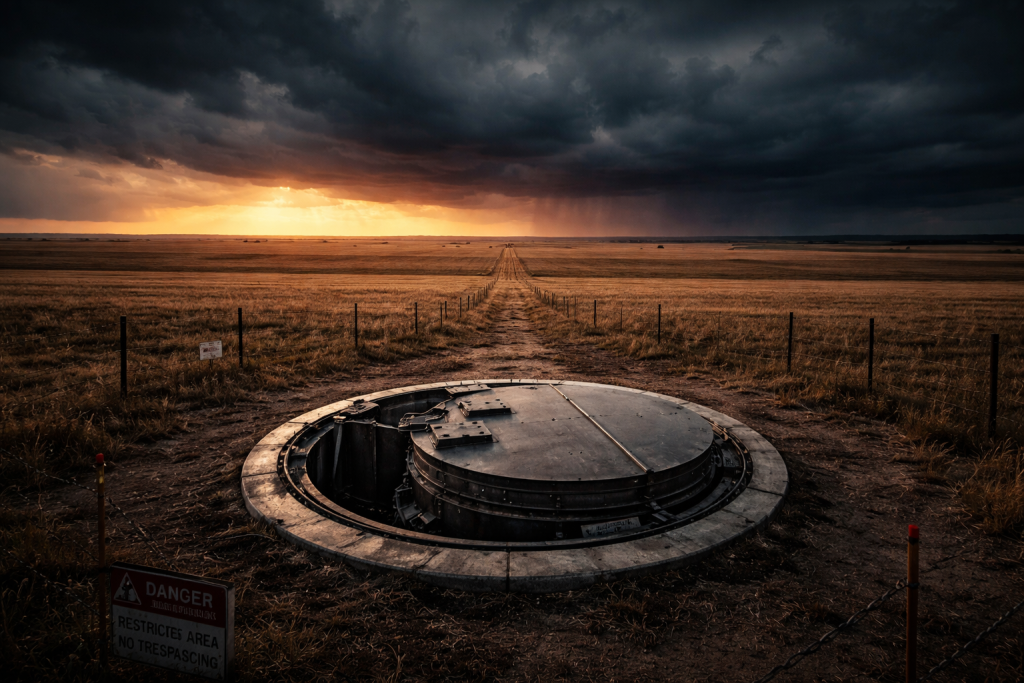
The transition from legacy Minuteman III systems to the LGM-35A Sentinel program reached a definitive legal crossroads in early 2026 following the fallout of the 2024 Nunn-McCurdy critical breach.
While the Department of Defense certified the program as essential to national security, the resulting 81% cost escalation transformed a standard procurement exercise into a massive regulatory restructuring.
This January 2026 milestone marks the formalization of "Restructured Milestone B" protocols, where every phase of development is now tethered to strict congressional cost-caps and reporting mandates under 10 U.S.C. § 4376.
Senior legal counsel must recognize that this shift is not merely budgetary; it is a fundamental alteration of the Engineering and Manufacturing Development (EMD) phase.
The rescission of the original Milestone B approval by the Under Secretary of Defense for Acquisition and Sustainment (USD(A&S)) created a vacuum in contractual certainty for prime contractors.
As the program moves forward under a $141 billion cap, the legal focus has transitioned from technical performance to rigorous compliance with the revised Acquisition Program Baseline (APB), forcing firms to navigate a "Milestone B-to-C" gap that may span until 2030.
The 2026 reality dictates that the "Refurbish" strategy of the last decade is effectively superseded by a new construction mandate. Findings from the Air Force Nuclear Weapons Center (AFNWC) and recent site scans confirmed that 50-year-old silos suffer from systemic concrete degradation, asbestos contamination, and lead paint hazards that make refurbishment more expensive than replacement.
Consequently, the Air Force has pivoted to a "New Dig" strategy, which necessitates the construction of entirely fresh launch facilities (LFs) rather than utilizing existing infrastructure.
This decision serves as the primary legal trigger for a decade of property and environmental litigation across the Great Plains.
The pivot to "Green Field" construction has fundamentally altered the commercial leverage between the federal government and private landowners in Wyoming, Montana, and North Dakota.
Under the initial plan, the government operated within established federal footprints, but the current mandate for 450 new silos requires massive expansion into 30,000 square miles of private and state land.
This development has triggered a wave of inverse condemnation threats as the Department of the Air Force seeks to acquire expanded property rights for "Launch Support Systems" and 62 new 300-foot communication towers.
The valuation of these properties is no longer restricted to agricultural utility but now includes "Impacted Zone" premiums that reflect the permanent federal footprint on previously unencumbered acreage.
Landowners and their representatives are increasingly challenging the "Just Compensation" offers provided by the Army Corps of Engineers, citing the loss of land-use flexibility and the impact on mineral rights.
This friction is compounded by the "One Big Beautiful Bill Act" (P.L. 119-21), which allocated $2.5 billion for risk reduction but failed to account for the skyrocketing legal costs of multi-state eminent domain proceedings.
| Former Status Quo | Strategic Trigger | 2026 Reality |
|---|---|---|
| Silo Refurbishment (Sustainment) | 81% Nunn-McCurdy Cost Breach | "Green Field" New Dig Strategy |
| Federal Land Primacy | Asbestos/Lead Remediation Failure | Eminent Domain Expansion (Takings) |
| Milestone B Stability | OSD-Directed Milestone Rescission | Milestone B Restructuring (2027 Target) |
The legal exposure for contractors has shifted from product liability to environmental and agentic liability. Because the Air Force is abandoning 55-year-old silos that are "too decrepit to reuse," the decommissioning process of the Minuteman III fleet introduces massive toxic tort risks under the Comprehensive Environmental Response, Compensation, and Liability Act (CERCLA).
Insurance carriers are now scrutinizing the "asbestos and diesel-leachate" clauses in wrap-up policies, as the remediation of these 450 sites constitutes one of the largest hazardous waste projects in modern history.
Primary liability chokepoints now exist for subcontractors tasked with site preparation and fiber-optic cabling. If a contractor disturbs legacy lead paint or disturbs unmapped subterranean aquifers during the "New Dig" phase, they may face secondary liability that extends beyond standard contractual indemnification.
The 2026 insurance market has responded by hiking premiums for firms involved in the command and launch segments, specifically targeting the risks associated with "Engineering and Manufacturing Development" restarts and the logistics of concurrent Minuteman III operation.
Legal departments at major defense firms are also addressing the risks of "Milestone Failure" as a form of agentic liability. With the Pentagon treating the $141 billion figure as a hard cap, any further cost growth could lead to a total program termination or a "Milestone C" denial.
This puts immense pressure on corporate officers to certify project timelines that may be statistically improbable, creating a secondary risk of shareholder derivative suits if the program faces further delays, such as the February 2026 slip of the first developmental flight test.
The Sentinel program is now a victim of "Regulatory Cram-downs" where federal mandates override local zoning and environmental standards to ensure the land leg of the Triad remains viable.
The Air Force’s use of the National Environmental Policy Act (NEPA) to fast-track construction via the Supplemental Environmental Impact Statement (SEIS) has created a bottleneck in the federal court system.
Law firms are increasingly involved in navigating these high-stakes regulatory hurdles on behalf of institutional investors who fear that "Sovereign Immunity" might not protect the program from state-level environmental challenges.
Systemic friction is being generated by the competing interests of the GAO, the CBO, and the Department of Defense. While the 2026 defense funding (P.L. 119-21) provides the capital, the GAO-25-108466 report highlights critical "Risk Management Gaps" that suggest the program may not reach initial operational capability until the mid-2030s.
This creates a "Secondary Liability Chokepoint" for firms that have banked on specific procurement cycles, as the government may be forced to extend the Minuteman III through 2050 via new sustainment contracts.
The densest area of litigation involves the "Cabling and Connectivity" segment, where thousands of miles of new fiber optics must be laid across five states.
The decision to re-examine the acquisition strategy for the ground segment has created a contractual maze. Subcontractors now face a "Regulatory Arbitrage" scenario where they must comply with both military specifications and the Corps' civil engineering standards, often without a clear dispute resolution mechanism for inter-agency conflicts that arise during the massive infrastructure overhaul.
The 2026 "Tech-Saturated" world has introduced forensic data risks that were nonexistent during the Cold War. The modernization of the Nuclear Command, Control, and Communications (NC3) architecture involves the integration of massive datasets across multiple digital platforms.
This creates a "Data Takings" risk, where the government’s need for secure communications intersects with the proprietary digital assets of private contractors, leading to potential disputes over Intellectual Property (IP) rights in the "Digital Thread."
Secondary liability now extends to the cyber-security of the supply chain under the newly enforced Cyber Security Maturity Model Certification (CMMC) standards.
Under the 2026 defense acquisition guidelines, any breach within a Tier-3 subcontractor can be legally attributed to the prime contractor under the theory of "Inadequate Systemic Oversight."
This has forced a complete rewrite of the liability clauses in Master Service Agreements (MSAs) across the entire ICBM industrial base to account for the vulnerability of digital ground infrastructure.
Law firms are advising clients on the "Forensic Trail" of Nunn-McCurdy compliance and the implications of the FY2025 reconciliation legislation.
Every email, meeting minute, and cost-estimate from 2024 to 2026 is now potentially discoverable in the event of a future congressional investigation or a breach of the $141 billion spending caps.
The legal mandate for 2026 is clear: absolute documentation density is the only shield against the impending regulatory audits and the scrutiny of the "ICBM Act" (H.R. 4685) proponents seeking to redirect funding.
Strategic Directive for C-Suite
Counsel Mandate:
The LGM-35A Sentinel program has become one of the most legally intricate nuclear modernization efforts in U.S. defense history.
What once looked like a traditional acquisition initiative has shifted into a multi-state land rights and environmental liability challenge, tightly governed by federal cost discipline under 10 U.S.C. § 4376 and new silo build obligations under 10 U.S.C. § 4371.
C-Suite leaders now need to widen their legal strategy beyond contract delivery, placing equal weight on inverse condemnation defense, state-level land acquisition friction, and airtight CERCLA indemnification protections covering 450 legacy Minuteman III silo sites.
Companies that move early, document aggressively, and build compliance-first legal frameworks will be the ones best protected when the next wave of audits, Nunn-McCurdy reviews, or shareholder challenges inevitably land.
As the program races toward the 2027 Restructured Milestone B decision, the balance of advantage will favor organizations built for regulatory resilience over competitive speed alone. In 2026, compliance strength isn’t just strategy, it’s survival.
Legal Insight:👉 The Reiner Homicide: Mental Health Liability and the Siege of California’s Special Circumstances 👈
As of January 2026, the Sentinel program is operating under a Restructured Milestone B certification. Following the "critical" breach in 2024 (where costs soared 81% to $141 billion), the program avoided statutory termination after the Secretary of Defense certified it as essential to national security under 10 U.S.C. § 4376. The program is now subject to a rigorous "cost-cap" management plan, with a formal Engineering and Manufacturing Development (EMD) phase restart—known as a new Milestone B decision—currently targeted for mid-2027.
The Air Force has pivoted from "refurbishing" old holes to a "Green Field" strategy of digging hundreds of entirely new silos. This shift triggers the federal power of Eminent Domain under the 5th Amendment, as many of these new sites do not fit within existing federal land boundaries. Legal friction is currently peaking around "Inverse Condemnation" claims where landowners argue that the massive utility corridors (needed for 7,500 miles of new fiber-optic cable) and the 62 new 300-foot communication towers constitute a regulatory taking of mineral and agricultural rights.
Decommissioning the 450 legacy Minuteman III silos introduces significant liability under CERCLA (Superfund). Because these sites contain 50 years of accumulated lead paint, asbestos, and diesel-leachate, they cannot be simply abandoned. Contractors and the DOD face long-term toxic tort risks. The 2025 Supplemental Environmental Impact Statement (SEIS) mandates specific remediation protocols to prevent hazardous materials from entering local aquifers during the transition to the new Sentinel silos.
Yes, under the authority of the 2026 National Defense Authorization Act (NDAA) and the Uniform Relocation Assistance and Real Property Acquisition Policies Act, the Air Force may acquire private property for national defense. While the service prefers "AF-owned real estate," officials have confirmed that "new dig" requirements necessitate land purchases from private owners in Wyoming, Montana, and North Dakota. Property owners are entitled to "Just Compensation," which is currently a point of significant litigation regarding the valuation of land impacted by nuclear infrastructure.
The U.S. Army Corps of Engineers (USACE) acts as the primary real estate and construction agent for the Sentinel program. While Northrop Grumman handles the missile and command segments, USACE manages the "Ground Segment," including the acquisition of easements for 7,500 miles of fiber-optic cabling and the construction of launch facilities. This inter-agency overlap creates a "Regulatory Arbitrage" scenario where contractors must reconcile military specifications with USACE civil engineering standards.
The FY2026 NDAA (S. 1071) significantly tightens congressional oversight by codifying the 450-silo requirement into Title 10 of the U.S. Code. It prohibits the Air Force from maintaining fewer than 450 launch facilities, effectively preventing "early decommissioning" to save costs. For contractors, this means a "no-exit" legal environment where they are mandated to sustain the aging Minuteman III fleet through 2050 if the Sentinel program faces further delays, as highlighted by the GAO-25-108466 risk report.
Litigation is primarily focused on easement disputes and inverse condemnation. Landowners in the Great Plains are challenging the DOD's 100-foot-wide fiber-optic corridor leases, citing multi-year disruptions to farming operations. Furthermore, the 2026 Sentinel Landscape Designation Cycle has introduced a layer of "unconventional partnerships" between conservation groups and defense officials, leading to legal challenges over whether these designations are being used to circumvent traditional state-level land-use hearings.
The Pentagon is treating the $141 billion estimate as a "hard cap." Under the current restructuring, any further cost growth exceeding 15% could trigger a second Nunn-McCurdy review and a mandatory Milestone C denial. This creates a "Secondary Liability Chokepoint" for prime contractors, as the Air Force has the right to reopen competition for the ground infrastructure segment if cost and schedule requirements are not met during the upcoming 2027 Milestone B restart.
Sentinel ICBM Litigation, Nunn-McCurdy Breach 2026, Eminent Domain Wyoming, Nuclear Decommissioning Liability, Defense Contract Restructuring, Northrop Grumman Legal Risks, 10 U.S.C. § 4376 Compliance, NEPA SEIS 2026.