Understand Your Rights. Solve Your Legal Problems


The 2024 sentencing of Ruby Franke and Jodi Hildebrandt may have closed the criminal docket, but by 2026 the consequences have only expanded.
What once looked like a contained prosecution is now a far broader legal reckoning, one that has drawn in professional licensing bodies, malpractice insurers, tax authorities, and civil litigants evaluating long-term recovery pathways.
For legal and insurance partners, the Franke-Hildebrandt fallout has become a defining example of how professional misconduct — especially when enabled by weak regulatory intervention — creates long-tail civil exposure that can outlive even the harshest criminal penalties.
It is also a reminder that when clinical credibility collapses, the liability often spreads outward, pulling institutions into disputes they believed they had already survived.

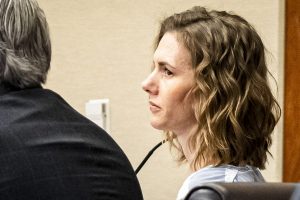
Jodi Hildebrandt confers with legal counsel in 2026 as institutions, insurers, and regulators assess malpractice exposure, RICO enterprise claims, IRS liens, and frozen-asset recovery pathways in Utah
The most important inflection point in this shift is the August 2025 medical malpractice lawsuit filed by Kevin Franke against Jodi Hildebrandt.
This filing altered the legal posture of the case, moving it from individual criminal wrongdoing into an examination of whether professional licensing bodies and supervising institutions exercised adequate oversight.
Hildebrandt’s credentials as a licensed clinical mental health counselor (LCMHC) are central here, because they give plaintiffs and insurers a formal standard against which her conduct can be measured.
The lawsuit alleges that Hildebrandt presented herself as a psychologist, used her clinical role to cut Kevin off from his children, and violated fundamental confidentiality obligations. For insurers evaluating exposure, these are not abstract allegations — they are policy-level triggers that determine whether coverage survives judicial scrutiny.
In 2026, the question of insurance enforceability has turned on how courts interpret Hildebrandt’s motivations and professional role. The "intentional act exclusion" — a standard clause in most Errors & Omissions (E&O) policies — has become the core coverage dispute.
Underwriters at Lloyd’s of London and other major professional liability carriers are currently testing how far their duty to defend extends when licensed clinicians combine counseling with faith-driven or coercive coaching frameworks.
If a court determines that Hildebrandt acted under religious ideology rather than clinical purpose, the policy may not respond at all, regardless of licensing status. For partners representing plaintiffs, this creates an obvious risk: a judgment is only valuable if there is a solvent recovery path behind it.
In cases like this, where insurance coverage is contested and overlapping claims already threaten available equity, the asset picture must be assessed before a single deposition is scheduled.
That reality explains why the $5.3 million Ivins, Utah property has become the focal point of civil recovery strategy. If coverage is ruled out, insurers pay nothing and plaintiffs must pivot to personal assets.
This is not unusual in high-severity professional liability disputes — what is unusual is the scale, visibility, and cross-sector scrutiny now surrounding the matter. For legal partners on both sides, a pre-litigation audit of an opponent’s E&O policy is no longer optional.
It is now standard practice to verify whether confidentiality violations, credential misrepresentation, or business-model claims can trigger a fraud carve-out or full denial of coverage. The worst outcome for a client in 2026 is not losing a claim — it is winning one that cannot be collected.
The malpractice allegations also forced a deeper look at Utah’s regulatory oversight timeline. Hildebrandt’s 2012 license probation for confidentiality violations at Brigham Young University (BYU) has become central to questions about administrative negligence. Probation is meant to signal elevated risk, yet her license remained intact until 2024.
For institutions advising clinical groups in 2026, the lesson is direct: when counseling, coaching, or psychological guidance intersects with monetized programs, oversight must be proactive, documented, and defensible. The line between spiritual guidance and clinical billing must be clean.
When it is not, insurers may argue that the professional framework was a pretext for conduct that falls outside the policy’s intent — a position that can leave defendants without coverage and plaintiffs without a payout.

A high-value estate in the Ivins, Utah area, symbolizing the frozen-equity recovery battleground in 2026 civil claims involving overlapping restitution, malpractice judgments, and enterprise liability.
The case’s commercial tension sharpened further as the December 2026 parole window approached. Utah operates under an indeterminate sentencing model, meaning the Board of Pardons and Parole — not the trial court — determines the actual timeline of release.
For civil litigants, this injects a second clock into the case: not just the pace of litigation, but the pace of asset attachment. The criminal sentence may sound final, but for partners tracking recovery strategy, the more urgent question is this: what remains collectible, who gets there first, and under what legal mechanism?
The Ivins property now sits at the center of three converging claim pathways:
Criminal restitution, ordered in Washington County and generally treated as the senior claim against assets.
Medical malpractice damages, which may attach to equity if plaintiffs prove gross professional negligence tied to clinical pretext rather than purely criminal motive.
Federal RICO damages, following Michael Tilleman’s January 2025 lawsuit alleging Connexions Classroom operated as a coordinated enterprise that monetized coercive control through deceptive coaching and wellness programs.

Legal filings and regulatory records tied to Jodi Hildebrandt and Ruby Franke’s 2026 civil liability fallout, including malpractice, RICO enterprise claims, licensing audits, and frozen-asset recovery reviews in Utah
What makes 2026 strategically different from 2024 is not the existence of multiple claims, but the interaction between them. Criminal restitution may outrank civil damages in the seniority stack, but it does not void civil claims — it simply narrows the equity left behind them.
RICO claims allow treble damages and enterprise-wide liability, but treble damages are only powerful when assets or insurance can respond. When coverage is contested, RICO shifts from a multiplier of recovery into a multiplier of competition for the same pool of equity.
The legal challenge for 2026 is not legal theory — it is claim coordination. A medical malpractice judgment can attach to property equity even when criminal conduct occurred, but only if plaintiffs can show the clinical role enabled or disguised the harm.
IRS liens, meanwhile, attach independently based on unpaid tax liability. These do not compete in legal principle; they compete in timing and equity. In a scenario where institutions are under audit, insurers are contesting coverage, and tax authorities are evaluating undeclared revenue streams, the recovery landscape becomes crowded quickly.
Here is the evolution at a glance:
| Former Status Quo | Strategic Trigger | 2026 Reality |
|---|---|---|
| Child-influencer revenue treated as household income with no fiduciary duty to minors. | Utah HB 322 (May 2025), mandating 15% earnings be placed into blocked child-performer trust accounts for qualifying creators. | Child-performer trusts are now mandatory, enforceable, and auditable, with additional digital privacy rights for minors including content removal pathways. |
| Licensed counselors delivering therapy under broad religious exemptions without meaningful supervision or insurance scrutiny. | Kevin Franke’s 2025 malpractice lawsuit targeting Hildebrandt’s licensing status, confidentiality breaches, and clinical misrepresentation. | Clinical and ecclesiastical services must now be formally separated in billing and documentation to preserve insurance viability and reduce administrative negligence exposure. |
| Civil abuse claims limited to direct physical harm, localized damages, and immediate restitution. | Federal RICO filing by Michael Tilleman (January 2025) alleging Connexions Classroom was a coordinated enterprise built on fraudulent coaching and coercive fee extraction. | Liability scope expanded to include business fraud, curriculum monetization, enterprise coordination, and indirect victims seeking institutional accountability. |
The Franke case has also taken on international regulatory relevance. The UK’s Digital Markets, Competition and Consumers Act (DMCCA) came into force in 2026, giving the Competition and Markets Authority (CMA) enforcement authority to penalize platforms and agencies that fail to prevent predatory or coercive digital engagement models.
This matters commercially because global digital agencies are now auditing their influencer rosters under the assumption that behavioral coaching brands operating without oversight can create turnover-scaled penalties. The Franke-Hildebrandt matter is now routinely referenced in compliance discussions involving influencer-led wellness programs and vulnerable-consumer safeguards.

Jodi Hildebrandt in Netflix’s 2025 Evil Influencer documentary, now a key exhibit in 2026 civil liability disputes examining Utah licensing oversight, insurer coverage challenges, RICO enterprise claims, and frozen-asset recovery.
Utah lawmakers created a statutory chokepoint by passing HB 322, a direct regulatory response to the revenue and oversight gaps exposed by 8 Passengers.
The legislation requires parents earning more than $150,000 annually from child-featured content to deposit 15% of gross earnings into blocked trust accounts for their children. For commercial legal partners advising digital brands, talent agencies, or family offices, this creates a new fiduciary standard. For litigators, it creates something equally valuable: a permanent, auditable financial trail that can be used to support future claims involving child labor, exploitation, or misuse of earnings.
Regulatory scrutiny has also focused on the Utah Division of Professional Licensing (DOPL). Hildebrandt’s 2012 probation for confidentiality violations at BYU is now being evaluated as part of a 2026 legislative licensing audit.
The central argument emerging in civil filings is that the time between the first documented warning and final license revocation in May 2024 created an actionable negligence window. While administrative negligence claims rarely bypass sovereign immunity, plaintiffs are now framing DOPL oversight failure as a breach of statutory duty to protect vulnerable parties from licensed clinical misconduct — an argument designed to test the limits of institutional protection when public-trust duties intersect with professional licensing.
Key regulatory and legal pressure points now include:
The Utah Board of Pardons and Parole’s first scheduled parole hearing for December 2026.
The Utah Fifth Judicial District Court’s ongoing freeze on the Ivins property.
The Federal District Court of Utah’s review of the Tilleman RICO claims.
BYU’s 2012 interaction with Hildebrandt, now under reputational and compliance review.
A "Sunrise Review" evaluating whether life coaches operating alongside licensed clinical services should require tighter regulatory guardrails.
Coordination between Washington County prosecutors and civil litigants to avoid full depletion of available attachable equity.
An audit of Utah DCFS regarding 2020 case handling involving Connexions Classroom.
2026 guidance notes from Lloyd’s underwriters clarifying exclusions for licensed clinicians operating influencer-style coaching or trauma-monetization programs.
IRS audits evaluating whether group therapy subscription revenue was misclassified as coaching fees to avoid clinical billing safeguards.
FTC review of historical ad revenue for deceptive engagement patterns tied to vulnerable consumers.
UK CMA enforcement frameworks referencing the case for compliance benchmarking.
Utah State Bar reviews examining LLC asset-shielding structures tied to Connexions Classroom.
The strategic irony is this: the very transparency that built Ruby Franke’s digital empire is now the connective tissue of civil liability.
Her journals, video archives, and coaching programs are being used to support claims involving emotional distress, professional negligence, enterprise coordination, and asset recovery strategy. For commercial legal partners advising digital creators, clinicians, or insurers, the takeaway is clear: when influence replaces oversight, documentation becomes evidence. And when evidence is abundant, liability rarely remains local.
Civil filings in 2025 — especially the malpractice and RICO claims — revealed a broader legal target: not just the defendants, but the commercial scaffolding that enabled their reach.
Tilleman’s lawsuit framed Connexions Classroom as a business enterprise built on trauma monetization and psychological coercion. That framing matters commercially, because it allows civil plaintiffs to argue that the business model itself created the harm, widening the pool of potential claimants and collapsing traditional boundaries between individual abuse and commercial enterprise liability.
The pressure on institutional accountability has only grown, amplified by global documentary visibility. The Netflix and HBO Max "Evil Influencer" series transformed a Utah prosecution into a global case study in licensing failure, influencer-enterprise liability, and regulatory lag. That visibility has forced insurers and licensing boards to tighten definitions around supervision, billing, exemptions, and consumer protection.
For 2026 partners and senior commercial readers, the verdict is unambiguous:
Influencer agencies must be treated as regulated commercial entities, not marketing novelties.
Licensed clinicians who blend therapy with coaching must maintain documented billing separation or risk total coverage denial.
Civil litigants must audit insurance enforceability before pursuing damages.
Trust oversight for minors is no longer a compliance suggestion — it is a fiduciary obligation.
Regulatory lag is no longer a bureaucratic footnote — it is a litigation runway.
The Franke-Hildebrandt matter marks the end of an era in which influence outpaced accountability. In 2026, the most expensive institutional asset is no longer a platform, a brand, or even a legal defeat — it is an oversight failure that leaves damages unpaid, trust broken, and liability permanent.
In Utah, judges set a range (e.g., 1 to 15 years), but the Utah Board of Pardons and Parole determines the actual release date. Because Ruby Franke and Jodi Hildebrandt received four consecutive 1-to-15-year sentences, their technical range is 4 to 60 years. However, Utah law caps consecutive sentences at 30 years. The Board will hold an original hearing—Franke’s is currently scheduled for December 2026—to set a "proximated" release date based on institutional behavior and the severity of the offense.
HB 322 mandates that "market value compensated minors" (those appearing in 30% of content where the creator earns over $150,000 annually) must have 15% of their gross earnings placed in a protected trust account. The law also grants minors a "Right of Deletion" upon turning 18, allowing them to force platforms to remove content featuring them. It establishes a private right of action, permitting children to sue for unallocated funds plus attorney fees.
Kevin Franke’s August 2025 malpractice filing argues that Hildebrandt used her clinical authority as a Licensed Clinical Mental Health Counselor (LCMHC) to facilitate the abuse. Success hinges on proving that Hildebrandt breached the "Standard of Care" by using therapy to isolate the family rather than treat them. The claim is strategically vital because it targets professional negligence, which may access Professional Liability (E&O) insurance funds that are typically shielded from standard criminal acts.
When an insurer invokes the "Intentional Act Exclusion," they deny both the "Duty to Defend" and the "Duty to Indemnify." In 2026, this effectively shifts the entire financial burden to the defendant’s personal assets, such as the $5.3M Ivins estate. For civil plaintiffs, this means recovery is limited to the defendant's liquidity and property, as there is no deep-pocket insurance payout to settle the judgment.
Hildebrandt’s 2012 probation for a BYU confidentiality breach is the "Patient Zero" for Institutional Negligence claims. Because the Utah Division of Professional Licensing (DOPL) allowed her to retain her license despite a documented pattern of professional overreach, victims now argue the state created a "Permissive Environment" for abuse. This 12-year "Administrative Lag" is the primary justification for 2026 legislative audits into Utah’s regulatory oversight.
Yes. Under HB 322, if the content generates revenue exceeding $20,000 in a calendar year, the parent or guardian must establish a trust for the minor. Content creators are required to maintain meticulous records of minutes featured and income earned. Failure to fund these accounts creates an immediate Fiduciary Liability for the parents, enforceable in civil court once the child reaches the age of majority.
The January 2025 RICO lawsuit (Tilleman v. Hildebrandt) argues that Connexions Classroom was a "Racketeering Enterprise" that used fraudulent curricula to extract fees. Because RICO focuses on the Business Fraud and the "Economic Scheme," it can proceed independently of the child abuse convictions. This allows clients who were not physically abused but were financially or psychologically defrauded to seek treble damages (triple the actual damages).
No. Utah’s "SUPREMACY OF PAROLE" means the Board of Pardons has the constitutional power to release a prisoner before their minimum term or keep them until their 30-year maximum. The judge’s sentence is merely the "Gate" to the prison; the Board is the "Key." In 2026, the Board's decision will be influenced more by the graphic evidence released in 2024 and the public interest than by the original court order.
High-visibility documentaries like Netflix's Evil Influencer (2025) create "Prejudicial Saturation." In 2026 civil trials, defense counsel will likely move for changes of venue or intensive voir dire to filter out jurors influenced by the "Strategic Irony" of the video evidence. Documentary exposure often leads to higher Non-Economic Damage awards (pain and suffering) because the "Visual Trauma" of the evidence is already embedded in the public consciousness.
Partners must first audit the "Licensing vs. Coaching" Boundary. If a practitioner marketed themselves as a therapist (triggering clinical duties) but operated as a "Life Coach" (to evade regulation), it creates a Consumer Fraud liability. The audit should focus on the Fee-for-Service contracts and whether the practitioner invoked clinical privilege to shield what was actually a commercial coaching relationship.
Latest Legal Insight Feature: 👉 Uber’s Liability Crisis Hits a Breaking Point in Phoenix