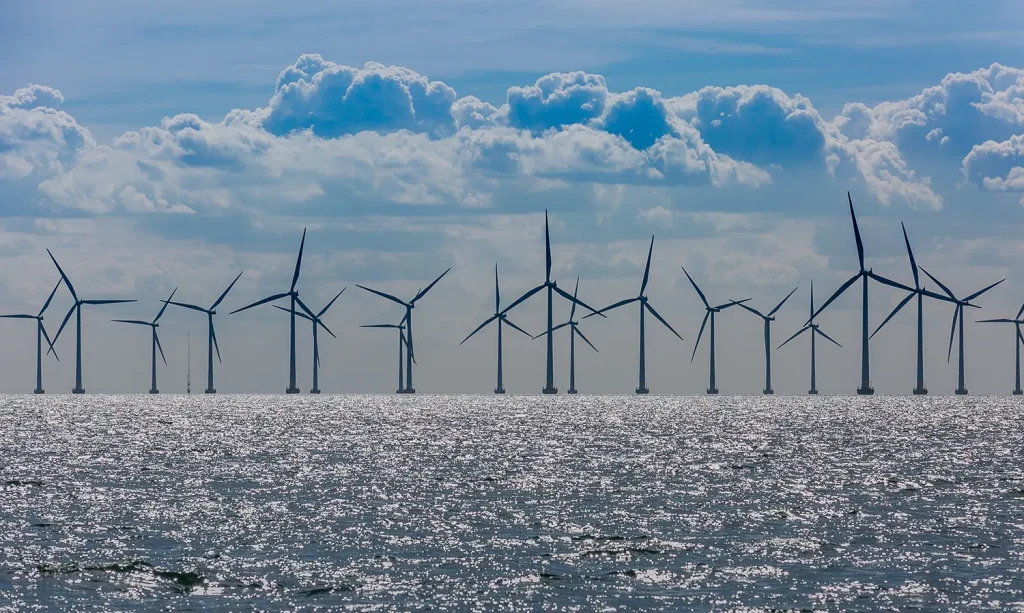
The Federal Injunction Play: Ørsted’s Legal Strategy to Bypass Presidential Suspension
On January 2, 2026, Danish energy giant Ørsted filed a formal legal challenge against the Trump administration’s blanket suspension of offshore wind leases. While the political narrative centers on the "Green Energy vs. Fossil Fuel" debate, the legal reality is a battle over Vested Rights and Administrative Procedure. Ørsted’s Revolution Wind project is 85% complete, and the company is moving to assert that executive orders cannot retroactively dissolve federal permits granted after nearly a decade of due diligence.
Under Section 10 of the Outer Continental Shelf Lands Act (OCSLA) and the Administrative Procedure Act (APA), the government’s power to suspend leases is traditionally limited to immediate environmental or physical threats.
By citing broad "national security" concerns related to radar interference, the administration has triggered a high-stakes litigation cycle. Public filings show that Ørsted is seeking a permanent injunction to prevent what it terms "arbitrary and capricious" interference with projects that have already cleared Department of Defense (DoD) vetting.
The Real Issue Beneath the Headline
The conflict isn't just about wind turbines; it is about Contractual Finality. Revolution Wind secured all federal and state permits in 2023. These were not granted in a vacuum; they were the result of a nine-year review process that included a formal agreement with the US Department of Defense to mitigate radar interference.
The administration’s sudden pivot—claiming the turbines now pose a national security risk—attempts to override established inter-agency agreements. For the legal sector, this raises a critical question of Due Process: Can an administration use "National Security" as a universal key to unlock and void multi-billion-dollar commercial contracts that have already been vetted by the very agencies now being cited as the "risk" holders?
The Power Delta (Who Wins, Who Loses)
The "Leverage Spine" here has shifted toward the Executive Branch in the short term, but Ørsted’s recent filing seeks to reclaim the "Sword" via the federal court system.
The Outcome Matrix: Lease Suspension vs. Vested Rights
| Scenario / Fact Pattern | Old Legal Standing (Pre-Dec 2025) | New Strategic Risk (Post-Suspension) |
| Permit Finality | Federal permits (COP) granted; work 85% done. | Permits "frozen" via Executive Order; work halted. |
| Radar Mitigation | DoD formal agreement signed in 2023. | Claims of "unmitigated" radar interference risks. |
| Judicial Precedent | September 2025 Preliminary Injunction. | New December suspension bypasses prior ruling. |
| Investment Security | Protected by OCSLA lease terms. | High risk of "Total Loss" or asset stranding. |
Who Wins: The administration gains the immediate power to stall the energy transition and redirect capital toward fossil fuel infrastructure.
Who Loses: Leaseholders (Ørsted, Skyborn, Equinor) face billions in stranded assets and potential defaults on supply-chain contracts.
Who is Exposed: State governments (Rhode Island, New York) who have integrated these projects into their long-term power purchase agreements (PPAs) and grid stability plans.
What Ørsted Must Prove for an Injunction
To secure a Temporary Restraining Order or preliminary injunction, Ørsted must meet the standard federal test for pausing government action before a full trial can unfold.
First, it has to show a strong likelihood that its core claims under the Administrative Procedure Act and the Outer Continental Shelf Lands Act will succeed, leaning on the fact that Revolution Wind’s permits were issued after inter-agency review and Department of Defense vetting.
Next comes irreparable harm, where the company must argue that halting construction risks more than balance-sheet losses alone—offshore turbines face corrosion, mechanical exposure, and expiring seasonal installation windows, which courts have historically recognized as injuries that can’t be cleanly reversed later with money alone.
The balance of equities requires Ørsted to prove its damage outweighs any theoretical harm to the government from keeping construction alive during litigation, especially since the turbines were already cleared by defense agencies.
Finally, the company must connect its legal ask to the broader public interest, positioning continued work not as a corporate demand but as a stabilizing force for state power purchase agreements, grid planning, and long-term consumer energy pricing.
The essence of the argument is continuity: Ørsted must persuade the court that it is defending the existing regulatory position and operational reality until the government’s national security justification is backed by specific evidence.
What the Government Will Argue Back
In response, the administration will try to reframe the dispute away from statutory limits and toward executive discretion and procedural timing.
The government will argue that lease suspensions under Section 10 of OCSLA sit within presidential authority when tied to national defense infrastructure, and that courts traditionally defer to the executive branch when it acts on agency risk assessments at the TRO stage.
It will also attempt to characterize offshore permits as conditional, asserting that finality is only triggered once power delivery begins, not when construction is nearly complete.
The question of standing and ripeness will surface as a central procedural shield, with the government suggesting Ørsted’s challenge is premature because no active radar disruption has yet been proven in operation. And, as a fallback, the government will attempt to label Ørsted’s injury as economic and therefore compensable later, not legally “irreparable” today.
The subtext for commercial readers is straightforward: the administration’s strategy is not to prove the turbines are a national security threat immediately, but to argue that the President has the authority to suspend first and justify the decision later in the litigation process.
Strategic Roadmap Going Forward
Over the next 6–12 months, this case will likely become the definitive test of the "Major Questions Doctrine" as applied to energy infrastructure. If the courts rule that the President has the unilateral authority to halt nearly-complete projects based on generalized security concerns, it will fundamentally re-price the risk of doing business with the US Federal Government.
The Navigator Advice:
-
Injunctive Relief: Expect Ørsted to move for a Temporary Restraining Order (TRO) within days. Their strongest argument is "Irreparable Harm"—the physical degradation of 58 installed turbines and the cost of idling massive offshore vessels.
-
Agency Estoppel: Attorneys for leaseholders should focus on "Equitable Estoppel"—arguing that because the DoD already signed off on radar mitigation in 2023, the government is legally barred from claiming those same radars are now a "new" security threat.
-
Secondary Claims: Watch for "Takings Clause" litigation under the Fifth Amendment. If the government halts the project indefinitely, they may be forced to compensate Ørsted for the full fair market value of the Revolution Wind farm.
Practitioner’s Takeaway
-
Permit Reliability: Post-2025, a federal permit is no longer a guarantee of project completion; it is merely a baseline for future litigation.
-
Mitigation Agreements: Ensure all inter-agency agreements (like the 2023 DoD deal) are explicitly cited in lease contracts as "Final and Binding" to create a stronger defense against executive overreach.
-
Security Pretexts: The "National Security" label is being used to bypass the APA. Practitioners must be ready to challenge the factual basis of the security risk in discovery.
FAQs
Q: Can the US President legally stop a wind project that is 85% built?
A: While the President has broad executive powers, the Administrative Procedure Act (APA) prevents the government from making "arbitrary and capricious" changes to existing permits. Ørsted is arguing that the suspension lacks a rational basis.
Q: What is the significance of the previous 2025 injunction?
A: In September 2025, a judge ruled that Ørsted could resume work despite a previous halt. This creates a "judicial momentum" that favors the company, suggesting the courts are skeptical of the administration's legal grounds.
Q: How does this affect other offshore wind companies?
A: Companies like Equinor and Dominion Energy are in a "holding pattern." A victory for Ørsted in the Revolution Wind case will provide the legal roadmap for all other suspended leases to resume work.
Q: What is "National Security" radar interference in this context?
A: The government claims turbines create "clutter" on radar screens, making it harder to track targets. However, Ørsted holds a 2023 agreement with the DoD stating this risk had already been addressed.
Q: Could Ørsted sue for damages?
A: Yes. Under the "Takings Clause," if the government effectively renders a multi-billion dollar project useless, the company can sue the US Treasury for the value of the investment.
Q: What happens if the court denies Ørsted’s challenge?
A: It would set a massive precedent for "Executive Sovereign Risk," likely causing a significant withdrawal of foreign direct investment (FDI) from all US federal infrastructure projects.
Related: ✋✋ The Invisible Shield: How Amtrak’s “Standard Safety” Defeated a $44 Million Verdict ✋✋