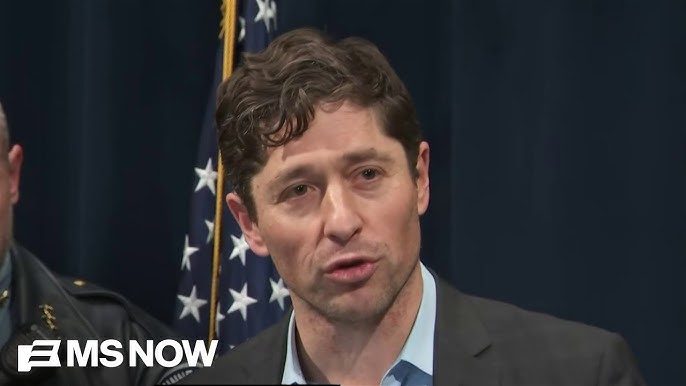
Minneapolis Mayor Jacob Frey Says He Will Cooperate With DOJ Investigation
The reported federal investigation raises questions about free speech, immigration enforcement, and local-federal authority affecting Minneapolis residents.
Minneapolis Mayor Jacob Frey said Sunday he will comply with any request from the U.S. Justice Department after reports that federal officials are examining whether Minnesota leaders obstructed immigration enforcement.
The comments followed media reports on Jan. 16 that the Department of Justice had opened an inquiry tied to public statements by state and city officials during a large federal immigration operation in Minneapolis.
The issue surfaced amid heightened federal activity in the city and ongoing public debate over immigration enforcement tactics.
The development matters now because it touches on constitutional speech protections for elected officials, the limits of federal authority, and public safety concerns during large-scale enforcement actions.
Federal civil rights law and long-standing court rulings protect political speech, while immigration enforcement falls under federal jurisdiction, often creating tension with state and local governments. How the inquiry proceeds could influence how local leaders nationwide publicly respond to federal operations in their communities.
Federal Inquiry Emerges Amid Intensified Enforcement
Federal authorities have opened a review focused on whether Minnesota officials’ public statements and actions may have interfered with federal immigration enforcement during a major operation in the state.
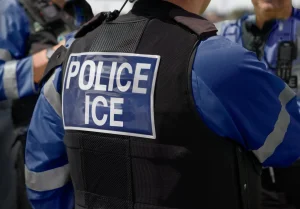
The Department of Homeland Security, which oversees Immigration and Customs Enforcement, deployed a large number of agents to Minnesota as part of an enforcement effort that federal officials described as their most extensive in the region.
That operation followed the fatal shooting of Renee Nicole Good, a 37-year-old Minneapolis resident, by a federal immigration officer during a confrontation in early January.
The surge in federal personnel and the circumstances of the shooting ignited protests and intensified scrutiny from both local officials and community groups.
Under U.S. law, ICE officers operate under the authority of the Department of Homeland Security, which has statutory responsibility for immigration enforcement.
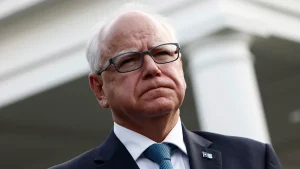
Minnesota Gov. Tim Walz criticized the reported investigation in a public statement, arguing that using federal law enforcement against political opponents undermines democratic norms.
Deputy Attorney General Todd Blanche acknowledged the inquiry in a Fox News interview, saying federal officials were reviewing public comments made by state and city leaders.
Community advocates and civil liberties groups have raised concerns about the chilling effect such investigations could have on public officials’ speech, while some residents have expressed support for stronger federal enforcement.
How Federal Immigration Actions Are Affecting Daily Life in Minneapolis
For many Minneapolis residents, the expanded federal immigration presence has altered everyday routines and heightened concerns about safety and stability.
Large-scale deployments of immigration agents can disrupt neighbourhoods, increase anxiety among immigrant families, and reduce cooperation with local police when residents fear contact with authorities.
City officials have repeatedly stated that Minneapolis police do not participate in federal immigration enforcement, a position supported by multiple federal court rulings.
Similar disputes in cities including Los Angeles, San Francisco, and New York show that prolonged federal enforcement surges can strain public trust even without criminal charges.
In those cases, community groups and local governments reported reduced business activity, lower public engagement, and increased legal uncertainty, particularly in immigrant-heavy areas.
Under federal law, immigration enforcement is handled by the national government, but courts have consistently ruled that states and cities cannot be compelled to enforce federal immigration statutes.
The Supreme Court reaffirmed that principle in 2018, limiting federal authority over state and local officials. Separately, the First Amendment protects the right of elected leaders to publicly criticize government actions, provided they do not obstruct enforcement.
The Pentagon has confirmed that active-duty soldiers in Alaska were instructed to prepare for a possible deployment to Minnesota, though no deployment order has been issued. Any domestic use of military forces would require specific statutory authorization.
Key Questions Answered
Is Mayor Jacob Frey under subpoena in the DOJ investigation?
Mayor Frey has publicly said he has not received a subpoena from the Justice Department. He has stated he would comply with any lawful request from investigators. As of now, no official court filings confirming subpoenas for him have been made public.
What is the Justice Department investigating in Minnesota?
According to multiple news reports, the Justice Department is reviewing whether statements by Minnesota leaders, including Minneapolis’s mayor and the governor, could be seen as interfering with federal immigration enforcement. The department has not released detailed allegations or formal charges.
Can the federal government use troops or military forces in Minneapolis?
Federal law allows for domestic deployment of troops under specific circumstances, such as the Insurrection Act, which permits presidential deployment of military forces to address serious unrest. No invocation of that authority has been announced in Minnesota.
Do local officials have the right to criticize federal enforcement actions?
Yes. The First Amendment protects political speech by elected officials, including criticism of federal policies and actions, provided it does not involve unlawful obstruction of federal operations.
Will this inquiry change immigration enforcement in Minnesota?
Federal immigration enforcement continues under national authority, and the current inquiry does not in itself alter enforcement powers. However, it might affect how openly local leaders comment on future federal operations.
Next Steps in the Federal Review
Federal investigators may issue subpoenas or request records as part of the Justice Department’s inquiry, steps that would become public through court filings if they occur.
The Department of Homeland Security has said its investigation into alleged fraud tied to the Minnesota operation is continuing. Any decision to bring charges, take enforcement action, or formally end the review would be announced by federal prosecutors through official statements.
The situation highlights the ongoing tension between federal immigration authority and the limits of state and local power.
Minneapolis residents, particularly immigrant communities and small businesses are affected by how enforcement actions are carried out and communicated.
The dispute also raises broader questions about constitutional protections for elected officials’ speech and the scope of federal oversight.