The Jersey Seizure: Institutional Risk and the End of Sovereign Sanctuary
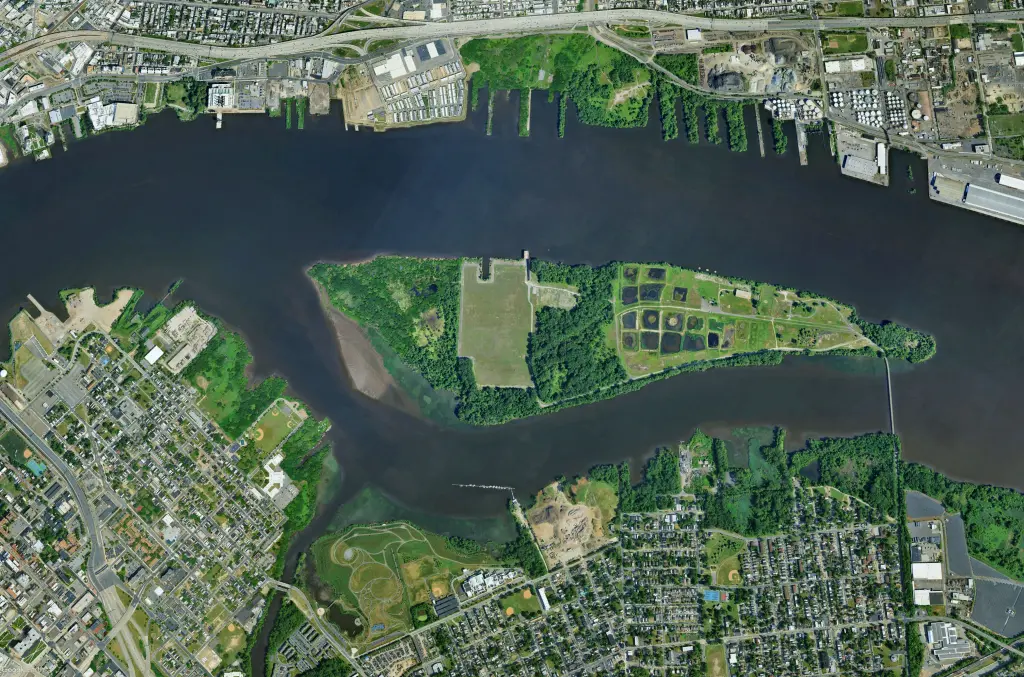
The island is gone. The law remains unsettled. Petty’s Island was once a 300-acre sovereign sanctuary in the Delaware River. Today, it stands as a $5.9 billion warning to every institutional investor, sovereign lender, and global law firm navigating U.S. jurisdictional exposure.
The November court ruling in Delaware allowed Amber Energy to bypass protections long assumed to be insulated by sovereign status. This was not a routine real estate disposition. It was a calculated and precedent-shaping strike against the practical limits of the Foreign Sovereign Immunities Act (FSIA).
Practitioners should recognize that what many are now referring to as the “Donroe Doctrine” has materially narrowed the era of assumed asset immunity. The Latin American crisis of early 2026 has moved from diplomatic briefings into binding judicial outcomes. The following analysis examines the institutional risks and lawfare tactics increasingly defining this decade.
The “Alter Ego” Trap and the Piercing of the State
Citgo Petroleum was long considered the crown jewel of Venezuela’s foreign asset base. For decades, it operated under the shield of state ownership. Creditors successfully argued, however, that the company functioned as an “alter ego” of the Venezuelan state rather than as a truly independent commercial entity. That strategy pierced the corporate veil and exposed the New Jersey site to private seizure.
The court applied the five-factor Bancec test to determine “extensive control.” Under this framework, the Venezuelan government’s involvement in daily operational affairs was sufficient to strip the entity of its separate legal identity. Continued adherence to corporate separateness was deemed a benefit to which the state was no longer entitled under prevailing circumstances.
Counsel must now warn clients that “separate legal identity” is no longer a reliable standalone defense. Where a sovereign exerts operational control over an agency or enterprise, the associated assets face heightened vulnerability. Petty’s Island demonstrates that domestic property can now be repurposed to satisfy foreign national debt obligations.
The Donroe Doctrine: Executive Overreach as Policy
The emerging “Donroe Doctrine” has effectively weaponized U.S. jurisdictional space through executive action layered atop judicial enforcement. President Trump’s recent national emergency declaration was framed as safeguarding oil revenue flows. In practice, the order centralizes control within U.S.-regulated financial channels.
This shift overrides prior regulatory assumptions and prioritizes executive-defined “stability” over historically predictable judicial sequencing. On January 9, 2026, the White House asserted that loss of control over these revenues would constitute a national security threat. By classifying the funds as “Foreign Government Deposit Funds,” the administration functionally nationalized the assets without formal expropriation.
Institutional risk is no longer confined to balance sheets or litigation strategy. It is increasingly shaped by executive discretion. Firms representing foreign state-owned enterprises (SOEs) now face an indemnity crisis. Standard political risk insurance policies may not respond to “judicial takings” executed under executive sanction.
The Delaware Auction Conflict: Price Versus Certainty
The Citgo auction introduced a new and destabilizing standard: “certainty of closing.” Amber Energy’s $5.9 billion bid was materially lower than Gold Reserve’s competing $7.9 billion offer. Yet on January 9, 2026, Judge Leonard Stark approved the lower bid.
The court determined that the Elliott Management-affiliated bidder offered superior execution certainty. The practical effect is a framework that penalizes creditors lacking political or executive-level alignment. For law firms advising in court-supervised auctions, this creates a fiduciary tension that existing doctrine does not clearly resolve.
If judicial discretion can prioritize transactional speed over maximum recovery, traditional creditor priority assumptions lose coherence. This is the operational core of modern cross-border lawfare. The “highest bidder” rule now yields to a “lowest friction” calculus. Amber’s bid incorporated a $2.13 billion Transaction Support Agreement (TSA) designed to resolve 2020 bondholder claims, removing procedural barriers that had stalled the sale for more than seven years.
Insurance Indemnity and the New Force Majeure
The insurance market is undergoing rapid recalibration. Carriers are increasingly excluding “Executive Seizure” from standard political risk coverage. This shift leaves multinational corporations exposed to enforcement strategies increasingly described, even by policymakers, as the “hard way.”
For clients operating in emerging “panic jurisdictions,” indemnity protections may already be compromised. Lawfare is now functioning as a mechanism for accelerated asset reallocation. The seizure of Petty’s Island by an entity aligned with Paul Singer’s Elliott Management underscores the consolidation of financial and enforcement leverage.
Amber Energy’s $5.9 billion bid, though lower than Gold Reserve’s $7.9 billion offer, prevailed due to perceived certainty. The precedent risks signaling that political alignment and procedural convenience can outweigh fiduciary obligations to maximize creditor recovery.
Cross-Border Lawfare: The Predatory Phase
Cross-border lawfare has entered a demonstrably more predatory phase. Private equity firms are increasingly operating as quasi-sovereign liquidators, acquiring distressed sovereign debt to seize tangible infrastructure under the FSIA’s commercial activity exception.
That exception is being stretched aggressively. Courts are more frequently concluding that sovereign conduct—such as refining oil on U.S. soil—constitutes private commercial activity. This interpretation lowers jurisdictional barriers and invites intensified litigation by distressed-debt investors.
Defense strategies anchored solely in FSIA immunity are now obsolete. Effective protection requires diversification, ring-fencing, and jurisdictional distancing executed well in advance of enforcement actions.
Macro Jurisdictional Shifts and Capital Flight
The rise of “panic jurisdictions” is accelerating capital flight. As the U.S. asserts prolonged control over Venezuelan reserves, capital is migrating toward decentralized and non-aligned jurisdictions. Ultra-high-net-worth individuals are reevaluating traditional Western safe havens.
The emerging “Donroe Era” signals that proximity to U.S. jurisdiction carries escalating risk. This has become especially evident following threats toward Greenland and the detention of Maduro. Legal advisors must increasingly operate as geopolitical architects, restructuring holdings to avoid entrapment within the “Delaware Trap.”
Practice ROI: The 2026 Talent War for AI-Native Associates
Firm profitability in this environment is no longer correlated with headcount. It is driven by AI-native proficiency. Manual audits of sovereign asset registries once consumed months of billable time.
Today, firms compete for associates capable of deploying agentic AI systems to map liability networks in hours. In London and New York, AI-native counsel with 3–6 years PQE now command base salaries between $165,000 and $210,000, augmented by AI-specific performance premiums.
The post-billable model is no longer optional. Clients impacted by the Venezuela-Cuba fallout are purchasing seizure prevention, not hourly research. Firms that fail to integrate generative AI into contract management and data sourcing are exposing their margins to structural erosion.
Operational Scale: The Consolidation Mandate
The complexity of the Petty’s Island litigation illustrates the declining viability of boutique practices in cross-border disputes. Navigating the intersection of New Jersey property law, FSIA exceptions, and OFAC sanctions requires operational scale.
Mid-market consolidation has accelerated by an estimated 20% as firms attempt to assemble full-stack defense capabilities. ROI is increasingly measured by a firm’s capacity to function as a geopolitical architect—restructuring assets and revenue flows before emergency declarations are issued.
This consolidation is strategic, not discretionary. The cost of technological infrastructure alone is forcing smaller firms to exit the market.
Tactical Checklist for General Counsel
To navigate this environment, firms should initiate a 72-hour audit of all state-linked assets:
-
Audit Commercial Use: Identify assets vulnerable under the FSIA’s commercial activity exception.
-
Indemnity Review: Confirm whether political risk policies cover executive interference or judicial takings.
-
Boardroom Shielding: Increase operational distance between the state and corporate entities.
-
Currency Ring-Fencing: Reroute revenues through non-U.S. custodial structures where feasible.
The rule of law is being reshaped by the rule of power. Petty’s Island is no longer merely geographic. It is a marker of a post-sovereign reality in which institutional risk migrates from courtrooms to situation rooms. Practitioners are no longer simply litigating disputes. They are defending the residual concept of sovereign property itself.
Related Stories👉 The Surgeon, the Dentist, and the Digital Tail: Ohio’s New Murder Precedent