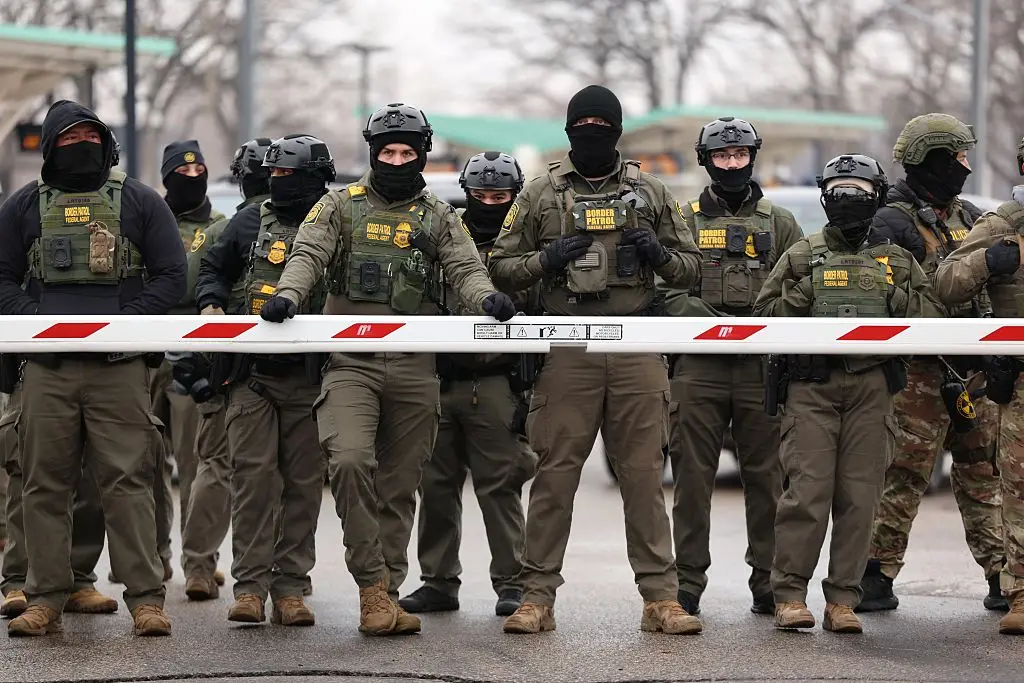
ICE Operations Slow as New Laws Leave Agents Exposed to Lawsuits
Across several U.S. states, immigration enforcement is no longer moving at its usual pace. Operations that once advanced quietly are now being paused, delayed, or approached with caution as new legal threats reshape the environment before any court has ruled on their legality.
The disruption is already being felt. Federal agents are operating in communities where personal legal exposure has become a live concern, not a hypothetical one. Local officials are hesitating to cooperate.
Advocacy groups are documenting encounters more aggressively. Decisions that once moved quickly are now subject to review, delay, or quiet recalibration.
At the center of this shift is a growing push by Democratic-led states to allow people to sue federal immigration agents in state courts for alleged civil rights violations. Illinois has already enacted such a law, and similar proposals are advancing elsewhere. None of the measures have been upheld or struck down yet, but their mere existence is changing behavior.
The federal government has responded by filing a lawsuit to block the Illinois law, arguing that states cannot expose federal agents to personal liability for actions taken while enforcing federal immigration policy. That case is unresolved, but the pressure it has created is already altering how enforcement unfolds.
For agents with U.S. Immigration and Customs Enforcement, the risk calculation has shifted. The question is no longer only whether an action aligns with federal guidance, but whether it could later become the basis for a personal lawsuit depending on where it occurs. For communities, the uncertainty cuts differently — enforcement may arrive late, change form, or not happen at all.
Why This Doesn’t Resolve Quickly
Legal clashes between states and the federal government rarely move fast. Challenges involving enforcement authority tend to stretch on, often climbing through multiple courts before clarity arrives. During that time, agencies must operate in a legal fog.
Institutions respond by adjusting internally. Guidance is refined. Approval chains lengthen. Coordination with local authorities becomes more selective. In high-visibility or sensitive situations, hesitation replaces speed.
Delay itself becomes a cost. Operations take longer to authorize. Planned actions are revisited. In some cases, timing becomes the deciding factor — not because the law has changed, but because the risk environment has.
What Changes Before Any Ruling
On the ground, behavior is already shifting. Advocacy organizations are preparing legal challenges that may never be filed but still influence decisions. Communities are documenting encounters more carefully, assuming legal action could soon be possible. Federal agents are reported to be more selective about where and how they operate, particularly in states where similar laws are advancing.
No one is being told what the final rules are, because no one knows yet. Instead, everyone is adjusting to the possibility that the rules may change mid-stream.
Supporters of the state measures say they are addressing an accountability gap that has existed for decades. Opponents warn that exposing agents to personal liability will chill enforcement and fragment the application of federal law. The courts have not settled that debate, but the uncertainty alone is enough to slow the system.
The unresolved question hovering over all of this is simple and destabilising: can states really open their courts to lawsuits against federal immigration agents, or will federal authority shut those efforts down? Until that question is answered, enforcement exists in a grey zone.
What happens next follows only two paths. If legal pressure continues to expand across more states, enforcement decisions may slow further while challenges work their way through the courts. If courts move swiftly to block or narrow these laws, some of the hesitation may ease.
For now, neither outcome has arrived. What has arrived is delay — driven not by a ruling, but by unresolved legal risk.