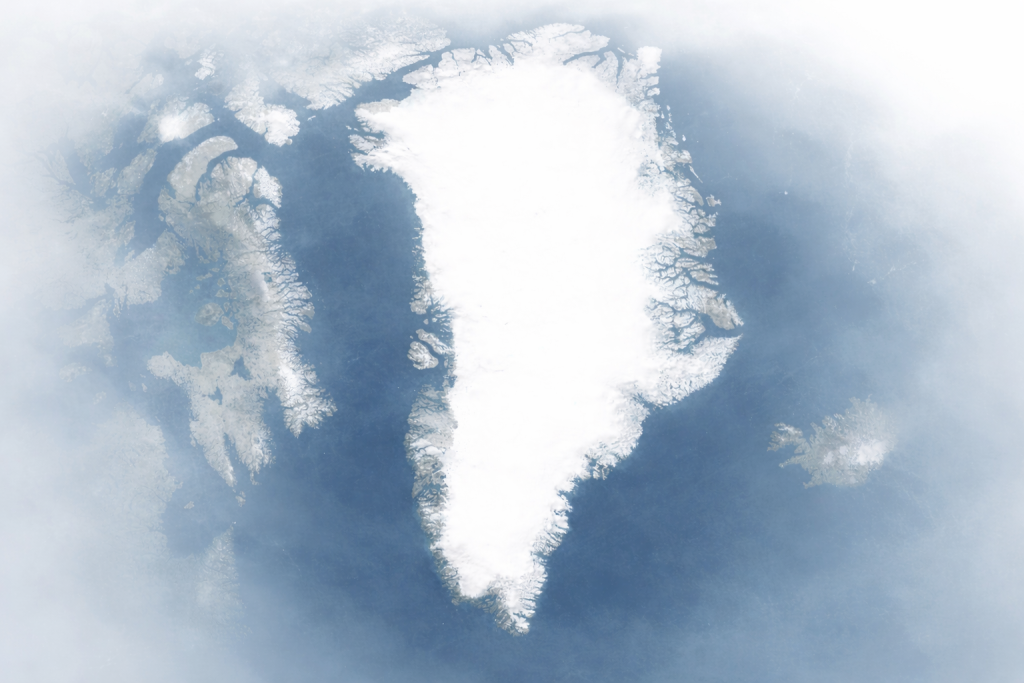
Greenland 2026: NATO Treaty Crisis Puts U.S. Power on Trial
The January 2026 arrival of Secretary of State Marco Rubio in Washington for classified briefings signals a definitive shift in American territorial policy.
This move follows the capture of former Venezuelan leader Nicolás Maduro and the subsequent revival of claims regarding the world’s largest island. The administration now explicitly targets Greenland for acquisition to counter strategic advancements by China and Russia.
This objective challenges the established legal framework of the Kingdom of Denmark, which maintains sovereignty over the territory through the 2009 Act on Greenland Self-Government.
While the White House characterizes the initiative as a pursuit of national security, the move directly confronts the North Atlantic Treaty and the foundational principles of the United Nations Charter.
The immediate legal trigger is the formal request for a meeting by Danish Foreign Minister Lars Løkke Rasmussen and Greenlandic counterpart Vivian Motzfeldt.
This diplomatic outreach follows the introduction of the Make Greenland Great Again Act in the 119th Congress, a bill authorizing the President to negotiate the purchase of the island.
Unlike historical acquisitions such as the 1867 Alaska Purchase, the current effort operates in an era defined by the right to self-determination.
The Danish government has signaled that any attempt at coercive acquisition or unilateral military intervention would terminate existing security arrangements.
This includes the 1951 Defense of Greenland Agreement, which governs the Pituffik Space Base and provides the legal basis for the United States military presence in the Arctic.
Commercial Liability and the Mineral Rights Contention
The push for Greenlandic acquisition introduces unprecedented exposure for global insurance markets and institutional investors. At the center of this tension is the Tanbreez project, a major rare earths initiative controlled by Critical Metals Corp.
Following Secretary Rubio’s briefings, shares in the entity surged over 25%, reflecting market anticipation of a state-backed pivot toward American mineral independence.
However, this commercial enthusiasm ignores the dense thicket of regulatory and civil liability. The Greenlandic government previously revoked the rights of Greenland Minerals (now Energy Transition Minerals) for the Kvanefjeld site, leading to an ongoing $11.5 billion arbitration claim.
This figure represents nearly ten times the annual budget of the territory, creating a systemic risk for any successor sovereign.
Institutional exposure extends to the maritime sector, where the "Polar Silk Road" ambitions of the China Communications Construction Company (CCCC) meet American resistance.
The administration’s suggestion of military "options" complicates the underwriting of hull and machinery insurance for vessels transiting the North Atlantic.
Lloyd’s of London and other primary insurers must now recalibrate risk premiums for a region previously considered a low-tension zone.
If the United States moves to unilaterally reinterpret the 1951 Defense of Greenland Agreement to seize administrative control, it triggers "political risk" clauses in multi-billion dollar infrastructure contracts, potentially bankrupting local entities and forcing the Danish Ministry of Finance to step in as a backstop.
Institutional Exposure and the Outcome Matrix
The transition from a cooperative Nordic framework to a contested American territory carries high-consequence triggers for the global economy.
Institutional investors, particularly those aligned with Vontobel Group and TwentyFour Asset Management, have noted that the 2026 geopolitical climate has shifted the "safe-haven" status of Danish sovereign debt.
A unilateral move by Washington would not only destabilize the Euro-Atlantic security architecture but also invalidate decades of commercial licensing granted under Danish Law.
The following table outlines the structural shift in the Arctic legal and commercial environment.
| Former Status Quo | Strategic Trigger | 2026 Reality |
|---|---|---|
| Danish Sovereignty: Greenland operates as a self-governing territory under the 2009 Act, with Denmark managing defense and foreign policy. |
The Rubio Doctrine: Formal U.S. intent to acquire territory to bypass Danish environmental regulations and secure rare earth supply chains. |
Contested Title: A legal stalemate where U.S. administrative claims conflict with Danish sovereignty, freezing $15B+ in mining investments. |
| NATO Integration: Security is managed through the 1951 Agreement, treating Greenland as a vital but protected "High North" ally. |
Military Option Clause: The White House declaration that military force is a viable "tool" for territorial acquisition against a NATO member. |
Alliance Fracture: European leaders (France, UK, Italy) warn that annexation ends NATO, leading to the withdrawal of joint security guarantees. |
| Environmental Primacy: The 2021 Greenlandic ban on uranium mining and petroleum exploration prioritizes indigenous health and ecology. |
Resource Mobilization: U.S. executive orders targeting the "Kvanefjeld" and "Tanbreez" deposits for immediate extraction for defense use. |
ISDS Litigation: Global arbitration tribunals face a flood of claims as private entities sue for "indirect expropriation" under new U.S. mandates. |
Jurisdictional Chokepoints and the Permanent Court of International Justice
The strategy to secure Greenland creates a jurisdictional impasse between the Kingdom of Denmark and the United States federal government.
At the heart of this conflict lies the precedent established by the Permanent Court of International Justice in the 1933 Legal Status of Eastern Greenland case.
This ruling affirmed Danish sovereignty based on the "continuous and peaceful display of authority," a standard that the Department of State now seeks to challenge.
By invoking the newly articulated "Donroe Doctrine," the Trump administration argues that security vacuums created by Russian and Chinese naval activity in the GIUK Gap invalidate previous territorial assumptions.
This aggressive posture has forced the European Commission to issue formal warnings regarding the inviolability of borders within the North Atlantic framework.
Legal resistance is consolidating within the Inatsisartut, Greenland’s parliament, which retains the exclusive right to initiate an independence referendum under the 2009 Act.
Any American effort to bypass this local authority would face immediate litigation in the Danish Supreme Court (Højesteret) and likely an emergency petition to the International Court of Justice in The Hague.
The Ministry of Foreign Affairs in Copenhagen has already coordinated with the United Nations Security Council to emphasize that territorial "purchase" in the 21st century requires the explicit consent of the governed.
Without this, any transfer of power would be viewed as an illegal annexation, triggering secondary sanctions from the European Union against participating American commercial entities.
-
The Office of the Legal Adviser must reconcile the "Make Greenland Great Again Act" with existing treaty obligations under the UN Charter.
-
NATO leadership has stated that unilateral U.S. action against Denmark would trigger an internal crisis, potentially suspending American voting rights.
-
The Greenlandic Department of Foreign Affairs remains the primary negotiator for all sub-surface resource licenses and maritime economic zones.
-
U.S. Northern Command (NORTHCOM) currently lacks the statutory authority to govern civilian populations outside of established Department of Defense installations.
-
The Danish Ministry of Justice maintains that the 2023 Enhanced Defense Cooperation Agreement does not grant the U.S. any sovereign administrative powers.
-
Arctic Council protocols require consensus for major regional shifts, a benchmark the current American proposal fails to meet among Nordic members.
Sovereignty as a Barrier to Resource Nationalization
The administration’s focus on the mineral-rich deposits of the High North has brought the U.S. Department of the Interior into direct conflict with the Greenland Ministry of Mineral Resources.
While the White House views these assets as critical for the national security of the United States, they remain protected by the Mineral Resources Act of 2009.
This legislation grants the people of Greenland the right to manage and benefit from their own wealth. Institutional investors, including the Danish Investment Fund, have warned that any attempt to nationalize these assets under American law would be met with an immediate freeze of the $500 million annual subsidy provided by Copenhagen, creating a fiscal void that Washington is not currently authorized by Congress to fill.
Furthermore, the House Committee on Foreign Affairs faces internal division over the legality of utilizing the Defense Production Act to claim foreign territory.
If the administration proceeds with its intent to "acquire" the island, it must navigate the Arctic Council’s stringent environmental and indigenous rights standards.
The Inuit Circumpolar Council has already filed a preemptive brief with the United Nations Permanent Forum on Indigenous Issues, asserting that any change in sovereign status without a popular mandate violates the Declaration on the Rights of Indigenous Peoples.
This multi-layered legal defense ensures that any tactical move by the Pentagon to expand its footprint beyond Pituffik Space Base will be stalled by decades of high-stakes international litigation.
The Compact of Free Association and the Path to Unincorporated Status
The administration’s strategic advisors, led by U.S. Special Envoy Jeff Landry, are increasingly evaluating the Compact of Free Association (COFA) as a transitional legal model.
This framework, currently governing relations with the Marshall Islands and Palau, offers a mechanism to bypass full annexation while securing exclusive military rights.
However, applying a COFA model to an autonomous territory of a NATO ally creates a unique constitutional friction. For the Department of Justice, the primary hurdle is whether Greenland would be classified as an "incorporated" or "unincorporated" territory.
Under the Insular Cases doctrine, unincorporated status would allow the United States to govern without granting full constitutional protections or a path to statehood, a prospect that the Greenlandic Human Rights Council has labeled as a return to colonial-era governance.
Furthermore, the fiscal reality of such a transition involves the U.S. House Committee on Appropriations, which must weigh the cost of replacing the annual $600 million block grant currently provided by the Danish state.
Internal projections from the Congressional Budget Office suggest that the infrastructure requirements to modernize the Arctic region for year-round military and industrial use would exceed $50 billion over the next decade.
Without a formal cession treaty ratified by a two-thirds majority in the U.S. Senate, any executive agreement remains vulnerable to the Supreme Court of the United States, which may view such an expansion of executive power as an encroachment on the legislative branch’s authority to acquire and govern new territory.
The current escalation in Arctic policy signals a transformative period for international law, where historical precedents of territorial purchase meet modern requirements of popular consent.
While the administration maintains that "all options" remain on the table to secure national interests, the institutional barriers remain formidable.
The interplay between Danish constitutional law, Greenlandic self-determination, and the North Atlantic Treaty ensures that any move toward acquisition will be a multi-generational legal endeavor rather than a swift diplomatic transaction.
For senior commercial leaders, the primary risk remains the uncertainty of title and the potential for prolonged litigation. As the United States and Denmark prepare for high-level meetings next week, the global legal community will be watching for any signals of compromise.
However, as long as Copenhagen maintains its refusal to sell and Nuuk insists on its right to self-determination, the Arctic remains a jurisdictional front line where the rule of law must eventually reconcile with the realities of 21st-century power.
Legal Insight: 👉 Greenland Annexation Threat Sparks Denmark ICJ Case Risk and NATO Treaty Liability 👈
People Also Ask
-
Can the U.S. legally buy Greenland without Denmark’s consent? No, international law under the UN Charter prohibits the acquisition of territory through coercion or force.
-
What is the 1951 Defense of Greenland Agreement? A treaty between the U.S. and Denmark that allows for American military installations, such as Pituffik Space Base, while maintaining Danish sovereignty.11
-
How does the 2009 Act on Greenland Self-Government affect an acquisition? It grants Greenlanders the right to self-determination and the exclusive authority to initiate an independence referendum.12
-
What is a Compact of Free Association (COFA)? A legal arrangement where a nation grants the U.S. exclusive military access in exchange for economic aid and defense guarantees.13
-
Can the U.S. President acquire territory through an Executive Order? No, the acquisition of territory typically requires a treaty ratified by the U.S. Senate and funding authorized by the House.
-
What are the Insular Cases? A series of Supreme Court decisions that define the legal status of U.S. territories and the extent of constitutional rights for their residents.
-
Why is the Pituffik Space Base strategically important? It is the northernmost U.S. military base, providing vital early warning and satellite tracking capabilities for Arctic defense.14
-
What happens if Denmark terminates its military agreement with the U.S.? The U.S. would lose legal access to its Arctic bases, potentially triggering a significant national security crisis.
Greenland acquisition, Marco Rubio Greenland, Arctic sovereignty, Trump Greenland 2026, Danish legal status, Pituffik Space Base, International Law Arctic, Greenland mineral rights, US-Denmark relations 2026.