Why the DOJ’s Subpoena of Fed Chair Jerome Powell Reclassifies Institutional Risk
For the non-lawyer CEO or board member, the news that the Department of Justice has served the Federal Reserve with grand jury subpoenas is not a story about office renovation costs. It is a fundamental shift in the American regulatory environment.
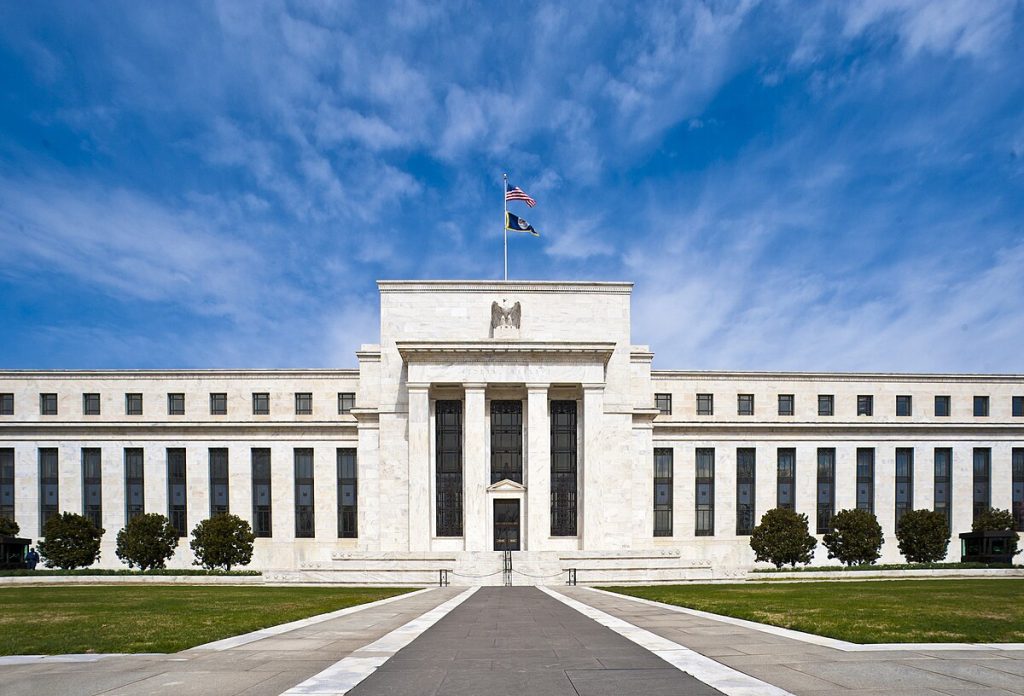
On January 11, 2026, Federal Reserve Chair Jerome Powell confirmed that the DOJ, under the direction of the Trump administration, is pursuing a criminal indictment tied to his 2025 congressional testimony regarding a $2.5 billion building project.
The immediate risk to your organisation is not the renovation itself, but the weaponization of criminal discovery against an independent regulator.
For decades, the Federal Reserve’s independence served as the bedrock of global contract stability and predictable capital costs.
That era has ended. If a central banker can be threatened with criminal charges as a "pretext" for interest rate policy disputes—as Powell explicitly alleged in his video statement—the primary risk for private sector leaders is no longer just market volatility.
It is the loss of a neutral arbiter of value.
For any decision-maker with exposure to U.S. Treasury yields, debt covenants, or long-term capital projects, this trigger reclassifies the Fed from a data-driven institution to a politically sensitive entity.
This is a governance crisis. It signals that the federal government is willing to use the DOJ to pierce the veil of institutional independence to achieve specific commercial outcomes, such as forced interest rate cuts.
Your risk conversation must now pivot from "when will rates drop?" to "is our capital strategy resilient to a compromised central bank?"
Capital Accountability After the DOJ’s Move: Who Owns the Downside?
The threat of a criminal indictment against the sitting Fed Chair immediately transfers the downside of market instability from the public sector to private balance sheets.
In the previous status quo, "Fed risk" was managed through economic forecasting. Today, it is managed through legal and insurance hedging.
The primary stakeholders now holding the risk are not the central bankers, but the boards and GCs of institutions reliant on stable dollar valuations.
As US Attorney Jeanine Pirro moves forward with the investigation into whether Powell misled Congress, the "truth" of the renovation costs becomes secondary to the reality of institutional paralysis. The table below outlines the immediate commercial shift.
| Former Status Quo | Trigger Event | Immediate Reality |
|---|---|---|
| Policy dictated by economic data. | DOJ grand jury subpoenas issued. | Policy influenced by legal survival. |
| Fed independence is a market floor. | Threatened criminal indictment. | Political interference is a priced risk. |
| Institutional continuity through 2026. | Potential removal/indictment of Chair. | Governance void in monetary oversight. |
Capital accountability has shifted to the lenders and counterparties who must now price in "sovereign-style" volatility for U.S. assets.
When the DOJ enters the boardroom of the Federal Reserve, every contract linked to SOFR or Treasury benchmarks inherits a layer of political litigation risk.
Lenders are already scrutinising debt-to-equity ratios with a fresh lens on how a decapitated Fed might fail to contain a sudden inflationary spike or a liquidity crunch.
Insurance & Risk Transfer: Political Risk and the New Exclusion Era
The insurance industry is the first responder to this escalation. Directors and Officers (D&O) insurers, as well as political risk underwriters, are currently recalibrating their exposure to U.S.-based multinationals.
The threat of a criminal indictment against the nation's chief financial regulator creates a "non-standard" risk event that traditional policies may not adequately cover.
We are seeing an immediate focus on "Regulatory Action" clauses. Traditionally, these covered your company’s interactions with the Fed or SEC.
Now, insurers must account for the risk that the regulator itself becomes a source of systemic contagion. If Powell is indicted, the ensuing market drop could trigger a wave of shareholder derivative suits against boards for failing to hedge against "foreseeable" political interference.
Underwriters at firms like Marsh and Aon are already noting that "political risk" is no longer an emerging market concern; it is a domestic U.S. reality.
The immediate consequence is a tightening of capacity. If your organisation is up for insurance renewal in the next quarter, expect higher premiums and more aggressive exclusions related to "government-induced market disruption."
Second-Order Institutional Pressure: Capital, Governance, and Market Impact
The DOJ’s action has triggered a series of near-term pressures that will affect capital access and governance across the S&P 500.
The response from Evercore ISI—describing the development as "unambiguously risk off"—highlights how quickly institutional sentiment can sour.
When the legal system is used to pressure monetary policy, the "Sell-America" trade becomes a rational defensive posture for global asset managers.
1. Capital Access Constraints
Global banks, including JPMorgan Chase and Goldman Sachs, must now navigate a world where the Fed's "best assessment" is under criminal fire.
If investors lose confidence in the Fed’s ability to act as a lender of last resort without White House approval, the "liquidity premium" on U.S. debt will rise. This forces your CFO to pay more for credit, regardless of your company’s actual performance.
2. Governance Scrutiny
Governance pressure is mounting from the Senate Banking Committee. Senator Thom Tillis’s vow to block any future Fed nominees until the DOJ matter is resolved creates a vacuum at the top of the financial system.
For a CEO, this means the regulatory roadmap for the next 24 months is now blank. Key institutions like the Office of the Comptroller of the Currency (OCC) and the FDIC are likely to see their own independence challenged, leading to a fragmented and unpredictable compliance environment.
3. Market Response and Pricing
We have already seen a flight to safety. Gold and Bitcoin have surged as proxies for a "trustless" economy. Meanwhile, the U.S. Dollar has shown signs of weakening against the Yen and Euro as the "independence discount" is applied.
If your company holds significant overseas earnings, your currency hedging strategy is now a front-page issue for the board.
The involvement of institutions such as the New York Times and NBC News in documenting the administration’s direct pressure on the Fed further cements the view that this is not a routine audit. It is a targeted enforcement posture.
Organizations that rely on the Fed for "clear signals" will find themselves operating in a fog of war, where every rate decision is parsed for signs of DOJ-induced compliance.
What the DOJ’s Subpoena Means for CEOs, Boards, and General Counsel
The verdict for executive leadership is clear: the Federal Reserve is no longer a "set and forget" variable in your strategic planning. The DOJ's subpoena of Jerome Powell has effectively nationalised monetary risk.
You must now account for a central bank that may be forced to prioritise the President’s preferences over economic stability to avoid criminal prosecution of its leaders.
For the CEO: Your role is to protect the firm’s valuation from a potential "independence crisis." This means stress-testing your 2026–2027 budget against a scenario where the Fed is unable to respond to a recession because it is legally or politically compromised. You are the chief risk officer of your company’s relationship with the U.S. dollar.
For the General Counsel: The focus must shift to the "force majeure" and "material adverse change" (MAC) clauses in your major credit facilities. Do these clauses trigger if the Fed Chair is removed or indicted? You need to verify if your contracts assume a functional and independent central bank and what happens if that assumption fails.
For the Board: Oversight must move beyond quarterly earnings to "institutional resilience." The Department of Justice’s willingness to use grand jury subpoenas against the Fed sets a precedent for how other regulators—the SEC, FTC, and EPA—might be handled.
Your compliance leaders must be prepared for a more aggressive, politically motivated enforcement environment across the board.
The immediate reality is that the safety net of "independent expertise" has been pulled back. In its place is a high-stakes legal battle that pits the rule of law against political utility.
As Powell noted, standing firm in the face of threats is a requirement of public service; for the private sector, the requirement is to prepare for the fallout when that firmness is tested by the full weight of the federal government.