Defense Seeks Prosecutor Disqualification in Charlie Kirk Case Against Tyler Robinson
Prosecutorial disqualification under Utah Rule of Professional Conduct 1.10 requires proving that an individual attorney’s conflict—such as a personal relationship with a witness—materially limits the office's objectivity.
While UCJA Rule 13-1.10(f) typically prevents office-wide imputation for government lawyers, courts may remove an entire agency if a "pervasive bias" threatens the defendant's due process rights.
Defense attorneys for Tyler Robinson are seeking to remove the Utah County Attorney’s Office from the case, alleging a conflict of interest involving a prosecutor’s relative who was present during the fatal shooting.
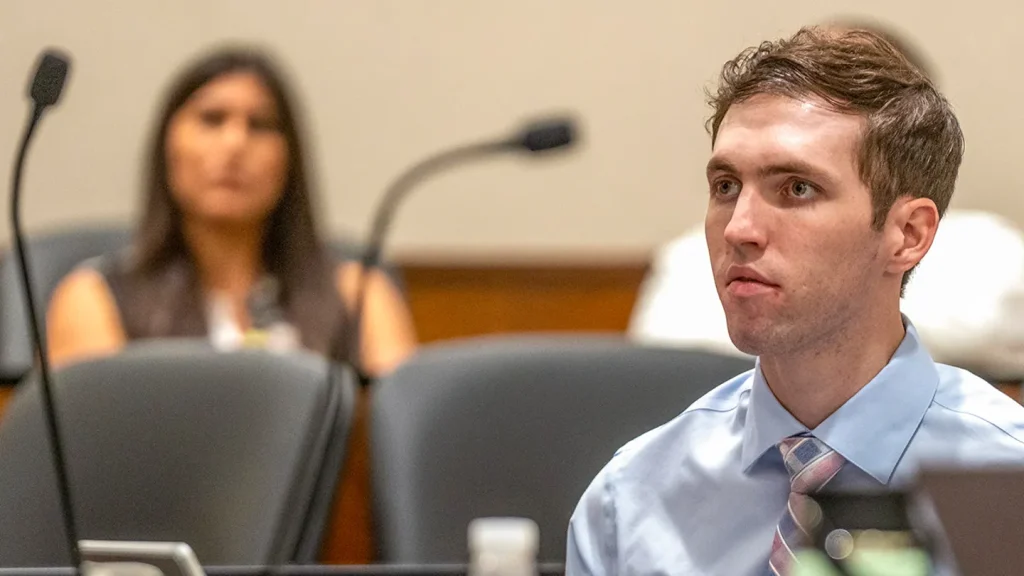
Attorneys representing Tyler Robinson, 22, are scheduled to appear in a Provo, Utah, courtroom Friday afternoon for a high-stakes hearing that could shift the entire trajectory of the state’s prosecution.
The defense is moving to disqualify the Utah County Attorney’s Office in its entirety, citing an ethical conflict of interest.
The motion centers on the revelation that the 18-year-old daughter of a senior prosecutor in that office was present at Utah Valley University on September 10, 2024, the day conservative activist Charlie Kirk was killed.
Defense filings indicate the daughter was positioned within 85 feet of the speaker’s platform when the fatal shot was fired, placing her in the immediate vicinity of a capital crime.
This procedural challenge represents a critical juncture for the Utah judicial system as it balances prosecutorial discretion with the constitutional right to an impartial tribunal.
Robinson, who surrendered to the Washington County Sheriff’s Office following a 30-hour interstate manhunt, faces charges including aggravated murder and felony discharge of a firearm.
Under Utah’s capital sentencing framework, the impartiality of the prosecuting agency is a prerequisite for seeking the state's highest penalty.
A successful disqualification would necessitate the appointment of a special prosecutor, potentially from the Utah Attorney General’s Office or an adjacent county, under the authority of Utah Code § 17-18a-402.
Defense Cites Prosecutor’s Family Ties to Crime Scene as Conflict
The defense first surfaced concerns regarding a potential conflict during an October 24 hearing, which was initially conducted under seal to protect the privacy of those involved.
Redacted transcripts now reveal that defense attorney Richard Novak argued the prosecution's personal stake in the case was elevated because a staff member's child was a student at the scene.
Novak specifically noted that law enforcement assets were deployed with the "safety and status" of this specific individual in mind during the chaotic moments following the shooting.
This suggests that the Utah County Attorney’s Office was not merely an objective observer of the facts, but a party with a direct emotional connection to a potential victim or witness.
The legal threshold for disqualification in Utah is governed by the Utah Rules of Professional Conduct, specifically Rule 1.7, which addresses conflicts of interest involving current clients and personal interests of the lawyer.
The defense contends that the prosecutor’s "personal interest" in his child’s safety creates a material limitation on the office’s ability to conduct a neutral investigation.
Furthermore, the defense points to the "rush to seek death" in this case—referring to the notice of intent to seek the death penalty filed shortly after Robinson's capture as evidence of an emotional rather than a clinical legal response to the crime.
Prosecutors Deny Conflict, Say Case Decisions Followed Standard Practice
In written opposition to the motion, the Utah County Attorney’s Office argues that the defense is attempting to create a conflict where none exists.
Prosecutors state that the deputy attorney’s daughter, identified as “Adult Child (AC)” in court filings, did not witness the shooting and did not observe the suspect with a weapon.
Because she has no firsthand knowledge of the crime, the state contends she is not a necessary witness under UCJA Rule 13-3.7.
The office also argues that even if one prosecutor had a personal concern, it would not disqualify the entire office.
Citing UCJA Rule 13-1.10(f), prosecutors note that conflicts involving government lawyers are not automatically imputed to colleagues unless there is evidence the issue influenced office-wide decision-making.
They maintain the decision to seek the death penalty followed Utah law and reflected the aggravated nature of the crime, which involved a public shooting at a crowded university.
Defense attorneys counter that the state’s rapid move toward capital charges reflects an emotional response rather than a neutral assessment.
They argue that in a death-penalty case, even the appearance of personal involvement can undermine confidence in prosecutorial objectivity, and that the pace of the charging decision itself supports their request for disqualification.
Public Impact and Evidence as Disqualification Could Delay Trial
If the Utah County Attorney’s Office is removed from the case, the effects would extend well beyond the courtroom.
A new prosecutor would need time to review extensive discovery, including forensic reports, surveillance footage, and physical evidence tied to the alleged shooting site. That process could delay the preliminary hearing, currently scheduled for May 18, 2026, into late 2026 or early 2027.
The financial cost of the prosecution is also a concern. Appointing a special prosecutor could shift expenses between county and state budgets, while prolonging uncertainty for the Utah Valley University community.
The killing, which occurred during a public event on campus, has already led to increased security measures at universities across the state. Further delays would extend the period before the case reaches a resolution.
Prosecutors have emphasized the strength of their evidence. Charging documents cite DNA linking Tyler Robinson to a bolt-action rifle and other items recovered near the university, along with ballistic testing that matched a spent cartridge to the weapon.
Investigators also recovered unused cartridges bearing engraved phrases that the state says show planning. Records indicate Robinson surrendered to authorities after an interstate search and provided a statement in the presence of his parents.
Defense attorneys argue that assigning the case to an outside prosecutorial office would help ensure neutrality, particularly given the crime’s local impact.
They contend that moving the case could reduce concerns about local influence as the court weighs both the evidence and the procedural challenge now before it.
Public Access and Court Information
Court proceedings in the Tyler Robinson case are generally open to the public, though some materials involving minor witnesses remain sealed under protective orders.
Hearings are held at the Fourth District Court in Provo. Utah courts may permit cameras in high-profile cases, but coverage is typically limited to pooled photography and video shared by accredited media outlets.
Robinson retains the right to a fair trial under the Sixth Amendment, including an impartial jury. The current motion seeking to disqualify prosecutors is part of the legal process used to protect that right.
Members of the public with concerns about prosecutorial conduct in Utah may submit complaints to the Office of Professional Conduct within the Utah State Bar.
Key Questions Answered
Why does the defense want a new prosecutor in the Tyler Robinson case?
The defense argues that a prosecutor’s family connection to the scene of the shooting creates an emotional conflict of interest. They claim this personal proximity influenced how quickly the office moved to seek the death penalty.
Does a prosecutor’s relative have to testify for a conflict to exist?
No. Under Utah Rule of Professional Conduct 1.7, a conflict can exist if a lawyer’s personal interests materially limit their objectivity. The defense argues the issue is not testimony, but the personal stake involved.
What is a special prosecutor in a criminal case?
A special prosecutor is an outside attorney appointed by a judge when a local prosecutor’s office has a conflict of interest. The appointment is meant to ensure the case is handled impartially.
How could the death penalty notice affect the case timeline?
Utah law requires prosecutors to file a notice of intent to seek the death penalty within a set period after arraignment. The defense argues that filing early limited flexibility and suggests the decision was made before the investigation was complete.
What Happens Next in the Robinson Case
The next step is a ruling from the judge on the defense motion to disqualify prosecutors, expected shortly after Friday’s hearing. If the motion is denied, the case will move forward to a three-day preliminary hearing scheduled for May 18, 2026.
If the motion is granted, the Utah County Attorney’s Office would be removed from the case and required to transfer its files to a new prosecuting agency, which would pause the proceedings while the new office reviews the evidence.
Tyler Robinson remains held without bail regardless of the court’s decision. After the preliminary hearing, the judge will decide whether prosecutors have presented enough evidence to bind the case over for trial. If the case proceeds, Robinson would be formally arraigned and enter a plea.
The ruling could also affect how similar conflict claims are handled in future cases. Courts are required to weigh public interest in a swift prosecution against the obligation to ensure decisions are made by an impartial prosecuting authority.