Understand Your Rights. Solve Your Legal Problems


The UAE construction sector continues to generate high-value, technically complex disputes driven by accelerated project timelines, evolving risk allocation, and multi-layered procurement structures.
Unlike common law jurisdictions, disputes are governed primarily by the UAE Civil Code (Federal Law No. 5 of 1985), which embeds principles of good faith, judicial discretion in the assessment of damages, and statutory decennial liability. Liquidated damages, force majeure, and termination provisions remain subject to judicial oversight, underscoring the importance of careful drafting and disciplined contract administration.
The introduction of the UAE Arbitration Law (Federal Law No. 6 of 2018), alongside the continued development of the Dubai International Financial Centre (DIFC) and the Abu Dhabi Global Market (ADGM), has reinforced the UAE’s position as a regional dispute resolution hub. Arbitration and mediation are now firmly embedded within major project frameworks.
Against this backdrop, effective claims strategy and contractual risk management have become central to managing legal exposure across the sector.
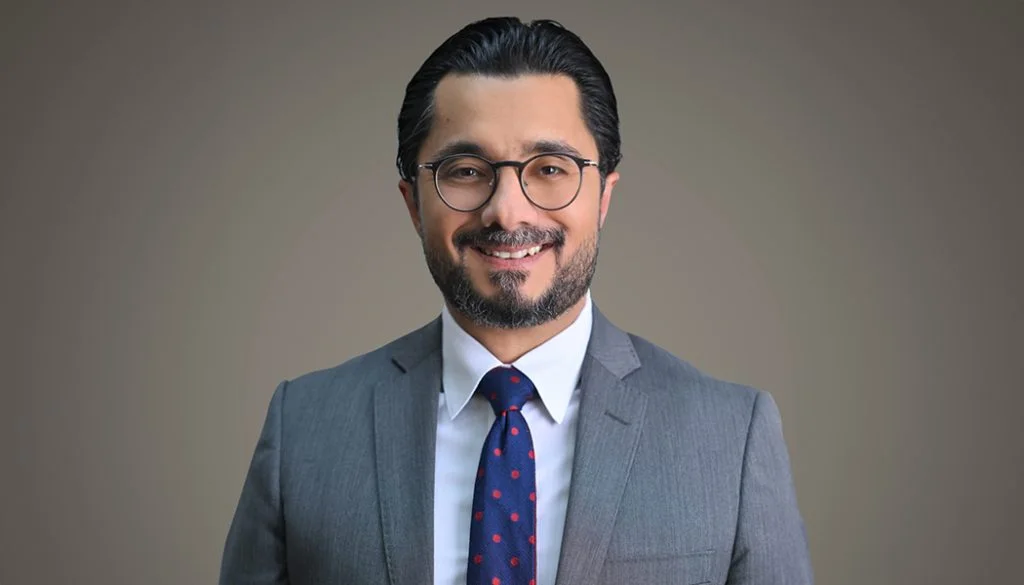
In this interview, Mustafa S. Khattab, Senior Contracts Manager and construction law specialist, discusses the structural drivers of disputes in the UAE, the increasing role of ADR, and the practical disciplines required to mitigate risk in complex construction projects.
The UAE offers a uniquely sophisticated legal and commercial environment. Its codified civil law system — combined with rapid infrastructure expansion — creates a setting where contractual precision and strategic risk management are essential.
The scale and pace of projects here naturally generate complex claims environments. Delay, variation and termination disputes often involve substantial financial exposure. I was drawn to this field because it sits at the intersection of technical construction expertise, legal interpretation, and commercial negotiation.
As ADR mechanisms have matured within the UAE, the role of the contracts professional has evolved beyond administration into strategic dispute management. That evolution has shaped my professional focus.
The recurring disputes tend to centre on:
Extension of Time (EOT) and delay analysis
Variations and scope modification
Termination and suspension rights
Liquidated damages assessments
Force majeure and unforeseen events
These issues are typically linked to compressed delivery programmes, evolving design parameters, and complex subcontracting structures. In large-scale projects, even minor contractual ambiguities can escalate into substantial claims if not managed proactively.
The UAE’s reliance on codified statute rather than precedent significantly influences dispute positioning.
Under the Civil Code, principles such as good faith and proportionality allow courts to intervene in contractual damage calculations, including liquidated damages. This means contractual drafting cannot rely solely on strict wording — it must anticipate statutory interpretation.
Additionally, decennial liability provisions create heightened exposure in certain construction contexts.
Strategically, this requires a balanced approach: strong contractual drafting combined with an awareness of how courts and tribunals may exercise discretion.
My approach begins with a detailed contractual and evidentiary review. Programme records, cost data, correspondence and risk registers must be analysed objectively before forming any strategic position.
Once the factual matrix is clear, I assess commercial exposure, stakeholder priorities, and reputational considerations. Not every dispute warrants immediate escalation.
The next step is to determine the most appropriate resolution pathway — whether structured negotiation, mediation, arbitration or litigation. The strategy must align with both legal merit and commercial objectives.
The objective is not merely dispute defence, but risk containment and commercially sustainable resolution.
It is fundamental.
Many disputes originate not from bad faith but from inadequate documentation, unclear scope definition, or delayed notification.
Effective contract administration — including contemporaneous records, structured reporting, and early risk identification — dramatically reduces escalation.
In practice, disciplined communication often resolves issues before they crystallise into formal claims.
Arbitration has become the preferred mechanism for major construction disputes in the UAE, particularly in projects involving international stakeholders.
The development of institutions within the Dubai International Financial Centre (DIFC) and Abu Dhabi Global Market (ADGM) has enhanced procedural certainty and enforcement confidence.
Mediation is also gaining traction, particularly where parties seek to preserve long-term commercial relationships.
Compared to court litigation, ADR offers procedural flexibility, confidentiality, and technical expertise — all critical in complex construction disputes.
Risk identification must begin at project inception. Scope clarity, risk allocation, and realistic scheduling are essential foundations.
Beyond drafting, consistent contract administration throughout the project lifecycle is equally important. Notification requirements, variation procedures, and record-keeping obligations must be observed strictly.
Early engagement with claims specialists when issues emerge can prevent minor disagreements from escalating into formal proceedings.
Technological integration — including AI-driven scheduling, cost modelling, and digital documentation — is improving transparency and analytical accuracy.
However, increased reliance on digital systems may also introduce new forms of dispute, particularly where automated forecasting or modelling errors affect performance metrics.
Sustainability compliance and green building standards will similarly introduce new contractual obligations and potential liabilities.
While technology may reduce certain evidentiary disputes, it will also reshape the types of claims that arise. Adaptability in dispute strategy will therefore remain essential.
Mustafa S. Khattab (BArch, MSc Construction Law, MCIArb, MiBArb) is a Senior Contracts Manager with over 20 years of experience in commercial management, contract strategy, and dispute resolution within large-scale infrastructure and aviation projects.
His practice spans pre- and post-contract stages, with a particular focus on claims development, risk mitigation, and structured dispute resolution. Combining technical construction expertise with formal legal training, he advises on complex contractual frameworks and high-value claims across both public and private sector environments.